
School and University

    Students and Apprentices

    Undergraduate and PhD Students

    Teachers

    Higher Education Statistics

    Scholarships

Career

    Career Guidance

    Job Vacancies

    Salary Information and Income Survey

    Academy

    Mentoring

Community

    Divisions

    Young Chemists’ Forum (JCF)

    Local Sections

    Regulars' Get-Togethers

    Chem_Connect

    Equal Opportunities and Diversity

    Partnerships and International Activities

    Volunteering

    Membership

Discover Chemistry

    Top Topics

    “Nachrichten aus der Chemie” – Members’ Magazine

    Specialist Journals

    Statements and Position Papers

    Press Releases

    Brochures and Academic Publications

    Books, Videos and Podcasts

    The Fascination of Chemistry

    Cartoons

    Biographies of Female Chemists

Events

    Conferences

    Academy

    Lectures

    Further Events

Awards

    Prices

    Historical Sites Relating to Chemistry

About Us

    Board and Other Bodies

    The Office

    Statutes and Code of Conduct

    Foundations

    Press and Public Relations

    Sustainability

MyGDCh

GDCh

Chemistry for a better world

© 2026 Gesellschaft Deutscher Chemiker. All rights reserved.

NewsletterDownloadsPressContactGDCh Shop
Legal NoticeData PrivacyTerms & ConditionsSubmit a revocation
Homepage/Divisions/history of chemistry
history of chemistry

history of chemistry

Divisions

history of chemistry

Board
Bettina-Haupt-Förderpreis
Publications
Mitteilungen der Fachgruppe online
Events ›
History of chemistry worldwide

history of chemistry

Who we are – what we do

Chemistry has a history that continues to be written every day. The rapid development of the natural sciences, and of chemistry in particular, presents society with new challenges. Only those who know their history can successfully shape the future, because scientific progress is based not only on current research, but also on what has been handed down. We learn from examples in the past how to manage technological and knowledge leaps in a way that takes people with us and delivers the greatest benefit for society.

Short link to this page: www.gdch.de/geschichte

Tasks and Objectives

We are a dedicated community of around 400 chemists, historians of science, teachers and students who are interested in the rich history of chemistry.

Our tasks are:

  • to arouse and maintain interest in and understanding of the historical study of chemistry
  • to encourage historical investigations into chemistry
  • to promote the study of history of chemistry at universities
  • to stimulate interest in local history of chemistry
  • to promote the use of historical topics in school lessons
  • to bring history of chemistry to the attention of the general public
  • to support museums and exhibitions on the history of chemistry
  • to raise awareness of the importance of bequests.

To achieve this, we promote contacts and the exchange of experience among members and with colleagues abroad. Every two years, we organise a Conference on the history of chemistry at changing locations, publish, among other things, the Mitteilungen as a publication forum for historical studies of chemistry, and support the work of the GDCh Commission “Historical Sites of Chemistry”. In doing so, we work closely with other GDCh Divisions, particularly the JCF (YoungChemistryForum), the Division of Chemical Education and the Senior Expert Chemists.

Donations

If you would like to financially support the work of the Division of History of Chemistry, we would be pleased to receive donations. These can be transferred to the following account:

Account holder: German Chemical Society e.V.
IBAN: DE36 5007 0010 0096 6416 01
BIC: DEUTDEFFXXX
Bank: Deutsche Bank AG
Reference: Donation to the Division of History of Chemistry

Donations of less than €300 can be declared on your tax return without a donation receipt. Donations of €300 or more require the additional information
“Please issue a donation receipt” in the reference.
Publications

  • Mitteilungen der Fachgruppe Geschichte der Chemie
  • Newsletter of the Division of History of Chemistry
  • Milestone in chemistry
  • From school year to school year – highlights from the history of chemistry
  • Eyewitness accounts

more

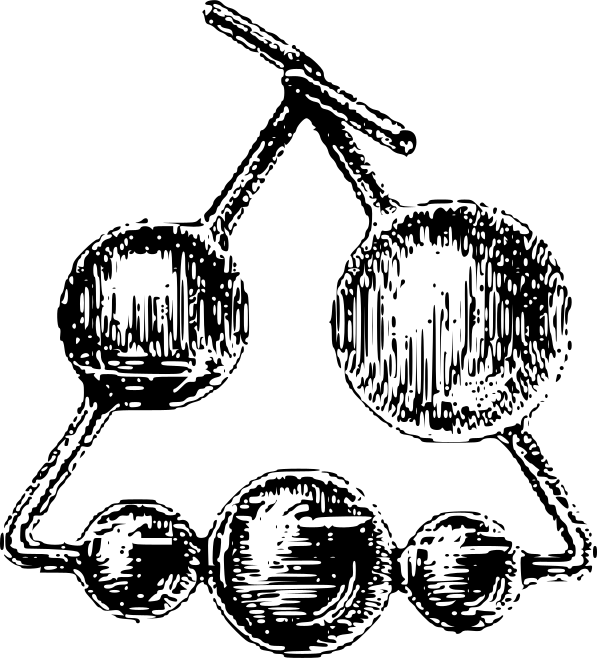
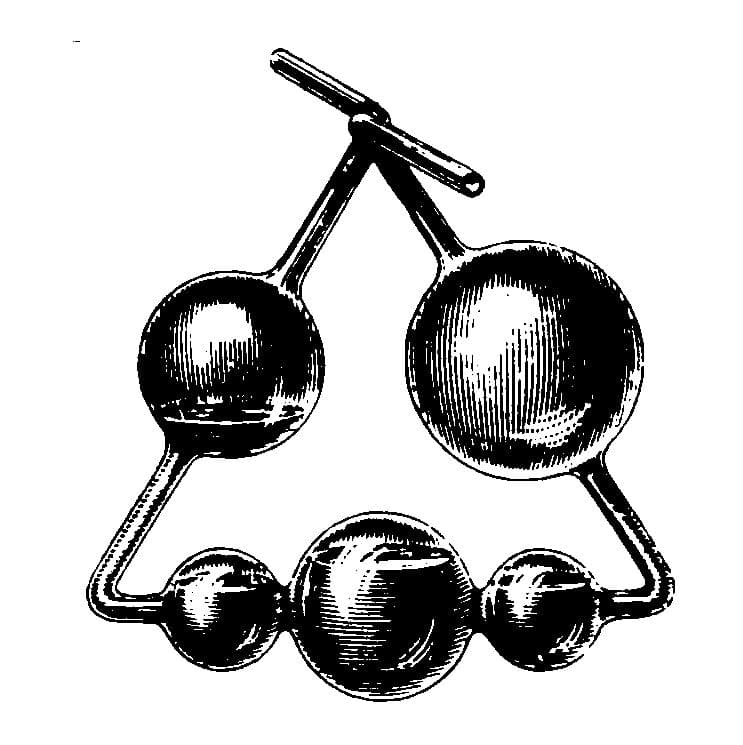
Description of the division logo

The five-bulb apparatus developed by Justus Liebig in 1830 simplified chemical elemental analysis and enabled research-based laboratory teaching. The instrument, also known as a Kaliapparat, soon became an international symbol of the self-image of the chemical profession. Those interested in how the five-bulb apparatus works and its capabilities are referred to: Melvyn Usselman, Alan Rocke, Christina Reinhart, Kelly Foulser, "Restaging Liebig. A Study in the Replication of Experiments", Annals of Science 62 (2005), 1-55.

Join Online

Free membership for students

Article “65 Years of the GDCh Division of History of Chemistry”

Nachrichten aus der Chemie
Issue 09/2026
more

Lecture offers

FG history of chemistry
more

Book series 'Lives in Chemistry'

Homepage
Flyer

JCF podcast “Rethinking Chemistry – How did people conduct research in the past?”

in cooperation with the Division of History of Chemistry
more

Historic Sites of Chemistry

GDCh programme recognising achievements in chemistry of historical significance since 1999
more

Downloads

Division leaflet
bylaws
Electoral regulations

Strong Professorships in the History of Science

Explanation of the historical Divisions of Germany’s scientific societies
more

Contact

Nicole Bürger

Dipl.-Biol. Nicole Bürger

GDCh-Fachgruppenkoordination

n.buerger@gdch.de
069 7917-231
