
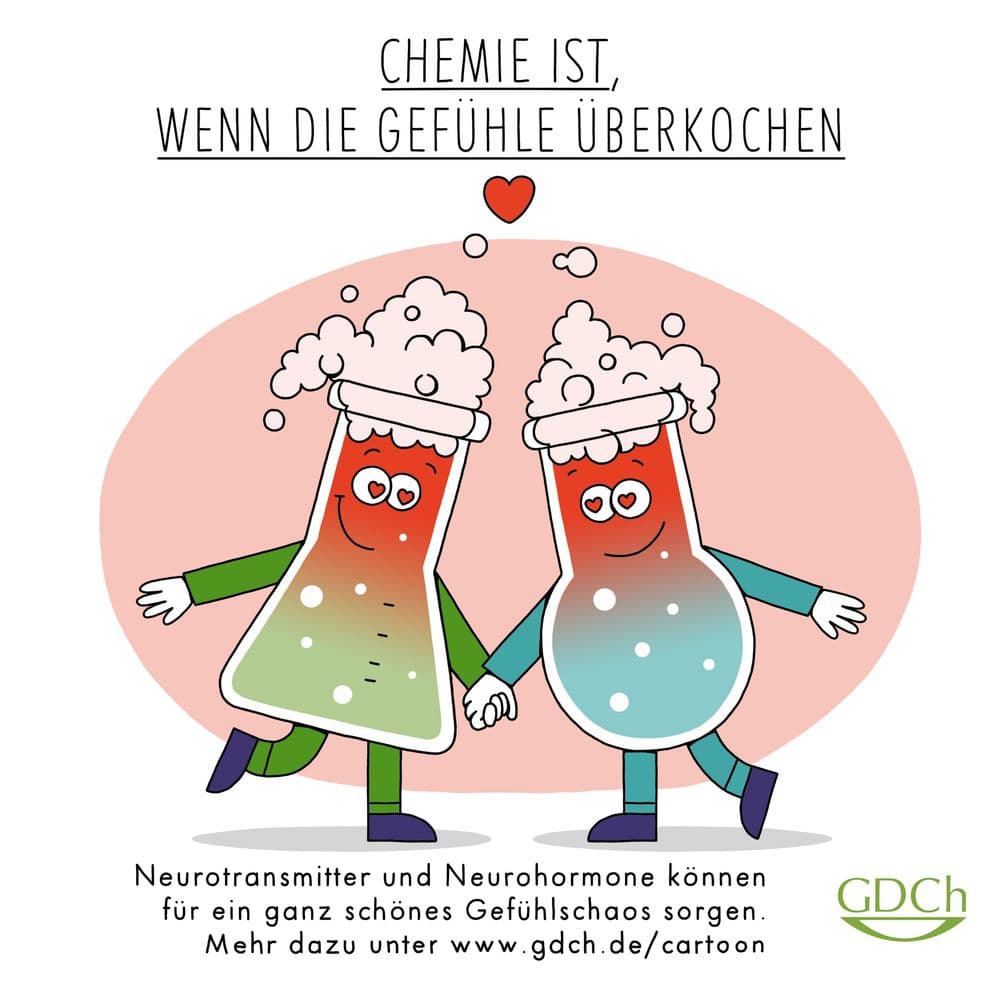
Neurotransmitters and neurohormones can cause quite an emotional turmoil!
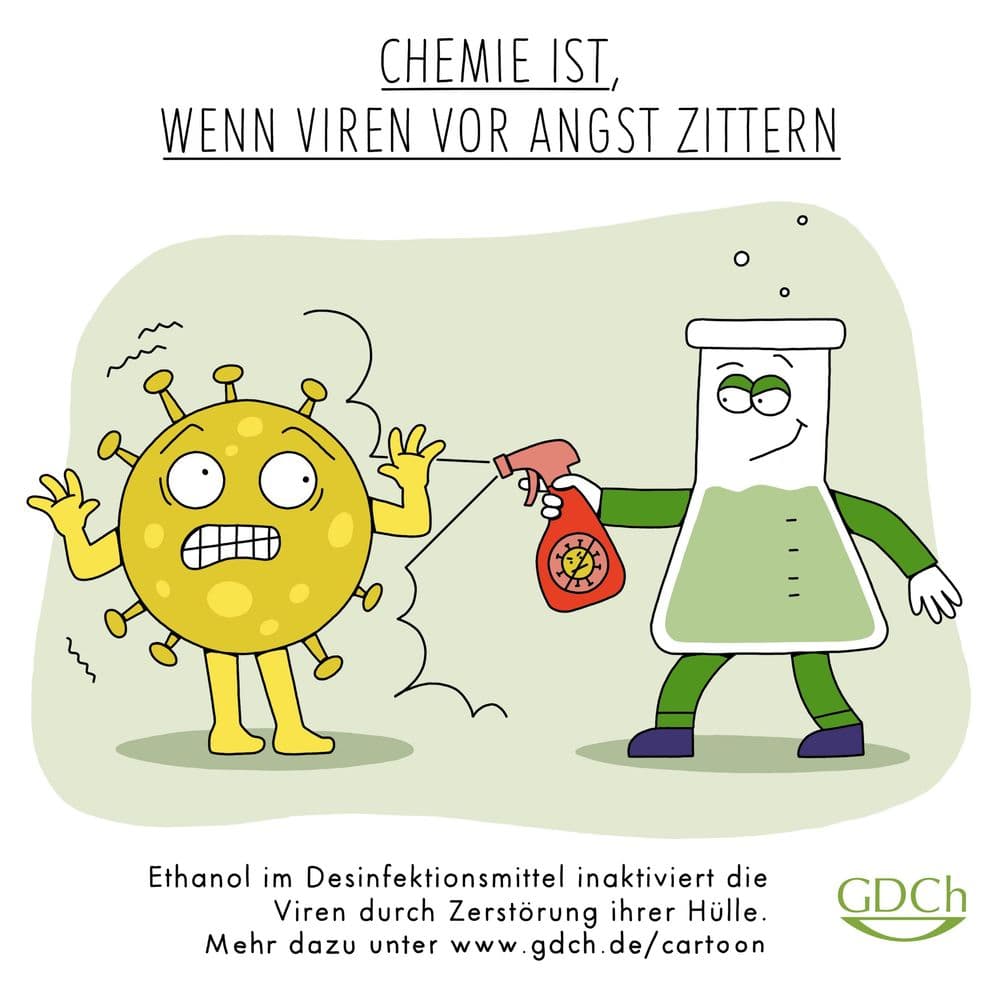
We all know that disinfection helps combat germs, bacteria and viruses. However, viruses are a more complicated group, as not all disinfectants are effective against them. Many viruses, including coronavirus, can nevertheless be destroyed with alcohol. But how does alcohol work?
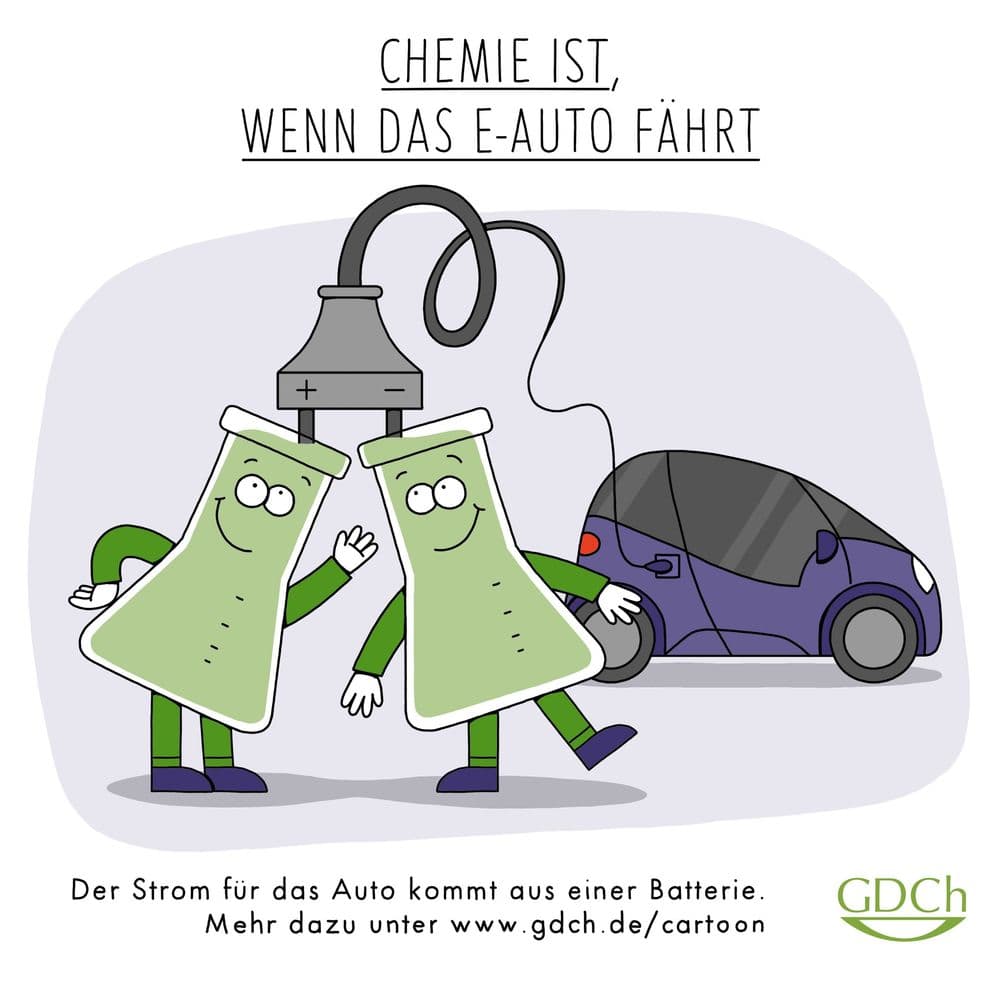
Like internal combustion engines, electric drives also require energy. In electric cars, also known as BEVs (Battery Electric Vehicles), the required energy is stored in accumulators (rechargeable batteries or batteries), in most cases lithium-ion batteries.
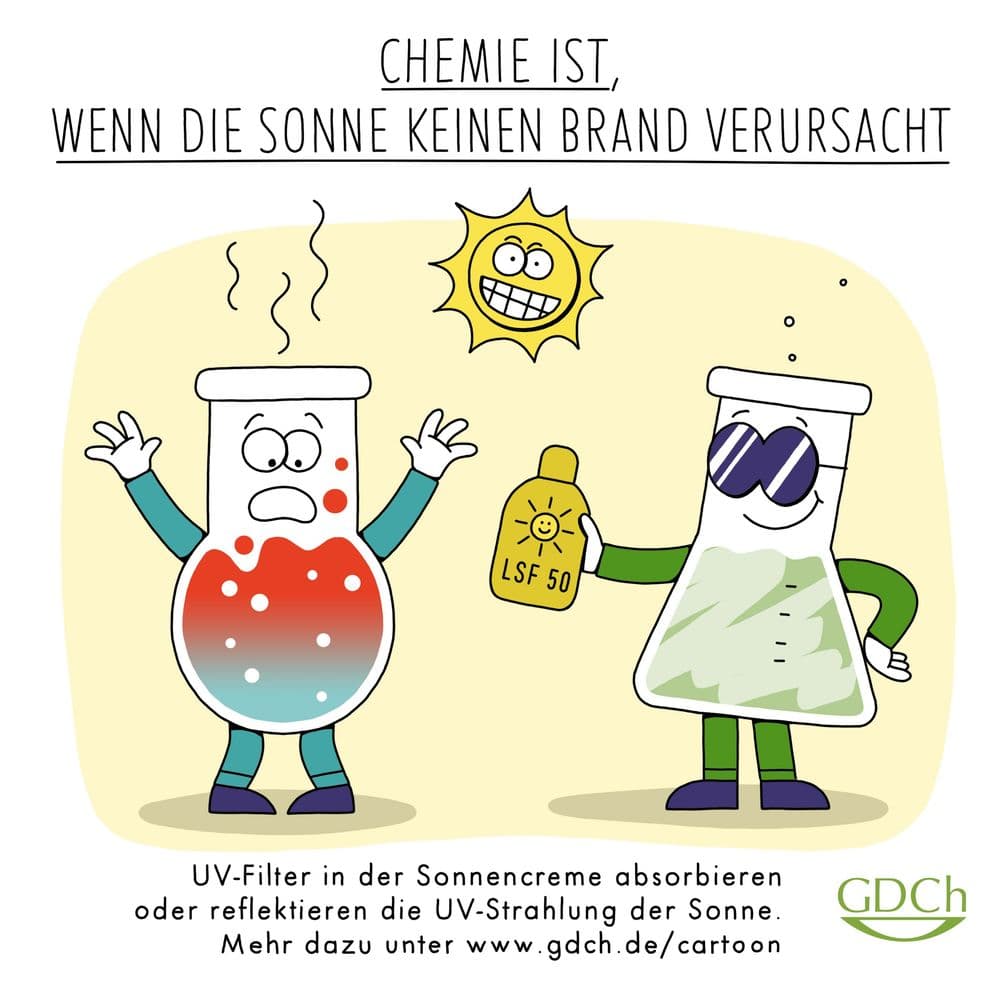
At last, it’s summer and holiday time. Many people take advantage of the warm weather to swim and sunbathe – either on holiday by the sea or at a local quarry lake. Even on cloudy days, you should not forgo sun cream in order to protect your skin from excessive solar radiation. And this is where chemistry comes into play, because chemical substances in sun cream ensure that we can enjoy the sun without fear of skin damage. But how does sun cream actually “work”? We took a closer look.
“There’s no chemistry in German beer, surely – it’s brewed according to the German Beer Purity Law of 1516,” some may think. Nevertheless, beer – whether alcoholic or alcohol-free – is the product of various chemical reactions.
That means there’d be no beer without chemistry! Let’s take a look at the chemical process of brewing beer.

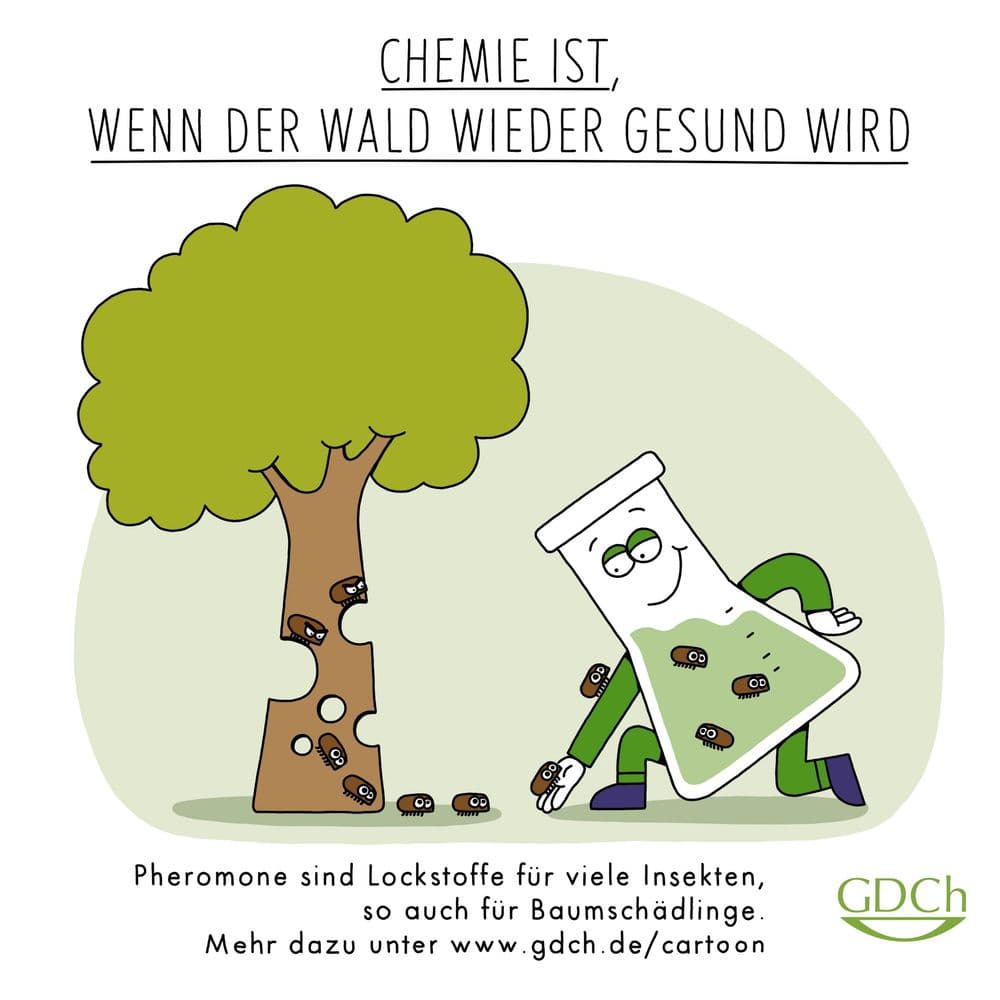
They invade the forest by the thousands and burrow beneath the bark of defenceless trees. Beetles such as the timber bark beetle and other tree pests can destroy the trees’ vital protective layer in next to no time. Severe storms, prolonged droughts and periods of heat, as well as monocultures in many places, have put the trees under considerable strain in recent years and are increasingly stressing them. These developments are a feast for tree pests. Pheromones help the trees to recover.
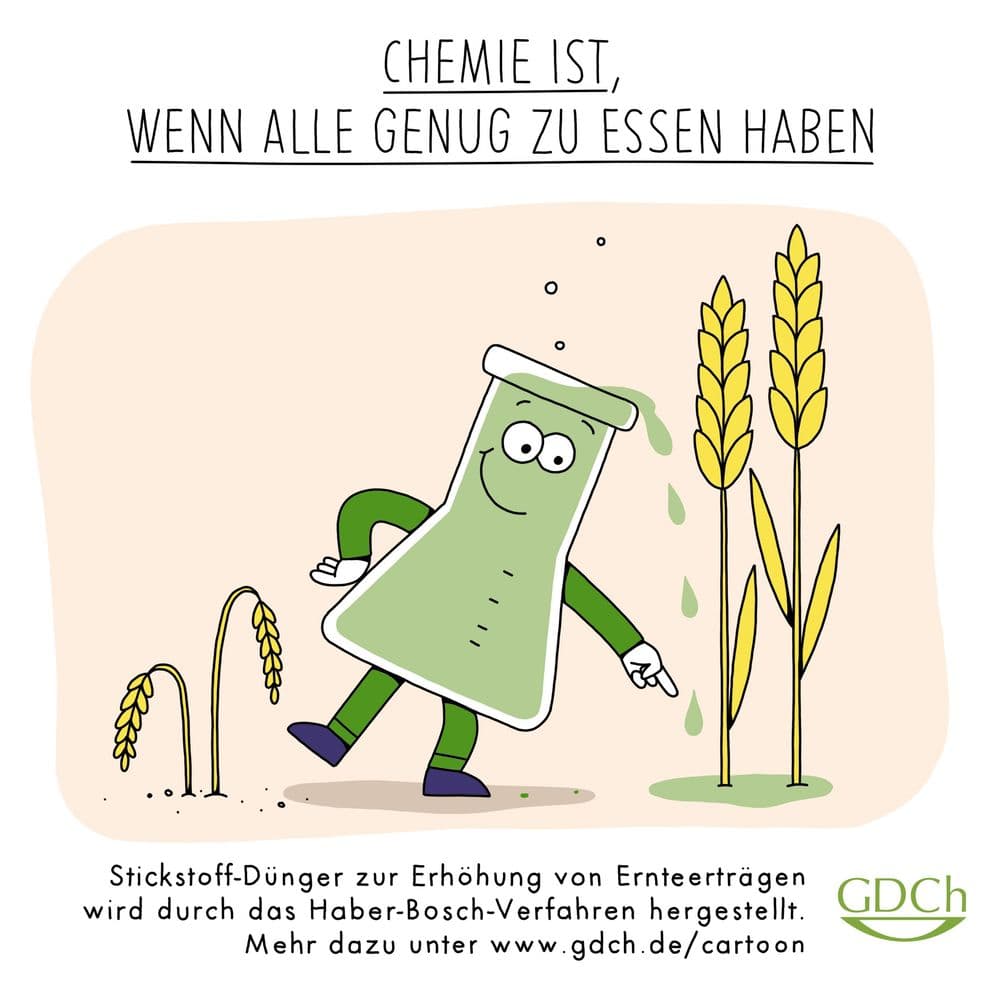
All living organisms need nitrogen compounds to grow and reproduce. Although the air we breathe consists of almost four-fifths gaseous nitrogen, only a few living organisms can use this nitrogen from the air. These include root nodule bacteria. They live in the root systems of legumes (e.g. lupins) and can convert around 50–150 kg of atmospheric nitrogen into nitrogen compounds per hectare. When we eat meat or vegetables, we take in the nitrogen compounds from the animals and plants. But how does nitrogen get into a plant if it is not a legume?
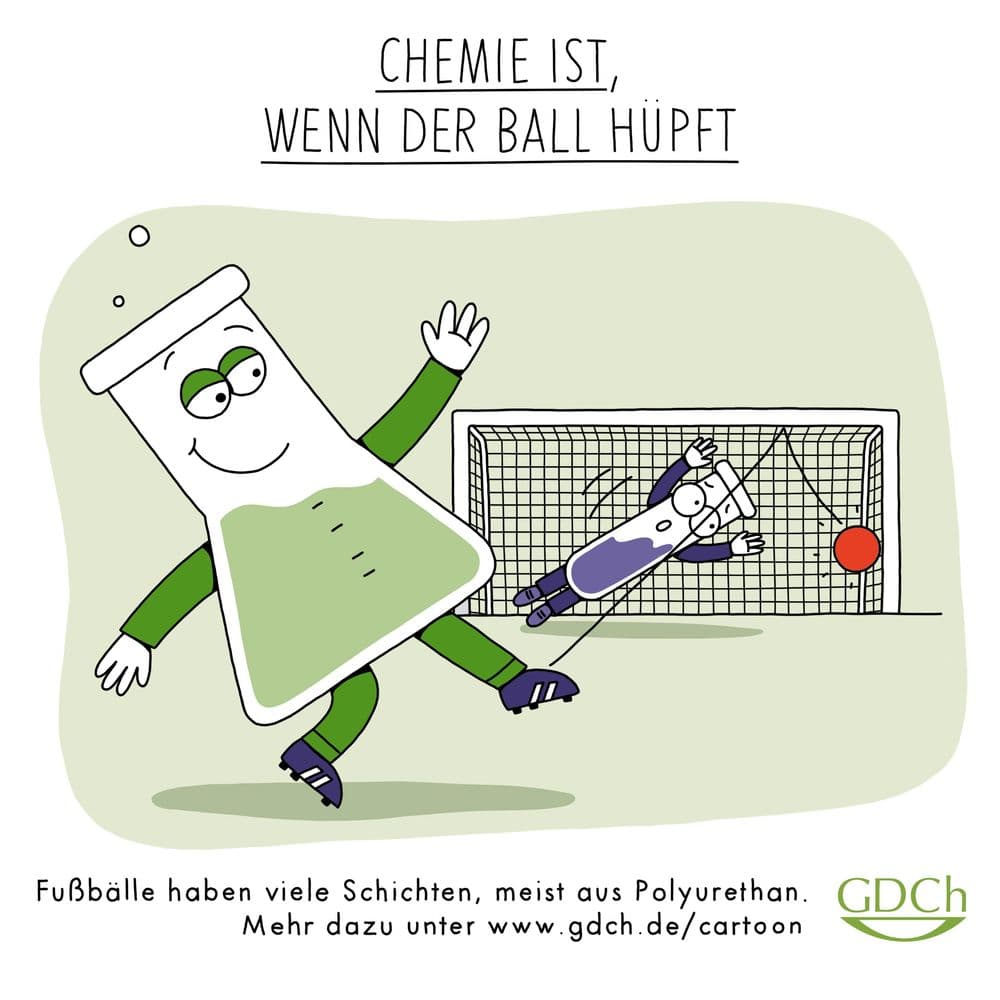
Football is, at least in Germany, one of the most popular sports. Millions of people follow the matches of their favourite team or the national team on television or in stadiums. And many of these fans become self-appointed experts over the course of a match, believing they know better than those who are paid to do so when it comes to the line-up, tactics and, of course, the referee’s decisions.
Let’s take a closer look at the piece of equipment without which football would be impossible: the ball.
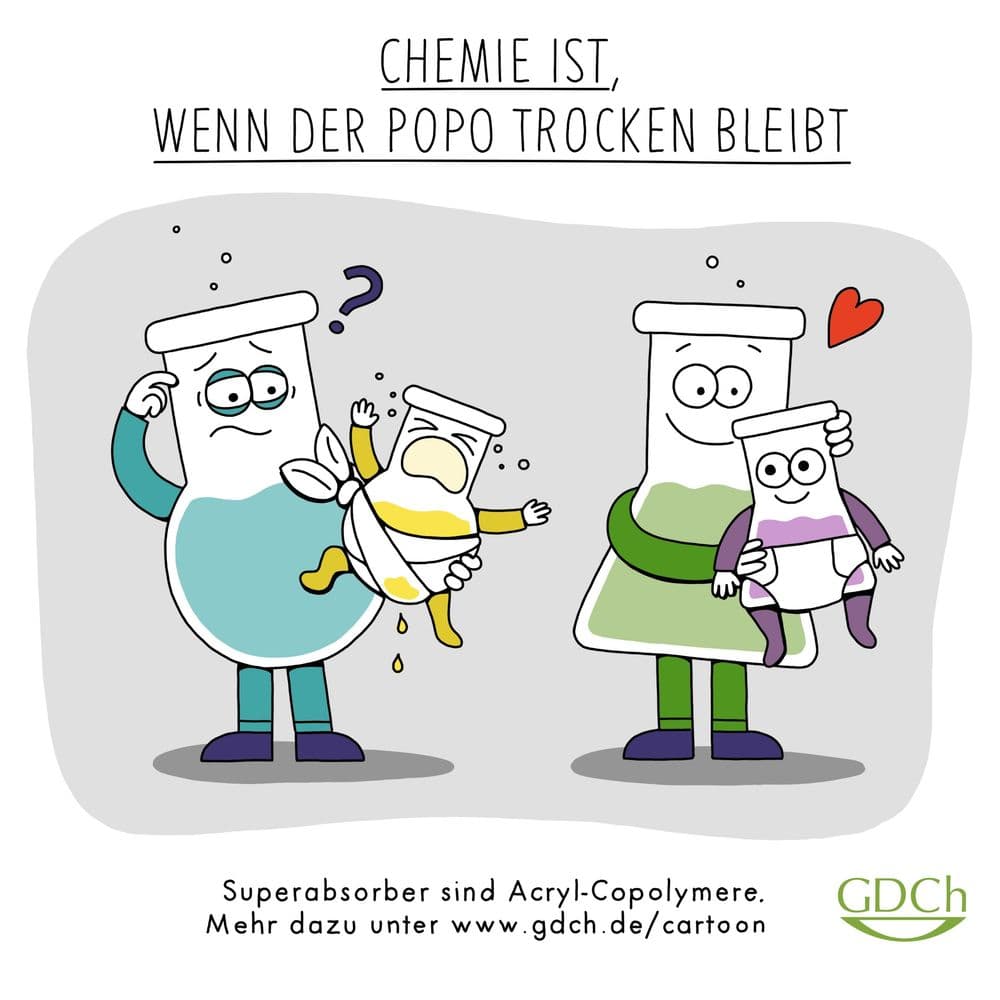
To absorb means “to take in”. Absorbers therefore take something in – in the case of Klein-Erlenmeyerchen’s nappy, mainly water.
Superabsorbents absorb a super amount of water, and the result is: the nappy stays dry. No witchcraft, but fascinating chemistry.
In mid-2018, the GDCh gained a new addition – not a real member, but a human-like laboratory device with distinctive facial expressions, born from the imagination of many contributors. Erlenmeyerchen was developed by the "Chemistry is..." working group within the GDCh. For more about the creation of Erlenmeyerchen, see Nachr. Chem. 2021, 69 (19), 96. All illustrations are by Maike Hettinger.