
2015 Wetzlar
For the 7th SEC Technology Tour, I invited SEC members to Wetzlar on 24 Nov 15. As before, together with the VAA pensioners in Hanau-Wolfgang. The programme included the modern architecture of the new Leica building, the world of Leica cameras and the role of fantasy literature in industrial innovation.

At Leica Camera AG, we experienced the Leica legend with all our senses at the new company headquarters in Leitz-Park. A fascinating experience park was created 40 minutes by car from Frankfurt am Main, offering Leica enthusiasts, those interested in Leica and guests from all over the world exciting insights into the Leica world. Photography is the focus here. Exclusive exhibitions, lectures and signing sessions with internationally renowned photographers form the exclusive events programme at Leitz-Park. Visitors were able to observe production and assembly in the new company building. An exhibition of historic cameras, lenses and sports optics products, a Leica Gallery, a Leica Store, a factory restaurant and a café completed the offering.
The Phantastische Bibliothek Wetzlar manages and maintains the world’s largest publicly accessible collection of fantastic literature, with a book stock of more than 260,000 titles covering the fields of science fiction, fantasy, utopias, horror, fantastic literature, fairy tales, legends, myths, travel and adventure literature. The collection is unique in its completeness of modern speculative literature.
The Head of the Phantastische Bibliothek, Thomas Le Blanc, gave us a lecture on the benefits of fantastic literature for industrial innovation (see Nachr. Chem. 2015, 63, 627). Afterwards, we were allowed to visit the Phantastische Bibliothek in two groups.
Wolfgang Gerhartz, July 2015
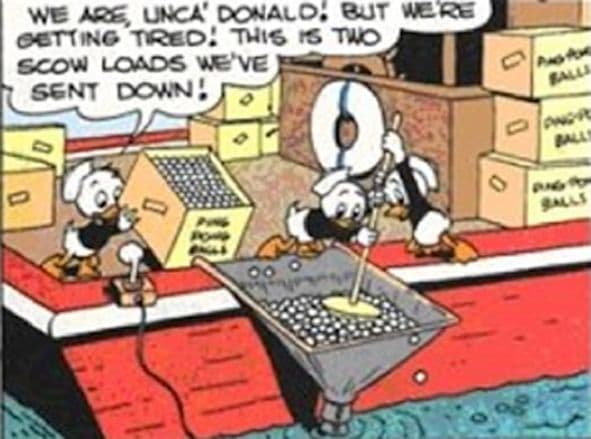
The graphic to the right of “Phantastische Bibliothek” shows a now-famous scene from a Mickey Mouse comic book from 1949: Donald and his nephews raise a sunken yacht by forcing table tennis balls into its hull. The idea was filed for a patent by BASF, among others, in 1964, but the Dutch examiner rejected the patent because its publication in the 1949 Mickey Mouse comic book destroyed its novelty!