2011 Koziol
The 4th SEC Technology Tour took a group of senior chemists (GDCh Senior Expert Chemists and VAA Werksgruppe Industriepark Wolfgang) to Erbach in the Odenwald on 26 August 2011. Despite the long journey and a poor weather forecast, the tour was almost fully booked with 32 participants.
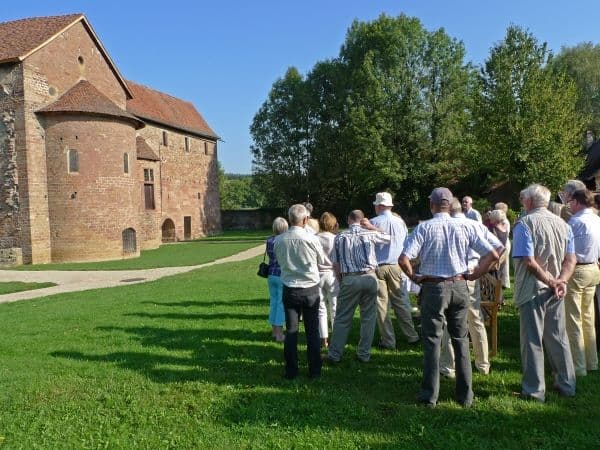
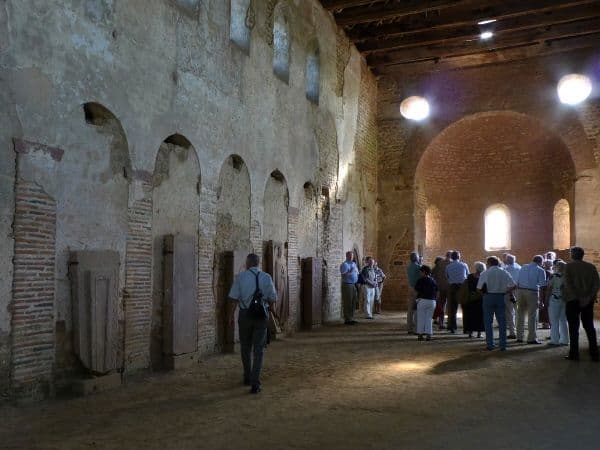
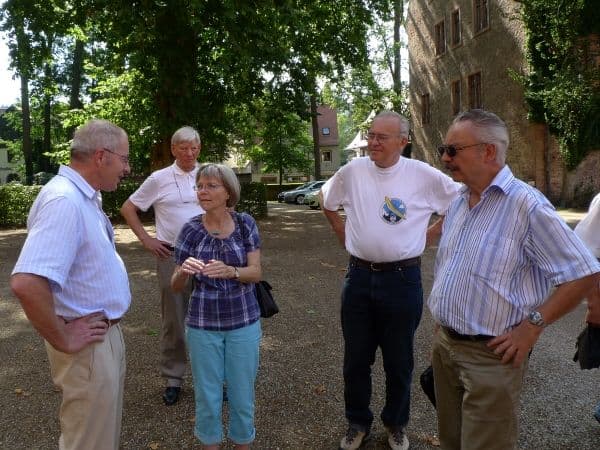
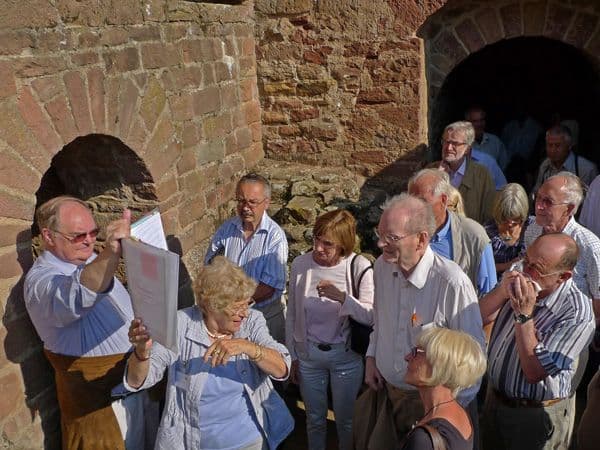
Einhard belonged to the large circle of Europe’s intellectual elite at Charlemagne’s court in Aachen. He was particularly close to Charlemagne and was his biographer. After Charlemagne’s death, he was given a considerable part of the Muhlinheim district, now Seligenstadt, and built a church in Steinbach near Michelstadt “of no little distinction” as his burial place. It is still preserved today and, together with the basilica in Seligenstadt and the King’s Hall in Lorsch, is among the last surviving Carolingian buildings north of the Alps. Together with the tour guide, the seniors were able to admire the fine Carolingian masonry, the original nave and even remnants of Carolingian frescoes. The fact that things turned out differently for Einhard’s burial place is another interesting story.
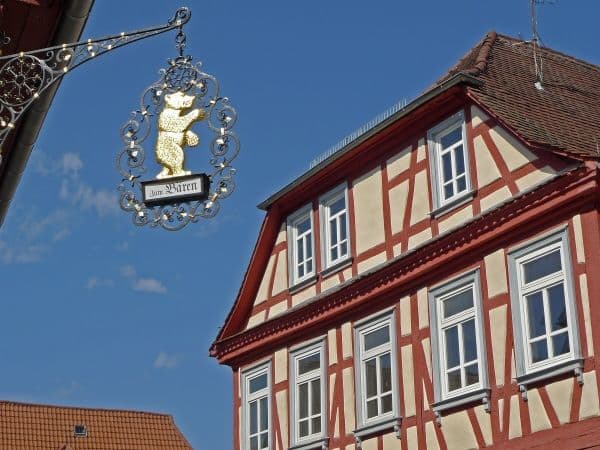
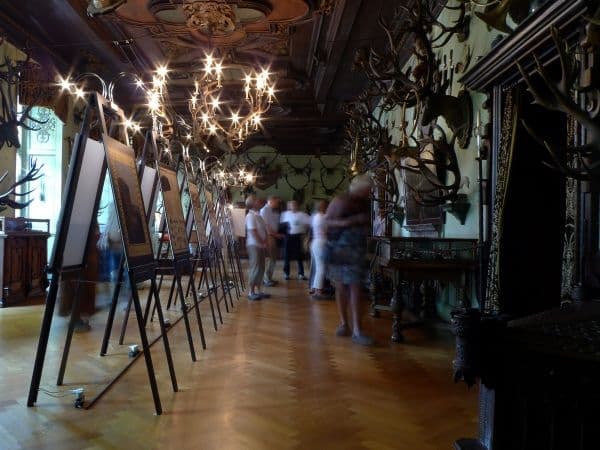
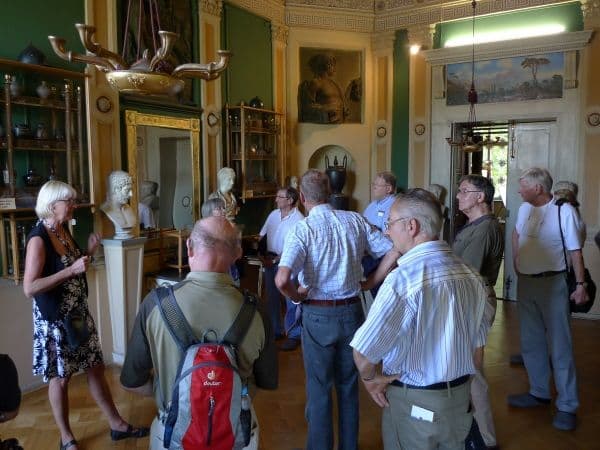
A short while later, the retirees met up with the same guide in the district town of Erbach for a guided tour of the town. In front of the palace, a statue of the most important of the Counts of Erbach, Franz I, dressed in a Roman toga, welcomes his subjects. Franz’s passion for antiquity is responsible for this rather unusual item of clothing in the Odenwald. He excavated Roman remains along the nearby Limes and “collected” numerous Roman antiquities in Italy, now a significant collection in the palace. However, he also introduced compulsory education, reformed agriculture and established ivory carving, thereby creating jobs in the economically weak region. The Baroque palace now belongs to the state of Hesse, but Hereditary Count Eberhard von Erbach-Erbach lives on the second floor – a Baroque penthouse of almost 1,000 m2. While the Count is correctly addressed as “Erlaucht”, an “Ei gurre wie” is more appropriate when addressing an Erbacher, which in the practical language of the Odenwald roughly means “Good day, how are you?”. Opposite the palace, the Erbacher Brauhaus is located directly on the Mümling. In the past, on brewing days, a rider was sent upstream to prevent any wastewater from being discharged beforehand. Nevertheless, the senior chemists enjoyed a cool beer, as the temperature had by then climbed to well over 30°C. After the break, the group split up into “Palace tour” and “German Ivory Museum”.
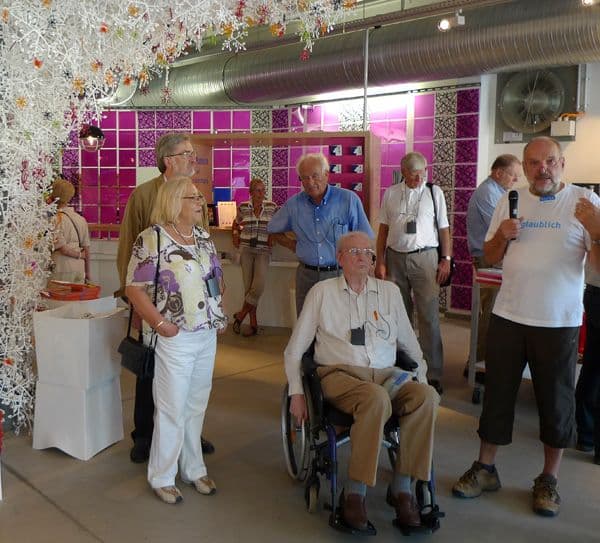
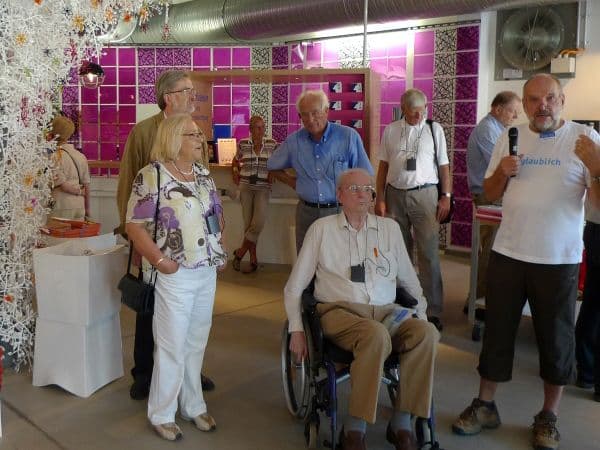
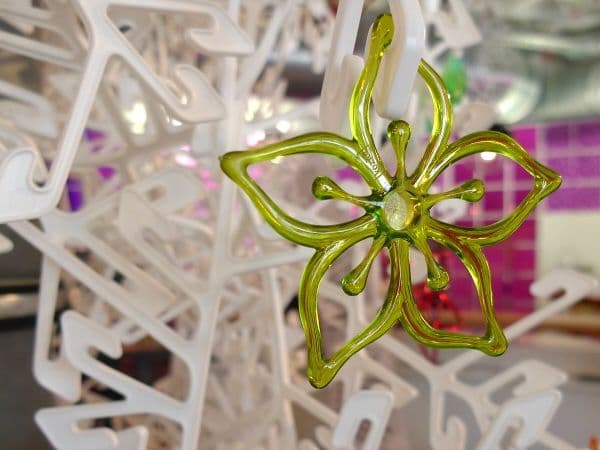
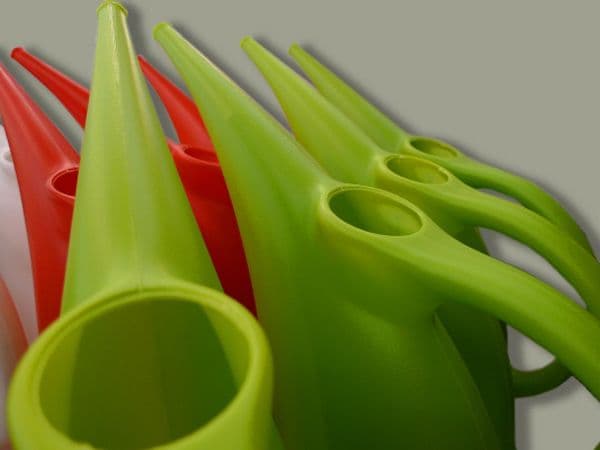
The excursion ended with a visit to the Koziol company, now one of Erbach’s largest employers. What is fascinating about Koziol is less its technology than its origins. This company, too, began by carving ivory. After 1945, however, cheap mass-produced goods were in demand, and Bernhard Koziol began making souvenirs. The big breakthrough then came with the snow globe, which Mr Koziol was allegedly inspired to create after looking through the pretzel-shaped window of his VW Beetle at the snow-covered Odenwald. Through the consistent restructuring of its product range, Koziol now plays alongside the very biggest product designers: “Designed in Odenwald.” Its list of international design awards is impressive.
After a look inside Koziol’s modern injection-moulding hall, visitors were able to get an idea for themselves of the many amusing ideas created by Koziol’s designers at the “Koziol Outlet”. An egg cup in the stylised shape of an iPod made by the company with the apple achieved particular fame. In August 2010, Apple successfully sued over the use of the name. The egg stand is therefore now sold under the name “Pott 2.0”; the accompanying cardboard box features a decapitated egg—not in the slightest resembling a bitten apple.