Wladimir Reschetilowski
Moderation: Eberhard Ehlers
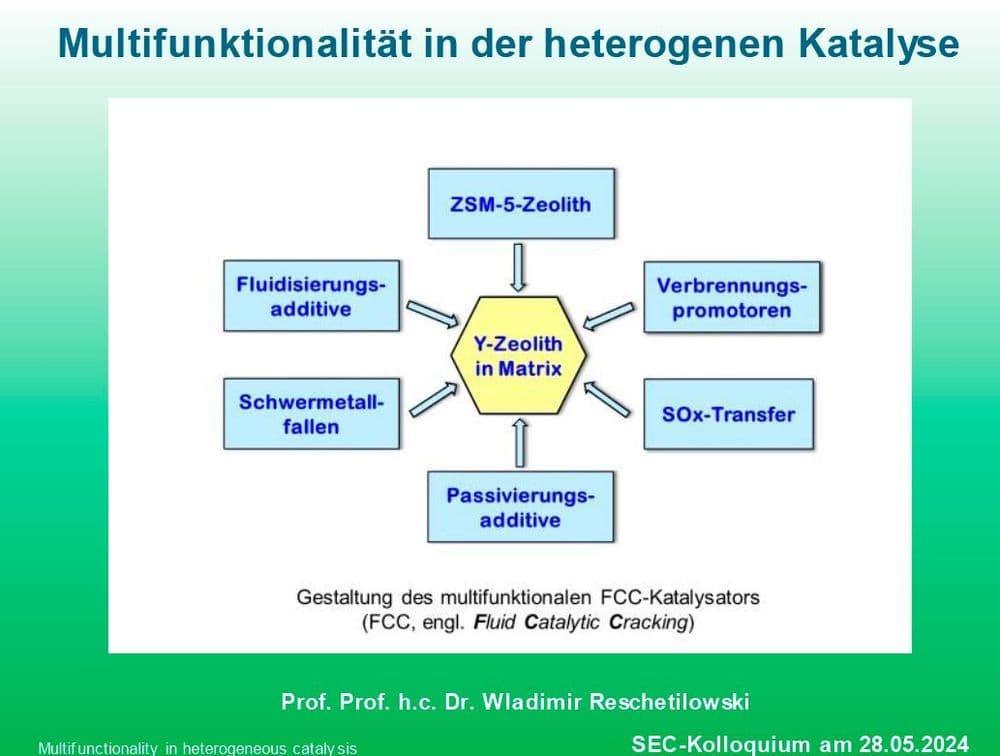
The performance of a catalyst (activity, selectivity, long-term stability) is a key determining element in the success of a catalytic process. However, in order to achieve the optimum performance of a catalyst, it is necessary to understand where and in what way a synergy-generating integration of catalyst functions should take place. The desired process benefits can already be achieved at the most immediate level through the targeted design of catalyst multifunctionality.
Using selected examples, the concept of catalyst multifunctionality as an indispensable prerequisite for the performance of heterogeneous catalysts is examined in greater detail.
Moderator: Klaus-Dieter Franz
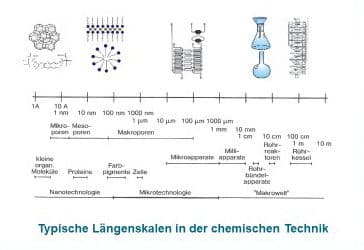
In the development of chemical reaction engineering over recent decades, there has been an ever-increasing trend towards the miniaturisation of reaction apparatus. The stated aim is to develop microstructured reactors that enable optimum reaction control with regard to mass and heat transfer, thereby contributing to efficient process intensification. The use of microstructured reactors in chemical engineering is expected to save raw materials, energy and space while simultaneously improving performance.
The lecture explains, assesses and discusses theoretical and practical findings, as well as experience to date, in the field of microreaction technology, in its application to the production of fine chemicals and nanoparticles and to the technical implementation of heterogeneous catalytic reactions.