
Helmut Ritter
Moderation: Wolfgang Gerhartz
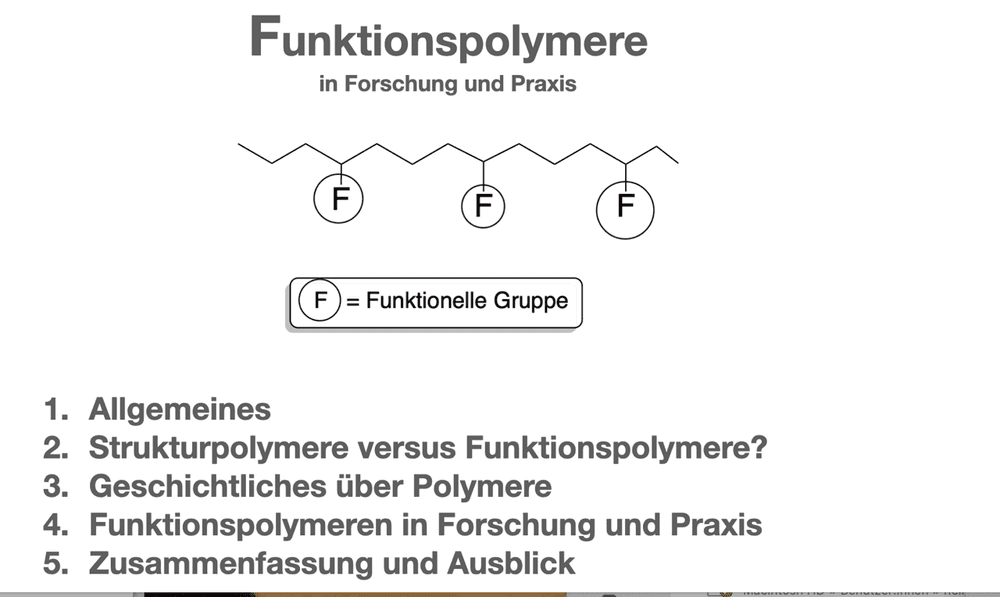
The development and application of some functional polymers are the focus of the lecture. At the outset, the term is critically examined in comparison with structural polymers. A brief look at the historical significance of plastics will be helpful in this regard. The speaker’s own work, including application perspectives, will be presented. This will be followed by
examples from practice, such as swellable polymer networks, which play a special role as superabsorbents. Ion exchangers and supports for peptide synthesis also belong to the group of functional polymers.
The lecture concludes with the current status and an outlook on the future. A critical look at the environmental situation and possible improvements will also be briefly addressed.
Moderation: Klaus-Dieter Jany
Life without “supramolecular interactions” is not possible.
Alongside the supramolecularly structured DNA double helix, host–guest phenomena play an important role in biological processes. During drug development, attempts are also made to adapt the structure of the active substance to the cavity of a bioreceptor in order to achieve optimum efficacy.
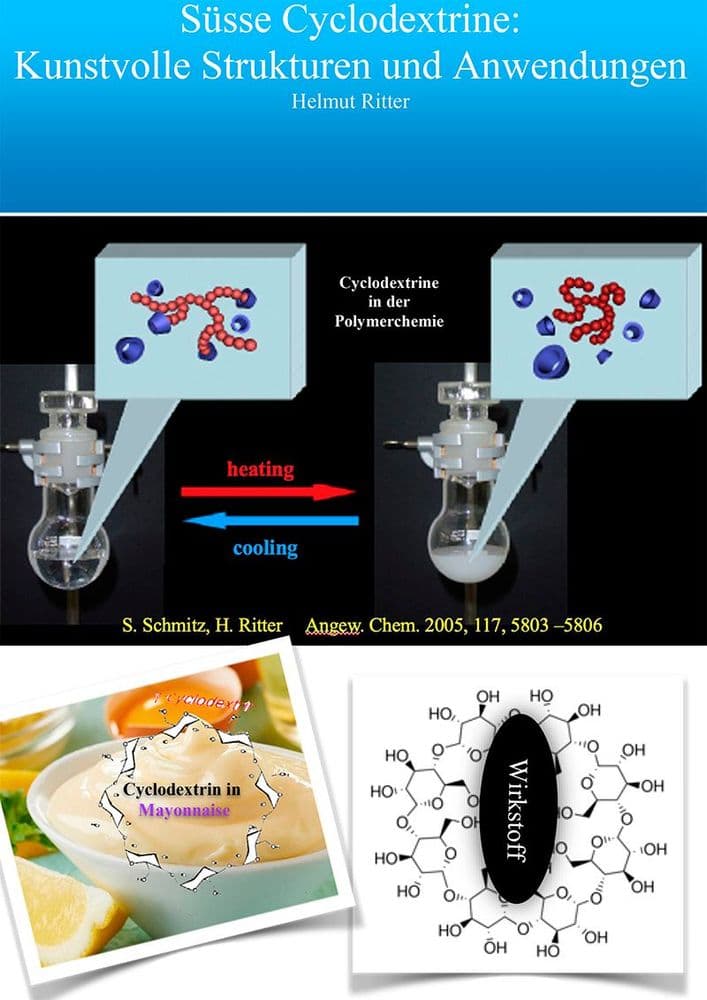
In recent decades, macrocycles such as crown ethers and the non-toxic cyclodextrins (CDs) have been extensively studied as host molecules in chemistry and have also been used in practice. The lecture focuses on cyclodextrins, which are technically available and non-toxic.
The focus is on polymer chemistry, but the breadth of other applications is also highlighted. For example, converting a viscous liquid into a gel can be useful in the construction industry. An active substance for conjunctivitis, for instance, can be made water-soluble using CD, and the aqueous solution can be instilled directly into the eye. The active substance is released in molecularly dispersed form through cleavage of the CD rings by the amylases present in the tear fluid.
The lecture will also present examples of how CD can recognise suitable side groups of water-soluble polymers. Colour changes can also be induced. Finally, the path leads from NANO to MACRO, meaning that, for example, memory effects can be induced in moulded articles on a centimetre scale using CD.