2010 Bitterfeld-Wolfen
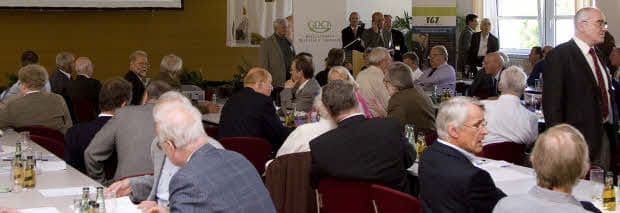
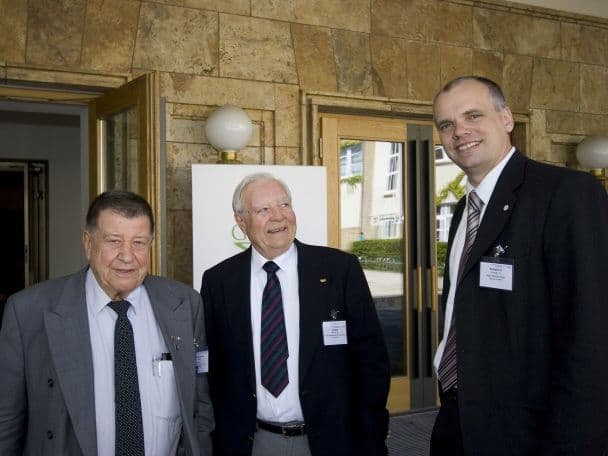
Under the motto “Like a phoenix from the ashes”, senior and young chemists met in Bitterfeld-Wolfen from 3 to 5 June 2010.
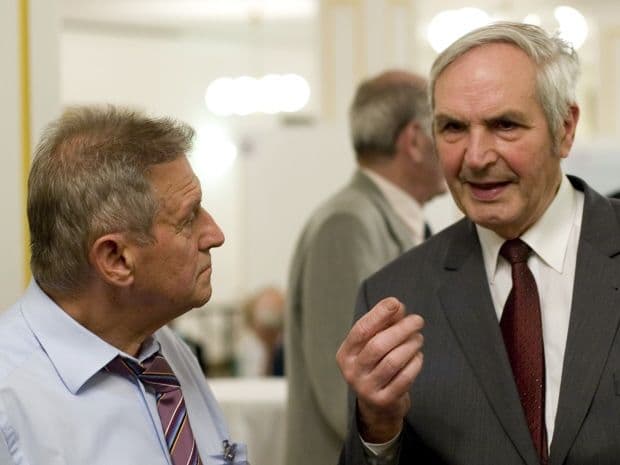
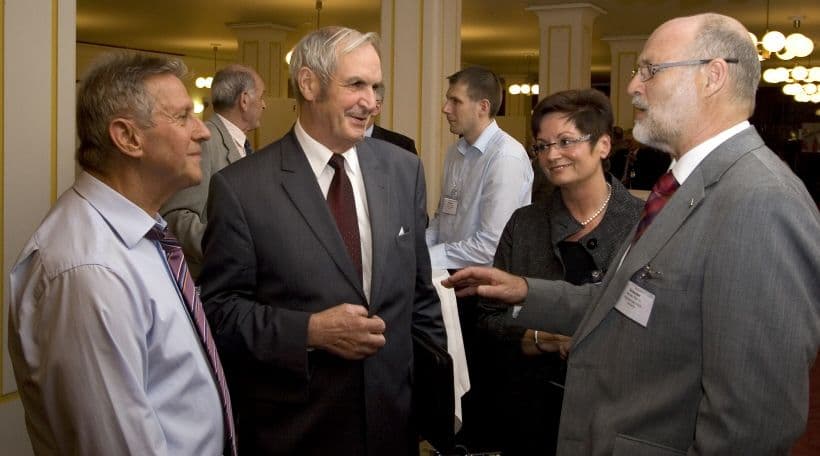
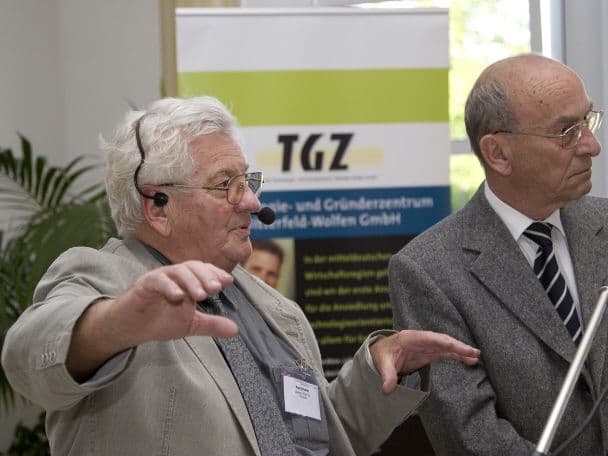
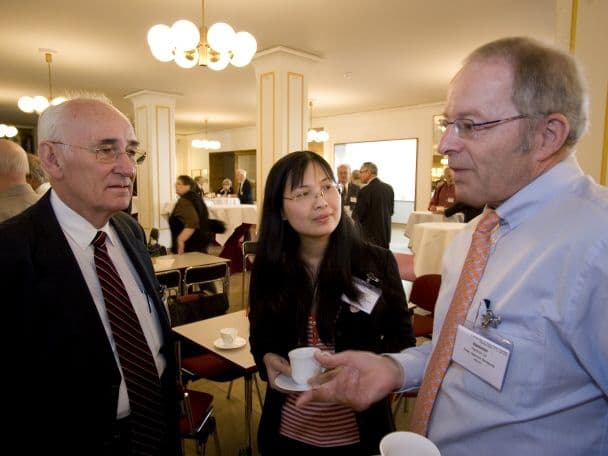
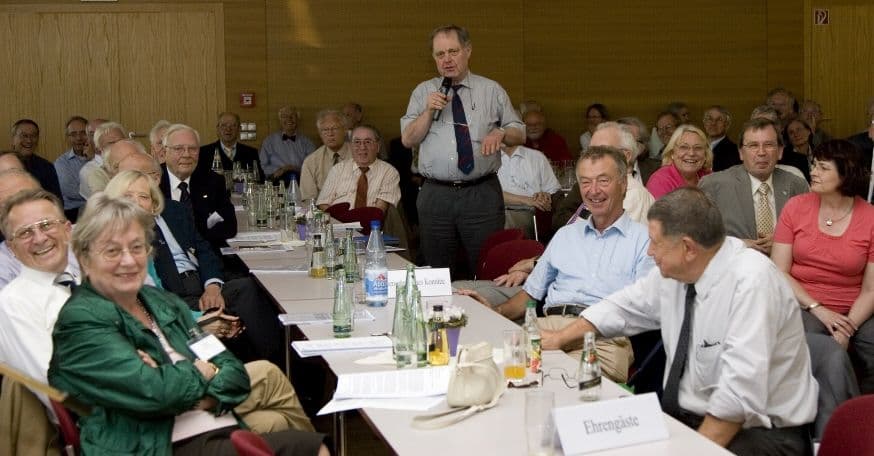
The third SEC Annual Meeting 2010, with around 250 participants, surpassed the success of the previous Conferences in Hanau. The local organisers, Egon Fanghänel, Horst Hennig and Rainer Moll, together with the scientific committee and its attractive programme, made a major contribution. The venue was the Municipal Cultural Centre in Bitterfeld-Wolfen. Great thanks are due to everyone responsible for preparing the meeting, especially those from the local Technology and Founders Centre (TGZ).
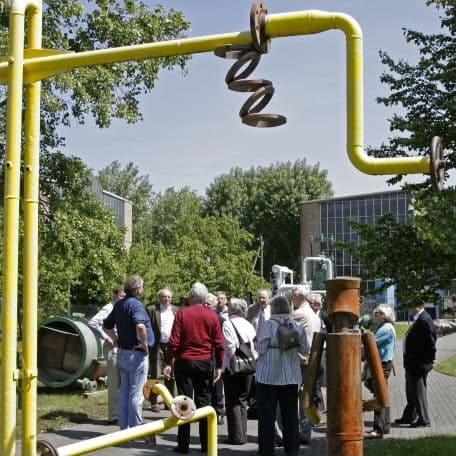
Twenty-five years ago, the Bitterfeld-Wolfen chemical site was synonymous with environmental pollution1). A tour of the now-remediated site, with its state-of-the-art production facilities and industrial monuments, showed visitors the success of gigantic clean-up operations over the past 15 years. The same applies to the Leuna industrial site, which was also visited. The German Chemical Museum in Merseburg was equally impressive: apparatus for chlor-alkali electrolysis, synthetic rubber and high-pressure technology recall landmark advances in chemistry in the 20th century.
The evening event was opened by SEC Chair Horst Altenburg. Greetings were delivered by Petra Wust, the Mayor of Bitterfeld-Wolfen, Kurt Lausch, the Executive Director of the TGZ, the GDCh President, Michael Dröscher, and Arne Bernsdorf, Deputy Federal Spokesperson of the JCF. Heiner Lück then presented an early achievement of the region: the “Sachsenspiegel”, a law book written in German by Eike von Repgow almost 800 years ago, whose influence extended throughout Europe until very recent times.
The first day of the Conference was held under the motto “Transformation of the Bitterfeld-Wolfen chemical site”. As Michael Polk described, around 1890 a centre of chemical research and production emerged thanks to cheap lignite, water from the Mulde and favourable transport links. From 1945 onwards, the Bitterfeld chemical combine produced a wide variety of products, often at the expense of the environment. Following exemplary remediation, 1,200 hectares of the previously heavily polluted region were transformed into the modern Bitterfeld-Wolfen Chemical Park. Christian H. Schleicher’s lecture described the exemplary establishment of Bayer Bitterfeld, with the aim of creating new jobs and preserving the chemical site. Jörg Gloede reported on the development of the growth regulator ethephon. This made it possible to break the alternation of plant flowering, bring about earlier flowering and ripening, and significantly increase grain yields by shortening the stems.
Annette G. Beck-Sickinger and Gunter Fischer presented highly topical subjects in bio-organic chemistry. Peptides are successfully used to treat autoimmune diseases through coupling to lipids or polyethylene glycol. Understanding protein folding can be used, for example, to treat diseases such as hepatitis C, asthma and stroke with suitable inhibitors. As Jörg Bagdahn described, universities and industry are efficiently linked in research and production within the photovoltaic cluster. Solar Valley, supported by the Federal Government and the Länder, is primarily aiming for technological market leadership in order to compete with Far Eastern competitors. Ernst R. Barenschee reported on lithium-ion batteries. Here, long service life, high safety and low costs are crucial, especially in large-scale production. Rudolf Taube then provided an in-depth insight into the capabilities of modern homogeneous organometallic catalysts for regio- and enantioselective synthesis.
The day ended with an exciting lecture on the myth and reality of ancient steels. Werner Kochmann reported on his many years of investigations, according to which the legendary, very hard steels contain unusual carbon modifications.
Saturday began with Hans-Jörg Hofmann’s highly committed lecture on the 130-year history of the “Old Chemical Institute” in Leipzig, marked by many changes. Names such as Beckmann and Ostwald, and discoveries such as the Nernst and Arrhenius equations, reflect the importance of this historic site of chemistry. Adolf Zschunke then demonstrated the importance of measurement accuracy, transparent determination of measurement uncertainties and standardisation for decisions in business, environmental protection, sport and law. The historian Michael Schneider examined the role of the chemical industry during Nazi rule. He addressed the extent to which production and location decisions were autonomous decisions by industry or the result of political constraints. Finally, Carsten Tschierske provided an aesthetic insight into the supramolecular chemistry of liquid-crystalline phases. His group is developing modular systems for this purpose, from which much can be learned about the self-organisation of small molecules.
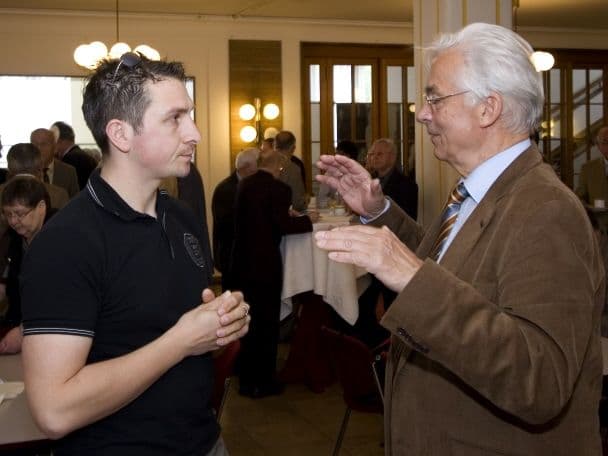
The organisers had scheduled ample time for discussions between the lectures. There was also an opportunity to discuss the posters presented by students from nearby universities – an appealing innovation at an SEC Annual Meeting, which was brought to a close in the early afternoon by former GDCh President Henning Hopf. According to legend, the phoenix has a life cycle of 500 to 1,000 years. Perhaps this is a good omen for the Bitterfeld-Wolfen industrial site and even for future SEC Annual Meetings!
| Many, but not all, lectures are available as PDFs. If interested, send an email to Wolfgang Gerhartz | |
Thursday, 3 Jun 2010 | |
| Prof. Dr. iur. Heiner Lück Martin Luther University Halle-Wittenberg |
Friday, 4 Jun 2010 | |
| Dr. Michael Polk, Executive Director P-D ChemiePark Bitterfeld-Wolfen GmbH |
| Prof. Dr. Jörg Gloede, formerly of the Central Institute for Organic Chemistry of the AdW, Berlin |
| Dr. Christian Schleicher, Executive Director Bayer Bitterfeld GmbH |
| Prof. Dr. Annette Gabriele Beck-Sickinger, University of Leipzig, Institute of Biochemistry |
| Prof. Dr. Gunter Fischer, Director of the Max Planck Institute for Plant Biochemistry, Halle |
| Dr. Ernst R. Barenschee, Litarion GmbH, Kamenz |
| Prof. Dr. Jörg Bagdahn, Fraunhofer Institute for Mechanics of Materials, Halle |
| Prof. Dr. Rudolf Taube, German Academy of Sciences Leopoldina, Halle |
| Prof. Dr. Werner Kochmann, formerly Chemie AG Bitterfeld-Wolfen |
Saturday, 5 Jun 2010 | |
| Prof. Dr. Hans-Jörg Hofmann, University of Leipzig, Institute of Biochemistry |
| Prof. Dr. Dr. h.c. Adolf Zschunke, formerly Federal Institute for Materials Research and Testing, Berlin |
| Dr. Michael C. Schneider, Goethe University Frankfurt am Main, Chair of Economic and Social History |
| Prof. Dr. Carsten Tschierske, Martin Luther University Halle-Wittenberg |
| Dipl.-Ing. Kurt Lausch, TGZ Bitterfeld-Wolfen, Bitterfeld-Wolfen |