2009 Hanau
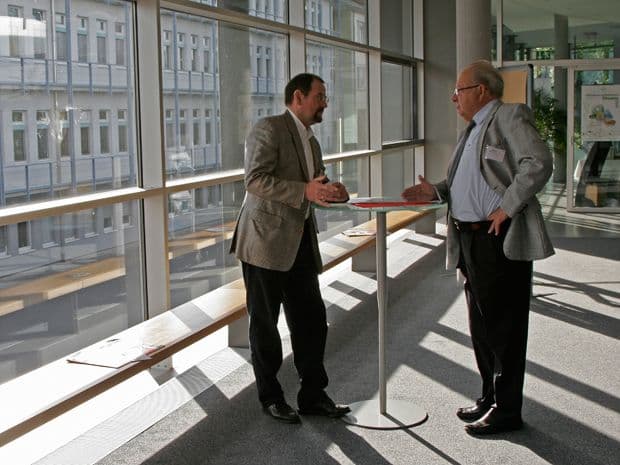
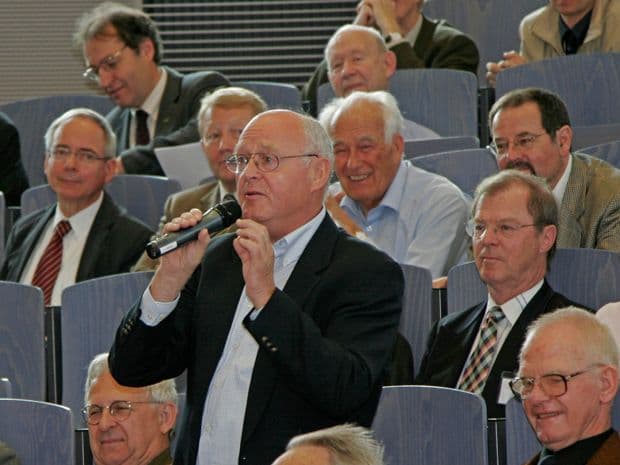
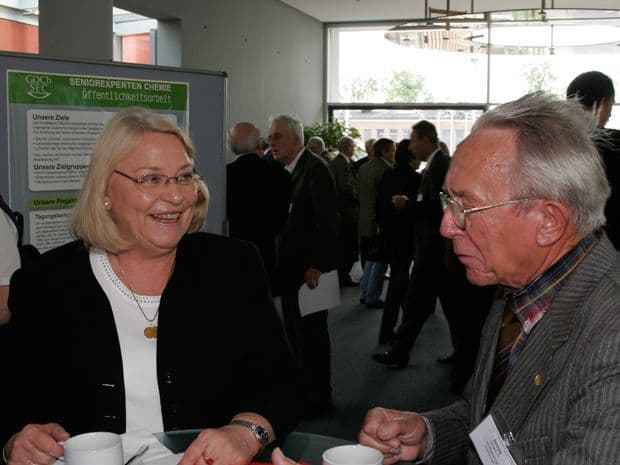
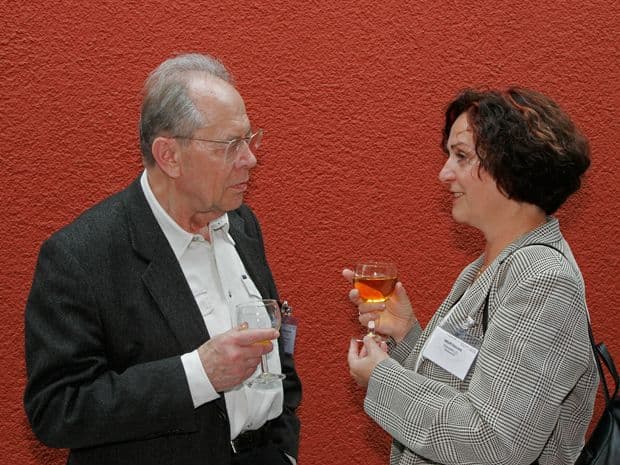
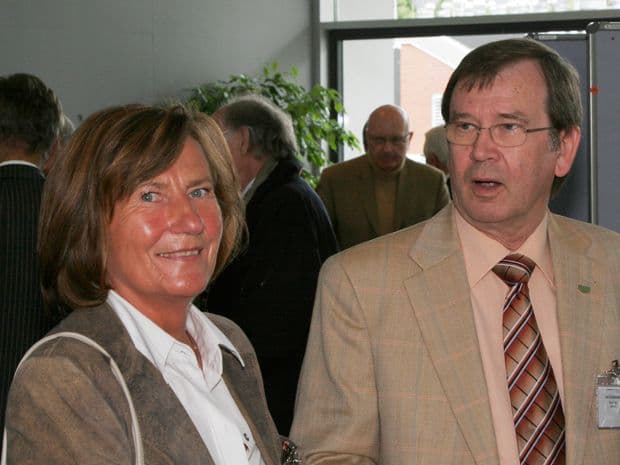
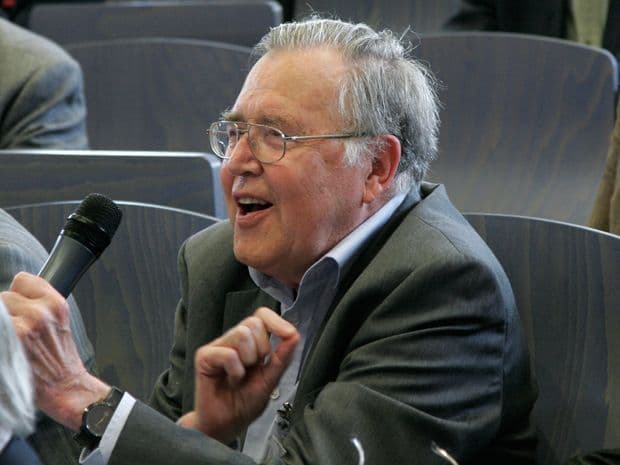
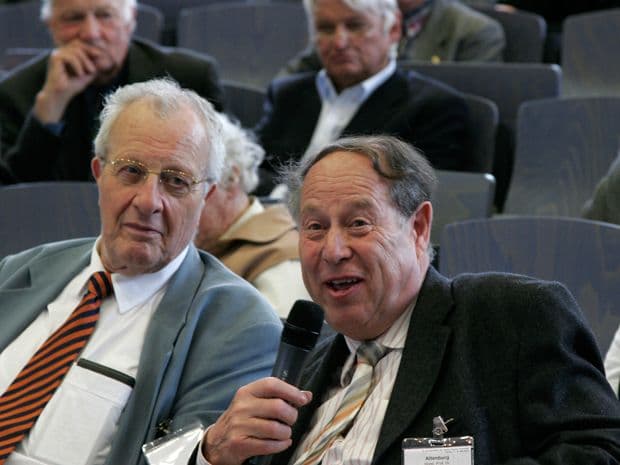
All expectations exceeded: Enthusiasm for chemistry brought together more than 200 senior chemists from all professional fields in Hanau to hear high-calibre lectures and use the meeting for lively discussions.
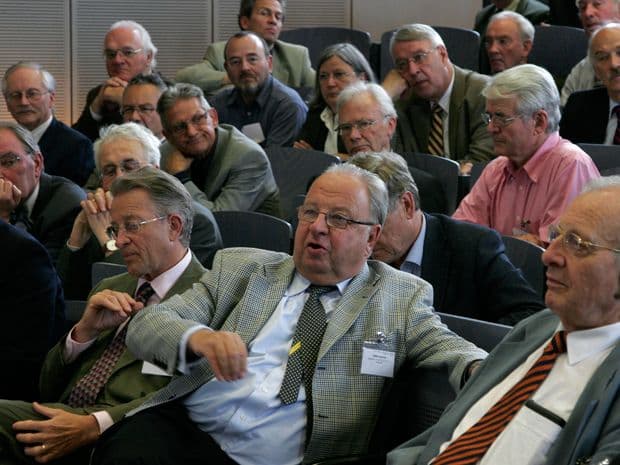
The organising committee, particularly Prof. Henning Hopf, Prof. Axel Kleemann and Prof. Heribert Offermanns, had put together a programme for the 2nd annual meeting of the Senior Expert Chemists of the CDCh in Hanau from 7 to 9 May that attracted more than twice as many participants as in 2007. The facilities - the esscom on the site of the Wolfgang Industrial Park - were filled to capacity.
On the welcoming evening, the participants accepted the gracious invitation of Materials Valley. In the packed Heraeus Casino, Dr. Wulf Brämer introduced them to the world of materials and precious metals, and thus to Hanau's global significance. In his lecture, the fortunes of companies such as Heraeus, Siebert, Vakuumschmelze, Degussa and Leybold came together naturally in a network of world-leading expertise. The subsequent dinner, hosted by Materials Valley e.V., provided an opportunity to discuss and explore what they had heard.
Following the opening by Prof. Horst Altenburg, the first lecture the next day - at the Wolfgang Industrial Park - followed naturally on from the previous evening. Dr. Karl-Gerhard Seifert reported on Hoechst's metamorphosis: fascinating and thought-provoking at the same time, because it was presented from the perspective of a former member of Hoechst's executive board.
The following lectures covered a broad range of topics, from global food supplies and stem-cell therapy to natural-products chemistry.
Prof. Friedrich Berschauer showed that targeted and tailored crop protection, fertilisation and the development of plants with improved resistance and, for example, short growth periods are necessary to feed the growing world population. In an engaging lecture, Prof. Stefanie Dimmeier reported on the efficacy and safety of current stem-cell therapy.
Prof. Heinz Langhals showed how chemists are successfully making the colour of the Terracotta Army of the first Chinese emperor "survivable" in light and air. Prof. Wilhelm Boland then spoke about protective substances with which brightly coloured leaf beetles defend themselves against enemies both in the larval and imago stages.
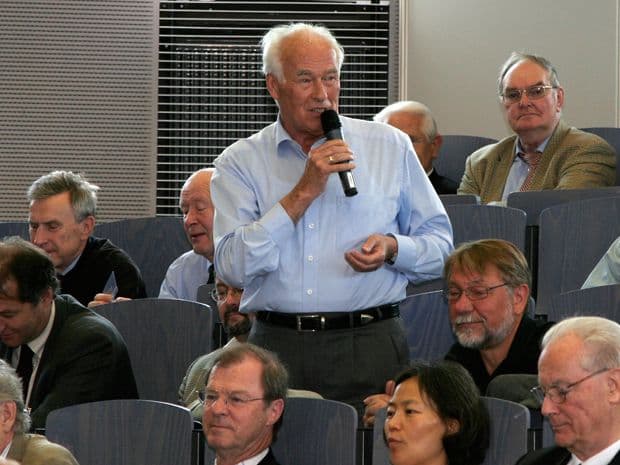
Before an extensive panel discussion on the topic "Chemistry and energy - What comes after oil and gas?", which predictably left many questions unanswered, Dr. Herbert Otteneder, as a wine expert, gave an excellent overview of how modern methods are becoming established alongside "classical" processes in this traditional trade, in order to remedy wine faults or enhance particular wine characteristics. His comments on detecting adulteration, determining the origin of wine and verifying the grape variety were particularly illuminating.
To ensure that it did not remain merely theoretical, Prof. Offermanns and Prof. Kleemann then invited the participants to taste a carefully selected range of wines from nearby Franconia. After the wine tasting, the Wolfgang Industrial Park hosted a "Hessian buffet".
A special treat of a different kind was then Prof. Theo Dingermann's "After Dinner Speech", "Freddie Mercury - Living with AIDS". Accompanied musically by "Bohemian Rhapsody" (Queen), the speaker impressively described the tragedy of the pop star's AIDS illness, the state of therapeutic options at the time and the spectacular advances in diagnosis and treatment.
On Saturday morning, Prof. Wolfgang Steglich gave a lecture on "Remarkable aspects of fungal chemistry", including the mechanism of some striking colour reactions of fungi with common laboratory chemicals. Fungal constituents such as fungicidal strobilurins now protect stored grain in the form of UV-stable analogues. Prof. Wolfgang Fratzscher then commemorated "Wilhelm Ostwald: 100 years of the Nobel Prize". The award certificate cites contributions to catalysis, chemical equilibria and reaction kinetics as achievements of the great, but also idiosyncratic, researcher. Finally, Dr. Joachim Schummer gave "an introduction to the philosophy of chemistry" and addressed the limits and ethical responsibility of chemical research.
A discussion with GDCh President Prof. Klaus Müllen and GDCh Executive Director Prof. Wolfram Koch brought the Conference to a close.
"By all means, carry on!" was the result of a survey of 99 participants. In their overall assessment, 92% rated the 2nd SEC annual meeting as very good to good. Participants particularly praised the excellent quality of the lectures, as well as the variety and successful selection of topics.
"Will there be a continuation?" was the question posed in the report on the 1st annual meeting in 2007. This year, the question is more likely to be "Can we build on the success of the second at the third annual meeting?" The 3rd SEC annual meeting will take place in Bitterfeld-Wolfen in 2010.
Thursday, 7 May | |
| Many, but not all, lectures are available as PDFs. If you are interested, send an email to Wolfgang Gerhartz | |
| Dr. Wulf Brämer, Head of "Innovation Management" at Heraeus Holding GmbH, Executive Director of "Materials Valley e.V.", Hanau |
Friday, 8 May | |
| Dr. Karl-Gerhard Seifert, Chairman of the Supervisory Board of AllessaChemie GmbH, Frankfurt |
| Prof. Dr. Dr. h.c. Friedrich Berschauer, Chairman of the Board of Management, Bayer Crop Science |
| Prof. Dr. Stefanie Dimmeler, Member of the German Ethics Council, Medical Clinic III, J. W. Goethe University Hospital |
| Prof. Dr. Heinz Langhals Department of Chemistry, LMU Munich Organic and macromolecular chemistry |
| Prof. Dr. Wilhelm Boland, Department of Bioorganic Chemistry, MPI for Chemical Ecology, Jena |
| Dr. Herbert Otteneder, former Senior Chemistry Director; visiting lecturer at the University of Kaiserslautern |
| Prof. Dr. Theo Dingermann, Institute of Pharmaceutical Biology, J. W. Goethe University Frankfurt |
Saturday, 9 May | |
| Prof. Dr. Wolfgang Steglich Department of Chemistry, LMU Munich |
| Prof. Dr.-Ing. habil. Wolfgang Fratzscher Martin Luther University Halle-Wittenberg Member of acatech |
| Dr. phil. habil. Joachim Schummer, Berlin Chemist and philosopher, editor of HYLE – International Journal for Philosophy of Chemistry |