
Young Scientist Award
The Division of Detergent Chemistry of the German Chemical Society (GDCh) awards – subject to the availability of worthy nominations – an annual Young Scientist Award each for an outstanding Bachelor’s thesis, a Master’s thesis/qualifying thesis and a doctoral thesis of particular relevance to the development of laundry and cleaning products. The awards are endowed with 1,000 euros, 2,000 euros and 3,000 euros respectively and are presented as part of the Division conference European Detergents Conference, which takes place every October under the umbrella of the SEPAWA CONGRESS in Berlin.
The prize is not currently open for applications (next call for proposals: early 2027).
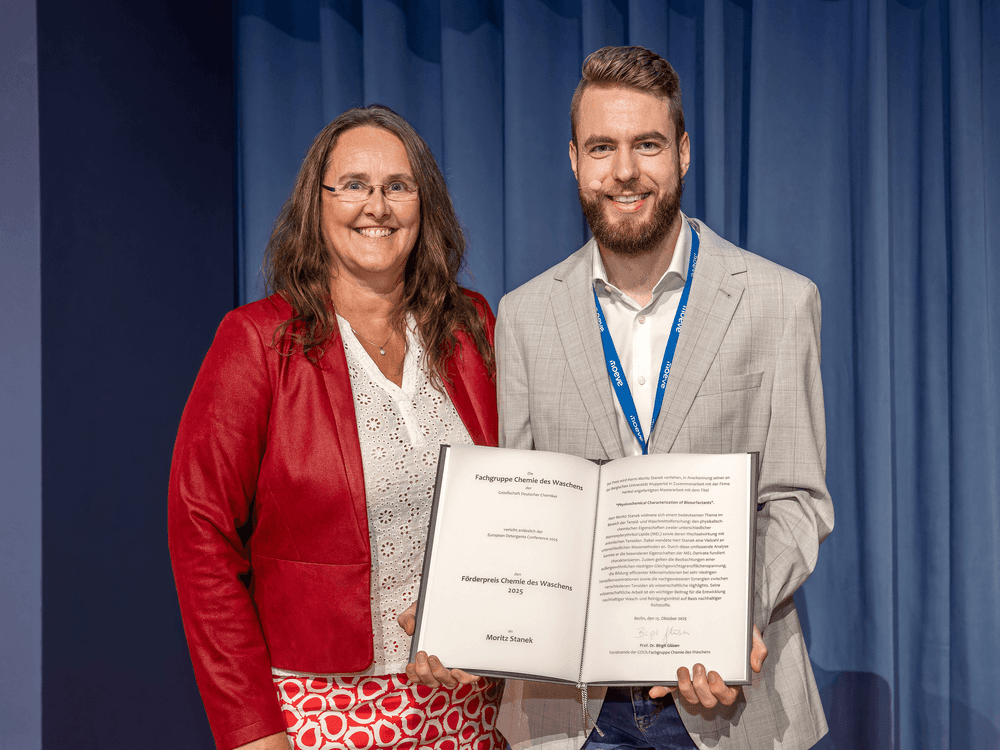
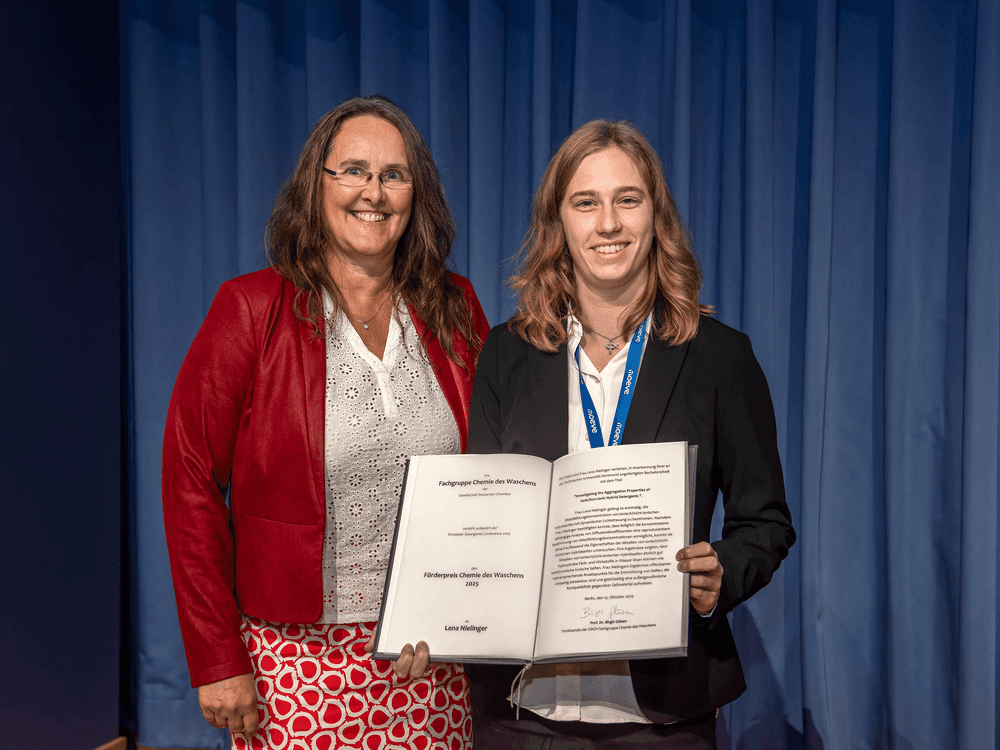
On the occasion of the European Detergents Conference on 15 October 2025 in Berlin the Division of Detergent Chemistry presented the 2025 Young Scientist Awards to Lena Nielinger (TU Dortmund University) and Moritz Stanek (Henkel / University of Wuppertal).
Moritz Stanek received the Young Scientist Award for his outstanding master’s thesis entitled Physicochemical Characterization of Biosurfactants: "Mr Moritz Stanek addressed a significant topic in the field of surfactant and detergent research: the physicochemical properties of two different mannosylerythritol lipids (MEL) and their interaction with anionic surfactants. Mr Stanek applied a wide variety of different measurement methods. This comprehensive analysis enabled him to characterise the specific properties of the MEL derivatives on a sound basis. In addition, the observation of an exceptionally low equilibrium interfacial tension, the formation of efficient microemulsions at very low surfactant concentrations and the demonstrated synergies between different surfactants are considered scientific highlights. His scientific work makes an important contribution to the development of sustainable laundry and cleaning products based on sustainable raw materials."
Lena Nielinger received the Young Scientist Award for her outstanding bachelor’s thesis entitled Investigating the Aggregation Properties of Ionic/Non-Ionic Hybrid Detergents: "Ms Lena Nielinger was the first to determine the critical micelle concentration of ionic/non-ionic hybrid soaps using dynamic light scattering. After Ms Nielinger confirmed that only the concentration-dependent analysis of diffusion coefficients enables the reproducible determination of critical micelle concentrations, she was able to use this as a basis for investigating the properties of the micelles of ionic/non-ionic hybrid soaps. Her results showed that micelles of ionic/non-ionic hybrid soaps can dissolve hydrophobic dyes and active ingredients in water just as effectively as conventional ionic soaps. Ms Nielinger’s results revealed promising approaches for developing soaps that are versatile and, at the same time, exhibit exceptional compatibility with cellular material."
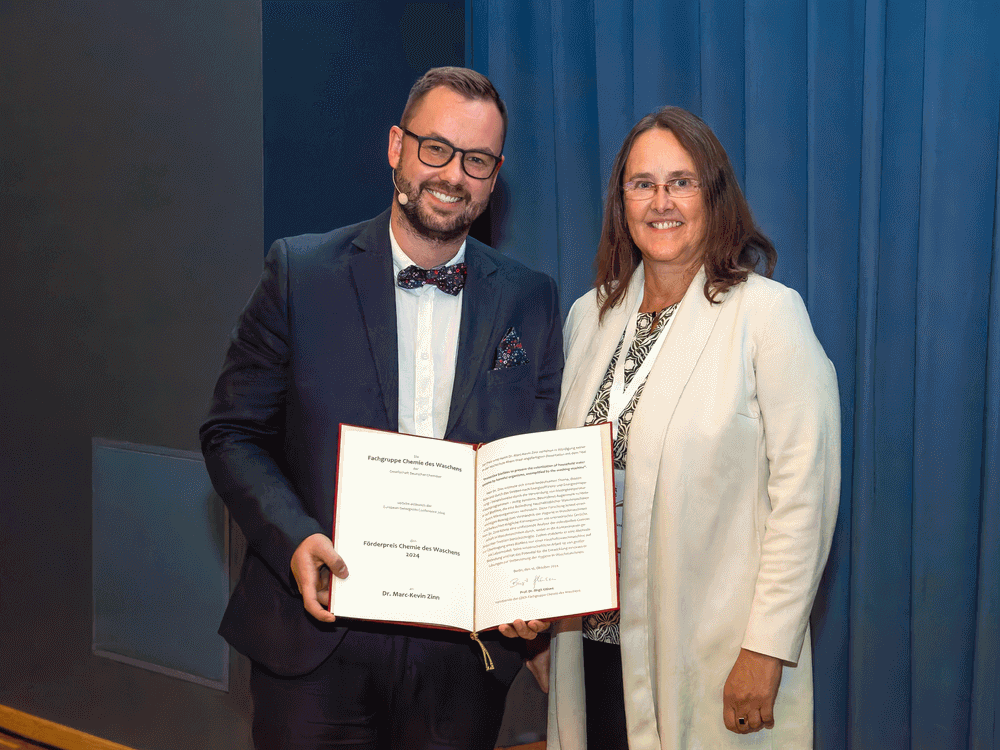
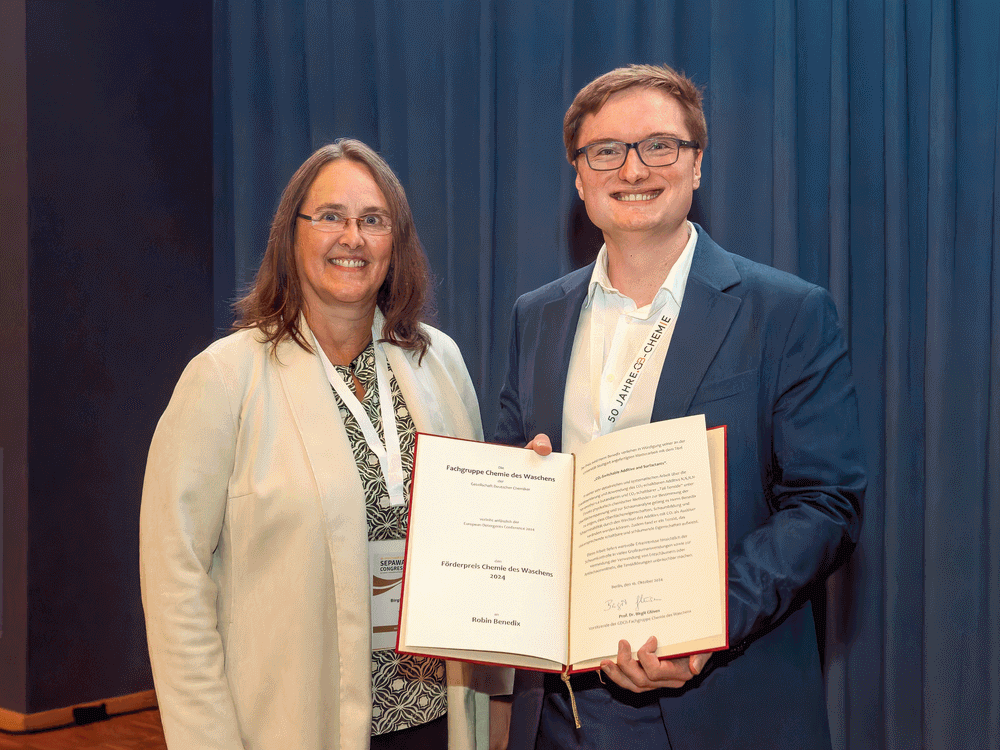
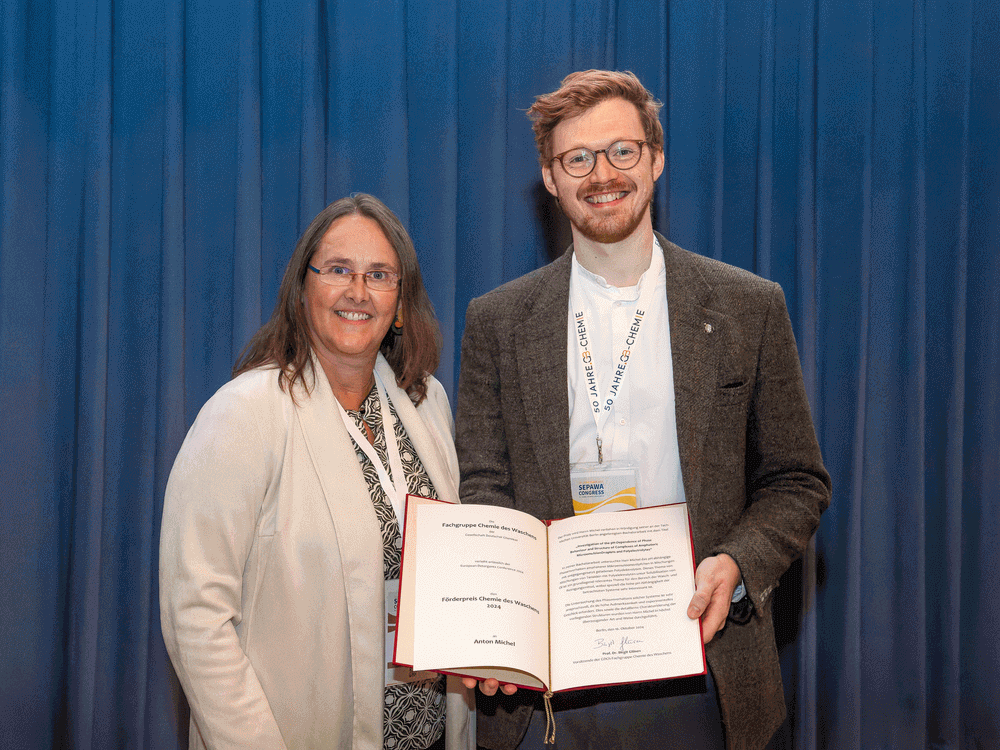
On the occasion of the European Detergents Conference on 16 October 2024 in Berlin the Division of Detergent Chemistry presented the 2024 Young Scientist Awards to Robin Benedix (University of Stuttgart), Anton Michel (University of Berlin) and Dr. Marc-Kevin Zinn (Rhine-Waal University of Applied Sciences).
Dr. Marc-Kevin Zinn received the Young Scientist Award for his outstanding doctoral thesis entitled Protective biofilms to prevent the colonization of household water systems by harmful organisms, exemplified by the washing machine: "Dr Zinn addressed a significant topic whose relevance is steadily increasing as a result of the pursuit of energy efficiency and energy conservation – for example through the use of low-temperature washing programmes. He paid particular attention to biofilms that prevent the colonisation of household washing machines by microorganisms. This research makes an important contribution to understanding hygiene in washing machines and highlights possible consequences such as unwanted odours. Dr Zinn conducted a comprehensive analysis of the microbial community in washing machines, taking into account the contamination of used textiles. He also established a method for transferring a biofilm from a household washing machine to a laboratory model. His scientific work is of great significance and has the potential to contribute to the development of innovative solutions for improving hygiene in washing machines."
Robin Benedix received the Young Scientist Award for his outstanding master's thesis entitled: CO2-Switchable Additive and Surfactants: "In his highly detailed and systematic work on the characterisation and application of the CO2-switchable additive N,N,N,N-tetramethyl-1,4-butanediamine and CO2-switchable ‘tail surfactants’, using physicochemical methods to determine surface tension and analyse foam, Mr Benedix succeeded in showing that surface properties, foam formation and foam stability can be changed by switching the additive using CO2 as the trigger. He also identified a surfactant with promising switchable and foaming properties. This work provides valuable insights into foam control in many large-scale applications and into avoiding the use of defoamers or antifoaming agents, which render surfactant solutions unusable."
Anton Michel received the Young Scientist Award for his outstanding bachelor's thesis entitled Investigation of the pH-Dependence of Phase Behaviour and Structure of Complexes of Amphoteric Microemulsion Droplets and Polyelectrolytes: "In his bachelor's thesis, Mr Michel investigated the pH-dependent phase behaviour of amphoteric microemulsion droplets in mixtures with oppositely charged polyelectrolytes. This topic of mixtures of surfactants with polyelectrolytes involving oil solubilisation is fundamentally relevant to the field of detergents and cleaning products, with the particularly strong pH dependence of the systems under consideration being especially interesting. Investigating the phase behaviour of such systems is highly demanding, as it requires great attention to detail and experimental skill. Mr Michel carried this out, together with the detailed characterisation of the structures present, in a highly convincing manner."


At the European Detergents Conference on 25 October 2023 in Berlin, the Division of Detergent Chemistry presented Young Scientist Awards in the field of fundamental research into detergents and cleaning products to Cara Kohler (Niederrhein University of Applied Sciences, Krefeld), Jörn Philipp Optatzi (TH Köln - University of Applied Sciences) and Dr. Susanne Jacksch (Furtwangen University and Justus-Liebig-Universität Gießen).
Dr. Susanne Jacksch received the Young Scientist Award for her outstanding dissertation entitled: “Investigations on the structure and function of the microbiota in household washing machines, kitchen sponges, and on laundered textiles”. "With her excellent work on the hygiene of washing machines, laundry and kitchen sponges in the domestic environment, Ms Jacksch made an important contribution to the development of sustainable, innovative detergents and hygiene products. Microbiome and metagenome analyses as well as state-of-the-art metatranscriptomics were established and applied. In addition, the foundations for applying RNA-based stable isotope probing to laundered textiles were developed. Particularly noteworthy are the quantitative data on the microbiological contamination of washing machines and the contribution to application-oriented fundamental knowledge."
Jörn Philipp Optatzi received the Young Scientist Award for his outstanding Master's thesis entitled: “Controlling the interfacial properties of surfactant mixtures using the Hydrophilic-Lipophilic Deviation concept”. "In his extensive work, Mr Optatzi succeeded in specifically adjusting the interfacial properties of different surfactant mixtures at variable salinity using the Hydrophilic-Lipophilic Deviation concept and demonstrating that this concept can be used as a guide for formulating surfactant/oil/water systems with optimum oil removal capacity. Mr Optatzi combined physicochemical methods such as the spinning-drop and bubble-pressure methods with dynamic phase inversion and salinity inversion, modelled the interfacial tension using the Net-Average Curvature model and demonstrated the applicability of the results of the Hydrophilic-Lipophilic Deviation concept using high-throughput washing experiments."
Carla Kohler received the Young Scientist Award for her outstanding Bachelor's thesis entitled: “Characterization of sophorolipids and study of synergism with cationic surfactants”. "In her highly detailed work on the properties of novel glycolipid surfactants, Ms Kohler succeeded in elucidating the phase and aggregation behaviour of sophorolipids and cationic surfactants in binary and multicomponent systems and developing synergistic mixtures that are also highly relevant for practical applications. These results were achieved using a wide range of analytical methods, including NMR spectroscopy, dynamic light scattering and fluorescence correlation spectroscopy, in addition to conventional surface and interfacial tension measurements."
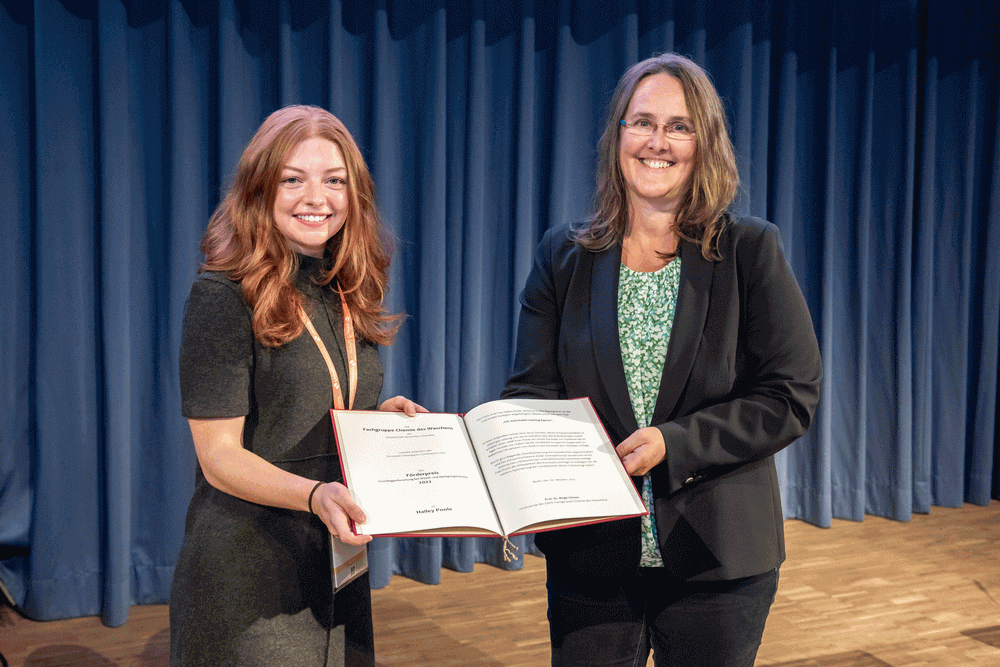
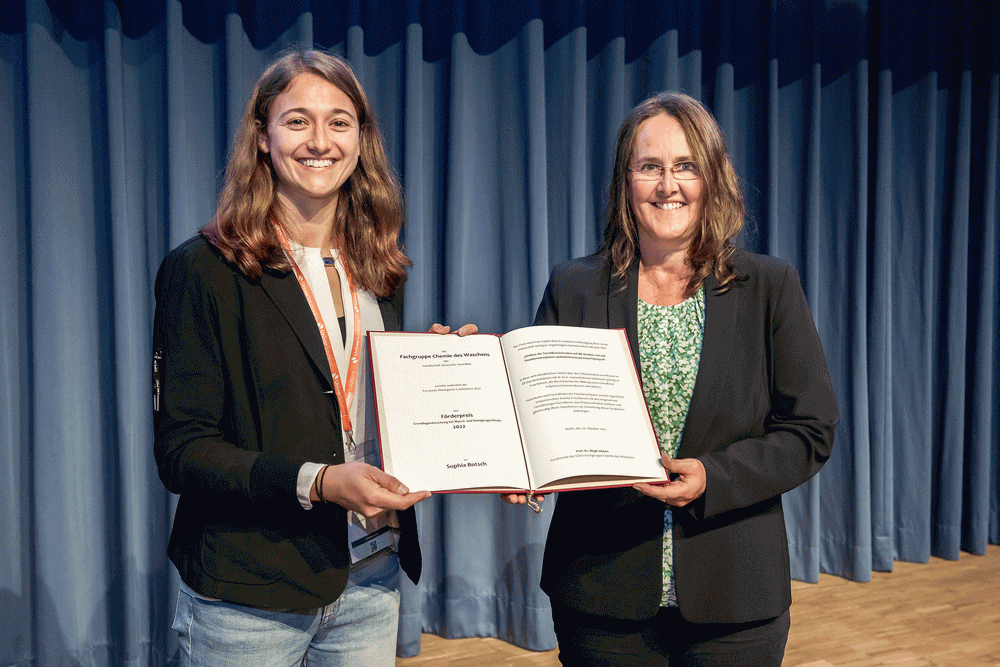
On the occasion of the European Detergents Conference held in Berlin on 26 October 2022, the Division of Detergent Chemistry presented Young Scientist Awards in the field of fundamental research into detergents and cleaning products to Dr Christoph Brudl (Graz University of Technology), Hailey Poole (University of Stuttgart) and Sophia Botsch (University of Stuttgart).
Dr Christoph Brudl received the Young Scientist Award for his outstanding doctoral thesis entitled: “Going green and clean – Is it possible? (Development of a biodegradable high performance dishwashing detergent)”. "In his highly detailed work on the development of biodegradable automatic dishwasher detergents, Dr Brudl succeeded in finding a system of biodegradable chelating agents, surfactants and enzymes whose performance is comparable to that of conventional automatic dishwasher detergents. Using the physicochemical methods SEM, Raman and IR spectroscopy, as well as AFM and XPS, Dr Brudl was able to detect residual soiling on artificial surfaces. This enables the correct quantities and combinations of surfactants for automatic dishwasher detergent formulations to be determined more easily."
Hailey Poole received the Young Scientist Award for her outstanding master’s thesis entitled: “CO2-Switchable Foaming Agents”. "In her original work on novel surfactants whose foaming behaviour in aqueous solution can be switched by varying the gas flowing through the solution, Ms Poole presents a new concept for synthesising such surfactants by moving the switchable group from the head to the tail of the surfactant, in contrast to known structures. Through fundamental characterisation of the surfactant properties and foaming behaviour of three exemplary structures representing anionic, non-ionic and cationic compounds, Ms Poole demonstrates the effectiveness of the concept and lays the foundations for further optimisation of the switchability of these substance groups."
Sophia Botsch received the Young Scientist Award for her outstanding bachelor’s thesis entitled: “Influence of the surfactant concentration on the structure of porous polystyrene synthesised from emulsion templates”. "In her highly detailed work on the polymerisation of water-in-oil styrene emulsions with oil- or water-soluble initiators, Ms Botsch succeeded in elucidating the mechanisms behind the formation of different polymer foam structures. Ms Botsch was able to correlate the pore shape and pore wall thickness of the polymer foams, as well as the foam structure itself, with the quantities of surfactants used, explain the phase behaviour and simultaneously disprove older hypotheses concerning the formation of these structures."
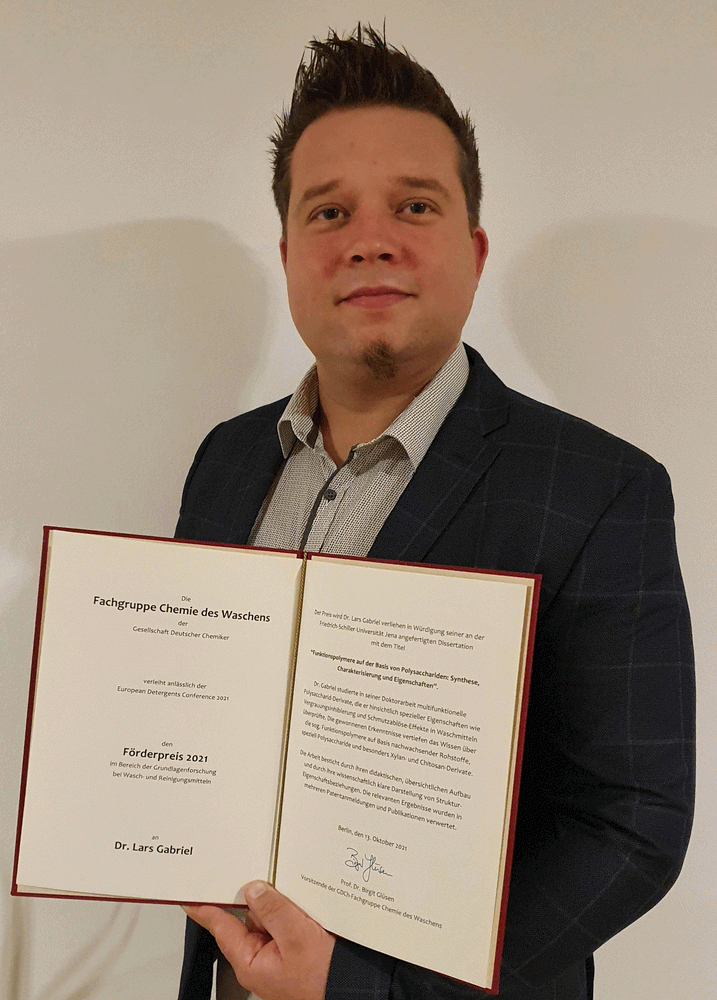
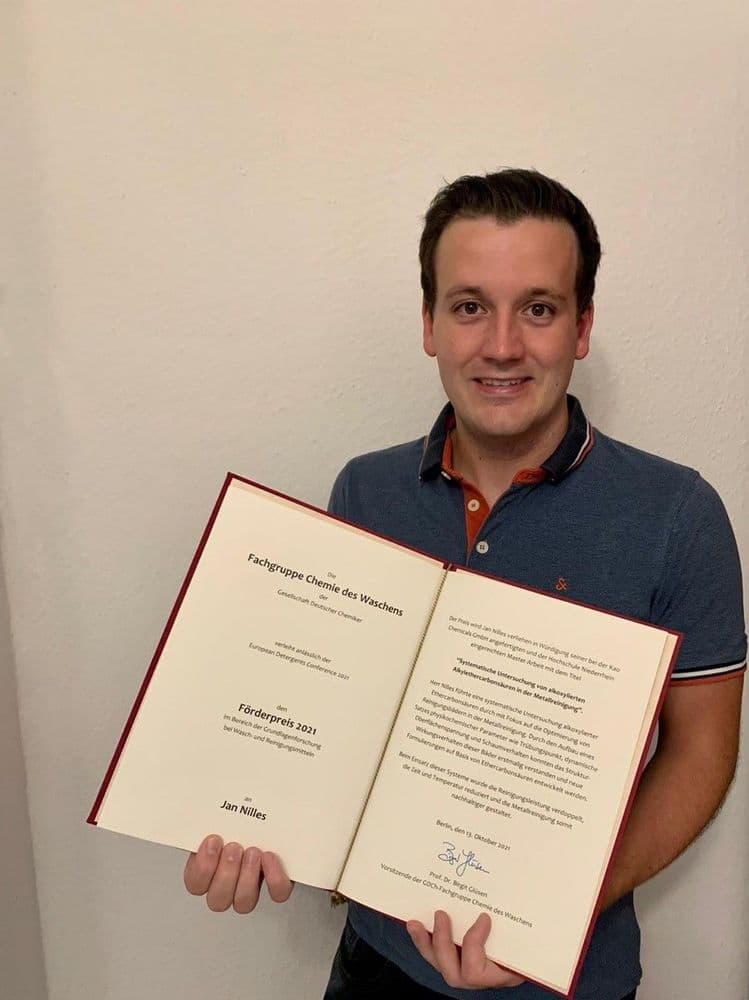
On the occasion of the European Detergents Conference on 13 October 2021 in Berlin, the Division of Detergent Chemistry presented Young Scientist Awards in the field of fundamental research into laundry and cleaning products to Dr. Lars Gabriel (Friedrich Schiller University Jena) and Jan Nilles (Kao Chemicals GmbH, Emmerich, and Hochschule Niederrhein, Krefeld).
Dr. Lars Gabriel received the Young Scientist Award for his outstanding doctoral thesis entitled: “Functional polymers based on polysaccharides: synthesis, characterisation and properties”. In his doctoral thesis, Dr. Gabriel studied multifunctional polysaccharide derivatives, which he thoroughly investigated with regard to specific properties such as greying inhibition and soil-release effects in laundry detergents. The findings obtained deepen our knowledge of so-called functional polymers based on renewable raw materials, particularly polysaccharides and especially xylan and chitosan derivatives. The thesis stands out for its didactic, well-structured organisation and its scientifically clear presentation of structure–property relationships. The relevant results were utilised in several patent applications and publications.
Jan Nilles received the Young Scientist Award for his outstanding master’s thesis entitled: "Systematic investigation of alkoxylated alkyl ether carboxylic acids in metal cleaning". Mr Nilles conducted a systematic investigation of alkoxylated ether carboxylic acids, focusing on the optimisation of cleaning baths in metal cleaning. By establishing a set of physicochemical parameters such as cloud point, dynamic surface tension and foaming behaviour, the structure–performance behaviour of these baths was understood for the first time, and new formulations based on ether carboxylic acids were developed. When these systems were used, cleaning performance was doubled, while time and temperature were reduced, thereby making metal cleaning more sustainable.
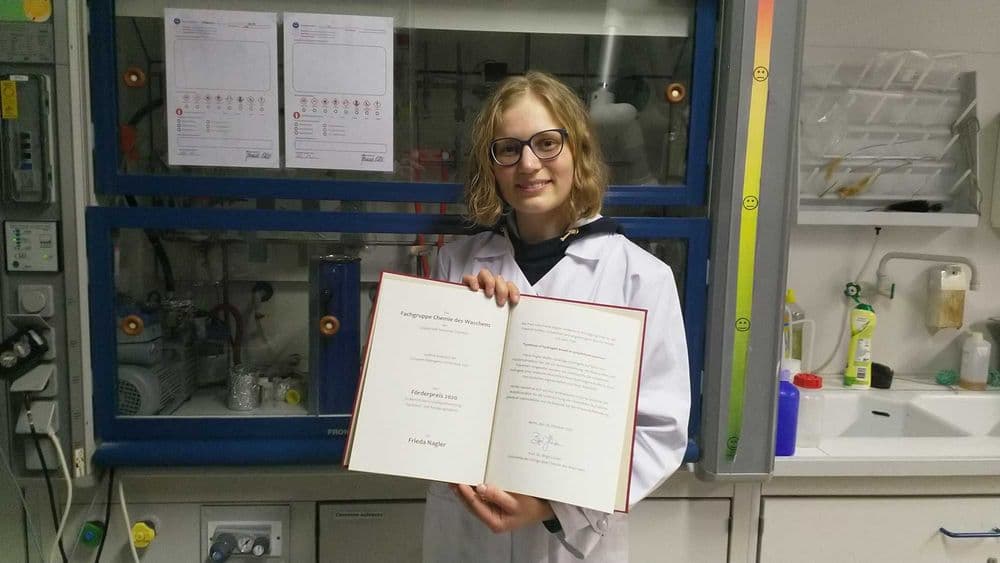
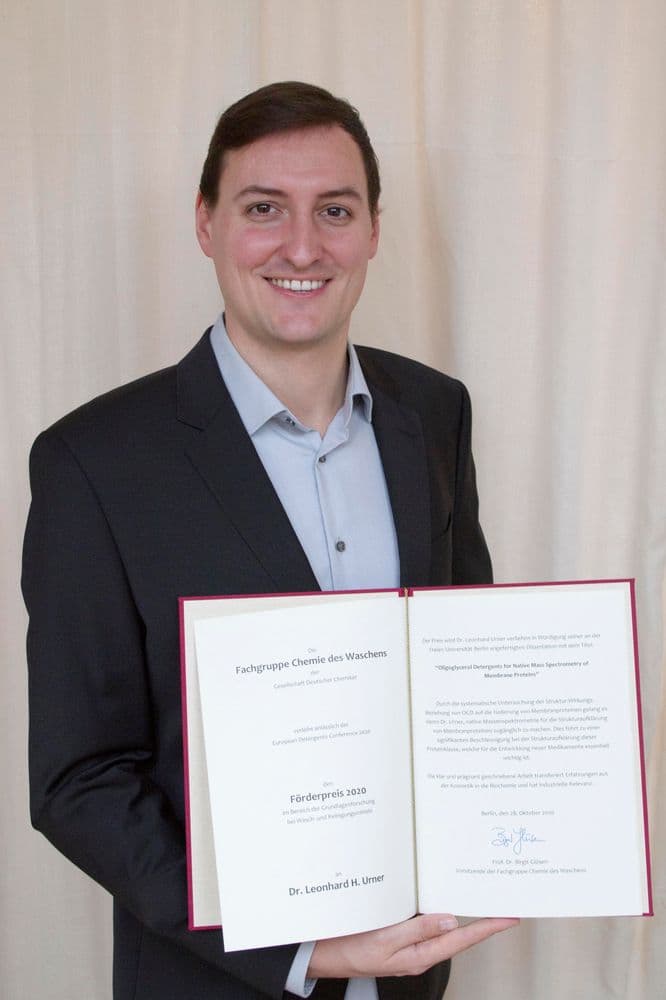
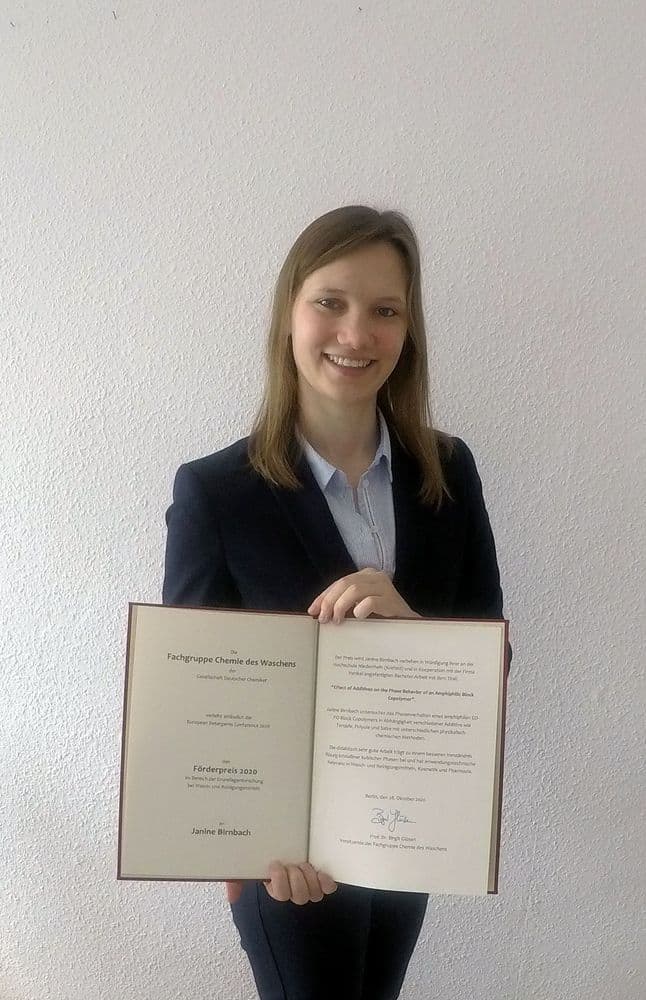
On the occasion of the European Detergents Conference on 28 October 2020 in Berlin, the Division of Detergent Chemistry presented Young Scientist Awards in the field of fundamental research into detergents and cleaning agents to Janine Birnbach (Niederrhein University of Applied Sciences, Krefeld, in cooperation with Henkel), Frieda Nagler (Friedrich Schiller University Jena) and Dr. Leonhard H. Urner (Freie Universität Berlin).
Janine Birnbach received the Young Scientist Award for her outstanding bachelor's thesis entitled: “Effect of Additives on the Phase Behavior of an Amphiphilic Block Copolymer”. Ms Birnbach investigated the phase behaviour of an amphiphilic EO-PO block copolymer as a function of various additives, such as surfactants, polyols and salts, using different physicochemical methods. The highly effective didactic work contributes to a better understanding of liquid-crystalline cubic phases and has applications-related relevance in detergents and cleaning agents, cosmetics and pharmacy.
Frieda Nagler received the Young Scientist Award for her outstanding master's thesis entitled: "Synthesis of hydrogels based on polydehydroalanine". Ms Nagler produced novel hydrogels based on polydehydroalanine, which were reacted with bisepoxides and polyethers to form networks. Among other things, she investigated the resulting hydrogels with regard to their swelling behaviour, mechanical properties and stability. These are highly interesting polymer systems with model character for investigating the reversible uptake of charged guest molecules and as a material for water treatment.
Dr. Leonhard H. Urner received the Young Scientist Award for his outstanding doctoral thesis entitled: “Oligoglycerol Detergents for Native Mass Spectrometry of Membrane Proteins”. Through the systematic investigation of the structure–activity relationship of OGD in the isolation of membrane proteins, Dr Urner succeeded in making native mass spectrometry available for the structural elucidation of membrane proteins. This leads to a significant acceleration in the structural elucidation of this class of proteins, which is essential for the development of new medicines. The clearly and concisely written work transfers experience from cosmetics to biochemistry and has industrial relevance.
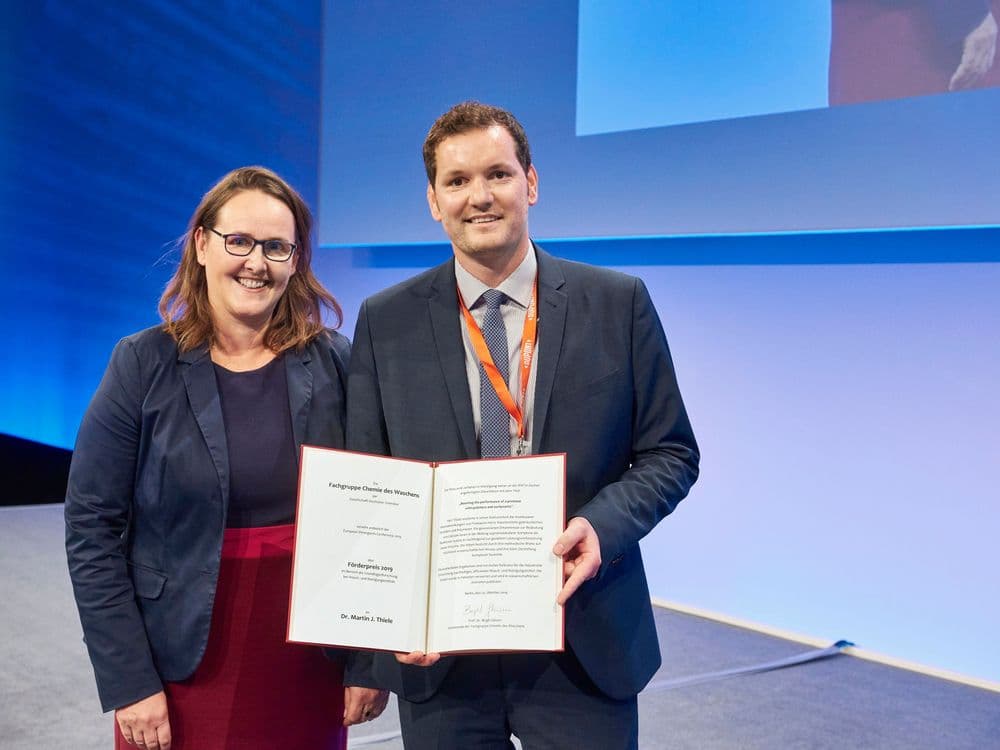
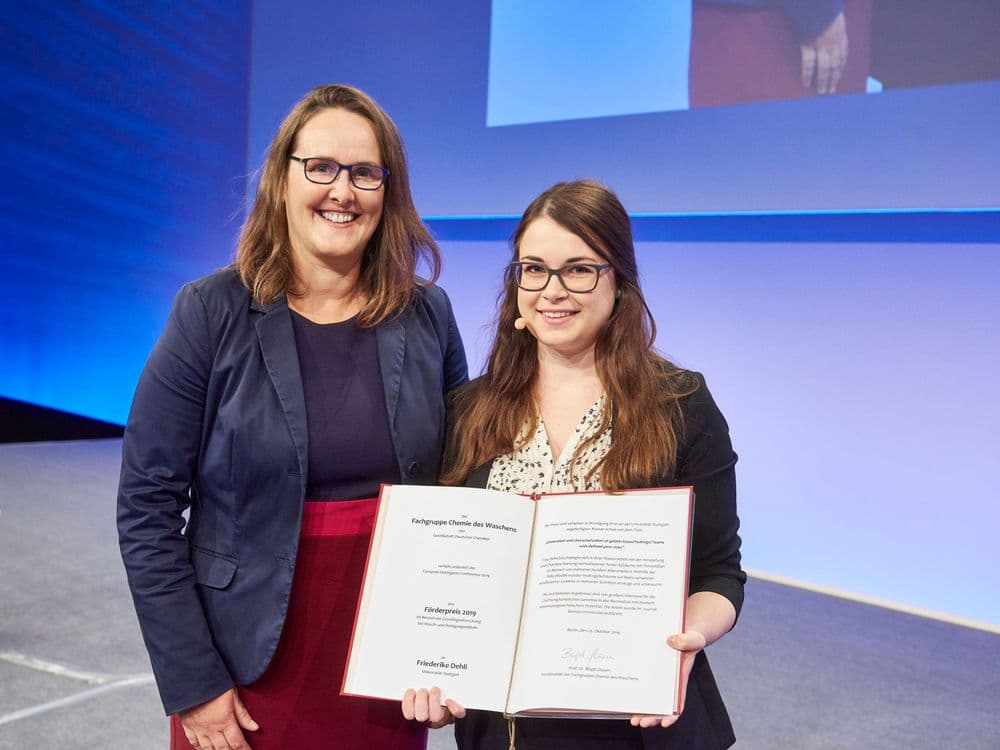
On the occasion of the European Detergents Conference held in Berlin on 23 October 2019, the Division of Detergent Chemistry presented Young Scientist Awards in the field of fundamental research into laundry and cleaning products to Dr Martin J. Thiele (RWTH Aachen University) and Friederike Dehli (University of Stuttgart).
Dr Martin J. Thiele received the Young Scientist Award for his outstanding doctoral thesis entitled: “Boosting the performance of a protease with polymers and surfactants”. In his doctoral thesis, Mr Thiele studied the molecular interactions of proteases with surfactants and polymers commonly used in detergents. He subsequently used the insights gained into the importance of calcium ions in the formation of supramolecular complexes as reactors to specifically improve the performance of these enzymes. The work is distinguished by its methodological breadth at the highest scientific level and its clear presentation of complex systems. The results obtained are highly relevant to the industrial development of sustainable, efficient laundry and cleaning products. The work has been used in patents and is being published in scientific journals.
Friederike Dehli’s outstanding master’s thesis “Generation and characterization of gelatin-based hydrogel foams with defined pore sizes” was also honoured with a Young Scientist Award. Ms Dehli worked on the production and characterisation of monodisperse solid foams with porosities in the range of several hundred micrometres. Using microfluidics, hydrogel foams based on cross-linked modified gelatine were produced and analysed in several stages. The results obtained are of great interest for the cultivation of artificial tissue in biomedicine, with broad potential for technical applications. The work was published in the journal Biomacromolecules.
| Year | Name | Award-winning work | Affiliation at the time of the award |
| 2025 | Lena Nielinger | Bachelor’s thesis | TU Dortmund University |
| 2025 | Moritz Stanek | Master’s thesis | University of Wuppertal |
| 2024 | Anton Michel | Bachelor’s thesis | University of Berlin |
| 2024 | Robin Benedix | Master’s thesis | University of Stuttgart |
| 2024 | Dr. Marc-Kevin Zinn | Doctoral thesis | Rhine-Waal University of Applied Sciences |
| 2023 | Cara Kohler | Bachelor’s thesis | Rhine-Waal University of Applied Sciences, Krefeld |
| 2023 | Jörn Philipp Optatzi | Master’s thesis | TH Köln - University of Applied Sciences |
| 2023 | Dr. Susanne Jaksch | Doctoral thesis | Furtwangen University and Justus Liebig University Gießen |
| 2022 | Sophia Botsch | Bachelor’s thesis | University of Stuttgart |
| 2022 | Dr. Christoph Brudl | Doctoral thesis | Graz University of Technology |
| 2022 | Hailey Poole | Master’s thesis | University of Stuttgart |
| 2021 | Jan Nilles | Master’s thesis | Kao Chemicals GmbH, Emmerich, and Rhine-Waal University of Applied Sciences, Krefeld |
| 2021 | Dr. Lars Gabriel | Doctoral thesis | Friedrich Schiller University Jena |
| 2020 | Janine Birnbach | Bachelor’s thesis | Henkel AG & Co. KGaA, Düsseldorf, and Rhine-Waal University of Applied Sciences, Krefeld |
| 2020 | Frieda Nagler | Master’s thesis | Friedrich Schiller University Jena |
| 2020 | Dr. Leonhard H. Urner | Doctoral thesis | Free University of Berlin |
| 2019 | Friederike Dehli | Master’s thesis | University of Stuttgart |
| 2019 | Dr. Martin Thiele | Doctoral thesis | RWTH Aachen University |
| 2018 | Marc-Kevin Zinn | Bachelor’s thesis | Rhine-Waal University of Applied Sciences |
| 2018 | Timo Bollmann | Master’s thesis | TH Köln - University of Applied Sciences |
| 2018 | Dr. Thiemo Faßbach | Doctoral thesis | TU Dortmund University |
| 2017 | Dr. Viet Hildebrand | Doctoral thesis | University of Potsdam |
| 2016 | Dr. Leonardo Chiappisi | Doctoral thesis | Technical University of Berlin |
| 2016 | Dr. Anne Waidelich | Doctoral thesis | University of Stuttgart |
| 2015 | Dr. Helge Klemmer | Doctoral thesis | University of Cologne |
| 2014 | Dr. Michaela Lampenheimer | Doctoral thesis | University of Stuttgart |
| 2013 | Dr. Julia Boos | Doctoral thesis | University of Stuttgart |
| 2012 | Dr. Daniel Zehn | Doctoral thesis | |
| 2011 | Dr. Ingo Hofmann | Doctoral thesis | University of Berlin |
| 2010 | Dr. Gabriela Catanoju | Doctoral thesis | University of Stuttgart |
| 2009 | Dr. Katja Skrabania | Doctoral thesis | University of Berlin |
| 2007 | Dr. Sandra Engelskirchen | Doctoral thesis | University of Cologne |
| 2006 | Dr.-Ing. Claudio Cinquemani | Doctoral thesis | University of Düsseldorf |
| 2004 | Dr. Tobias Fütterer | Doctoral thesis | |
| 2003 | Dr. Britta Jacobs | Doctoral thesis | |
| 1999 | Dr. Thomas Sottmann | Doctoral thesis | University of Cologne |