
Young Scientist Award chemistry of construction materials
The Division of the Chemistry of Construction Materials of the German Chemical Society (GDCh) generally awards the Young Scientist Award for chemistry of construction materials every two years as part of its Division conference. The best Master's thesis and the best doctoral thesis in the field of chemistry of construction materials are honoured. The Young Scientist Award for chemistry of construction materials includes a certificate and prize money of €1,000 for the Master's thesis and €3,000 for the doctoral thesis. Selection is decided by an awards committee appointed by the Division Board.
The prize is not currently open for applications (next call for proposals: early 2027).
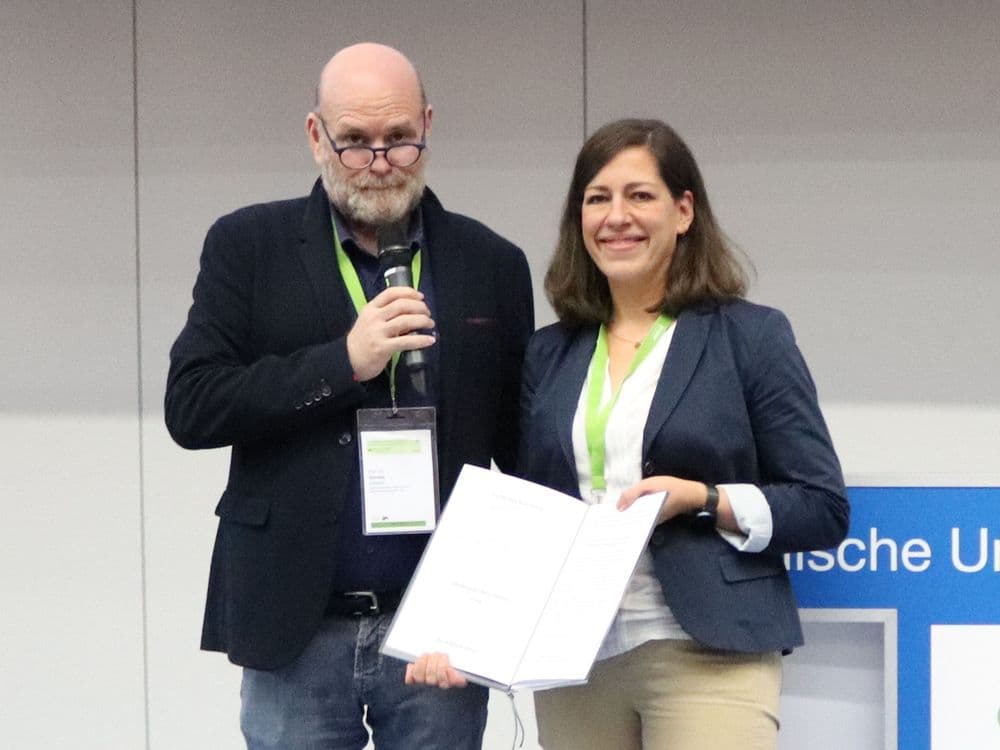
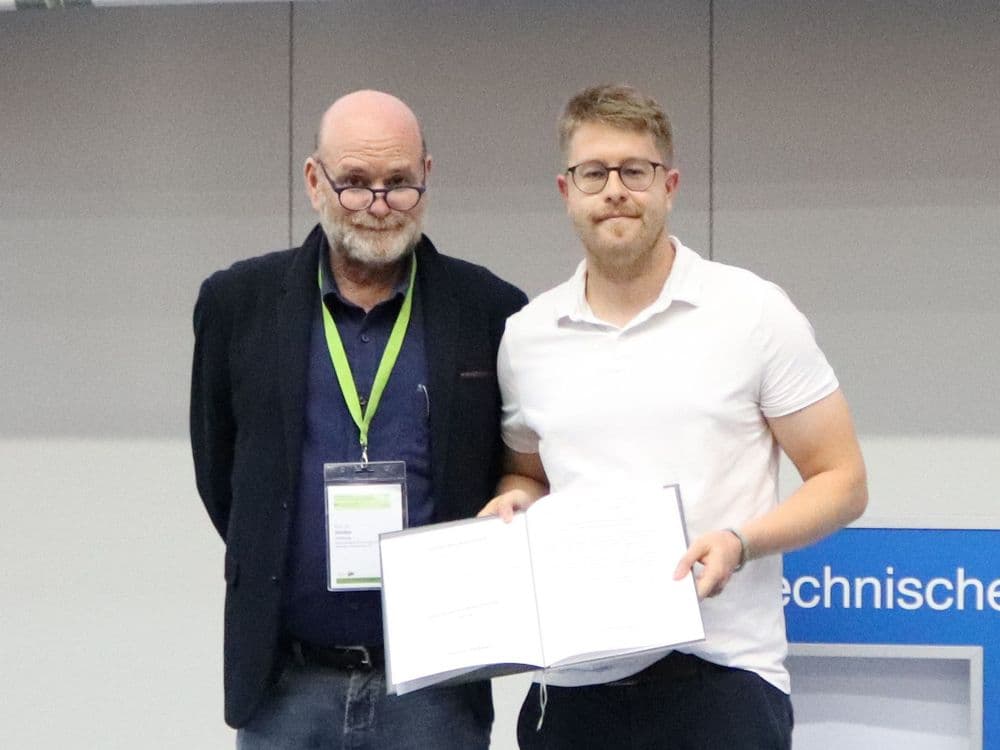
The Young Scientist Award for chemistry of construction materials 2024 was presented to Dr. Kathrin Otten and M.Sc. Simon Skibbe at the 5th International Conference on the Chemistry of Construction Materials (ICCCM).
Dr. Kathrin Otten: "[...] in recognition of her outstanding dissertation, entitled „Investigation of Water Transport Mechanisms in Hydrophobised Mineral Construction Materials”, completed in the working group of Professor Dr. Klaus Littmann at Leibniz University Hannover. In her dissertation, Dr Otten describes the use of hydrophobic additives in different concentrations and the resulting effects on water transport in mineral construction materials – a topic of great scientific and practical relevance for chemistry of construction materials. The award winner focuses on the relevant publications concerning the use of organosilicon compounds for the hydrophobisation of construction materials. From this, she developed a profound understanding of water transport mechanisms and laid the foundation for a new test method. She succeeded excellently in transferring her findings on the influence of hydrophobised pore spaces to generally applicable model systems. These accurately describe the phenomena of water transport in the gas and liquid phases and close gaps in assumptions from earlier publications. The work culminates in a highly successful systematic overview that can realistically be transferred to various practical construction scenarios."
Simon Skibbe: "[...] in recognition of his outstanding master's thesis, entitled „Investigation of the Effects of Functional Molecules on the Carbonation of Calcium Hydroxide”, completed in the working group of Professor Dr. Torben Gädt at the Technical University of Munich. In his work, Mr Skibbe describes the investigation of the effects of functional molecules on the carbonation of calcium hydroxide in a highly structured approach. The form and linguistic execution of the work are very well developed, and the weighting of the individual components is purposefully selected. Mr Skibbe uses various measurement methods, which are not only analysed in a targeted manner and compared with one another, but also placed in a broader context. The results obtained are critically reflected upon, and a detailed outlook on possible subsequent investigations is provided. The work contributes added value to the fundamental understanding and straightforward analytical implementation of common admixtures in the carbonation process."
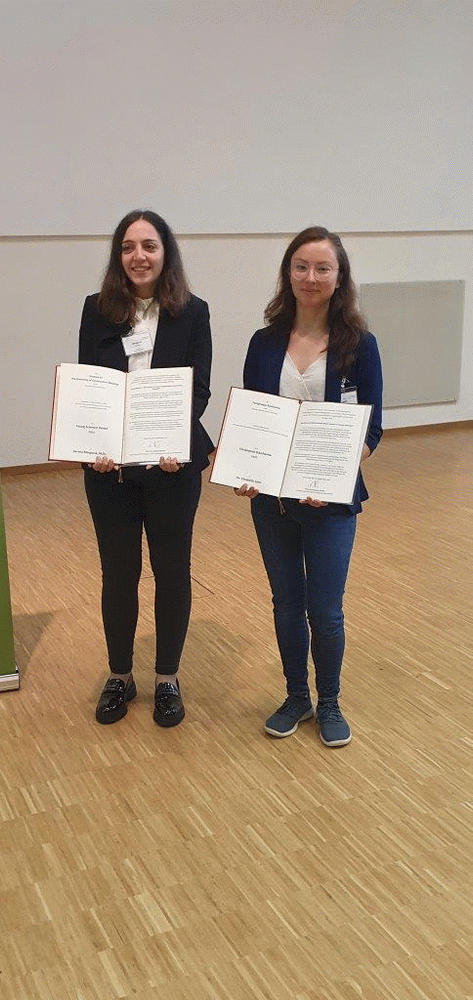
The Young Scientist Award for Chemistry of Construction Materials 2022 was presented to Dr. Elisabeth John and M.Sc. Serena Mingione on the occasion of the 4th International Conference on the Chemistry of Construction Materials (ICCCM).
Dr. Elisabeth John: "[...] in recognition of her outstanding dissertation, completed in the working group of Professor Dietmar Stephan at Technische Universität Berlin, entitled „The Effect of Artificial Calcium Silicate Hydrate on Cement Hydration”. In her dissertation, the award winner addresses the production and characterisation of C-S-H phases. She succeeds exceptionally well in spanning the gap between fundamental research topics in cement hydration and the optimisation of C-S-H syntheses. In a very comprehensive review article, Dr. John examines the relevant historical and current work in the field of C-S-H nucleation. Her resulting synthetic and analytical work makes a significant contribution to clarifying the influence of calcium-to-silica ratios on cement hydration. The development of a new IR method is an essential part of this scientific work and, for the first time, opens up the possibility of monitoring silicate formation in situ. Finally, the award winner demonstrates the relevance of her work for practical applications through an extensive study of factors influencing C-S-H production. This provides evidence that optimised reaction control can improve both efficiency and energy input."
Serena Mingione: "[...] to recognise her outstanding master's thesis conducted at the University of Naples Federico II in collaboration with the EMPA – Swiss Federal Laboratories for Materials Science and Technology, entitled „Investigation on the reactivity of slag as supplementary cementitious material”. Ms. Mingione presented an approach to improve the CO2 balance of cements by investigating the potential use of slags and its limitation by minor elements (Zn, Mg, and Sr). The thesis evaluated the influence of industrial slags on the structure, reactivity, and hydration behaviour of cements. The model system used was based on calcium aluminosilicate glasses serving as fundamental validation of the presence of various oxide compounds. All experiments were carefully considered and purposefully performed. The analytical methods allowed a precise characterisation of the model system. Application-oriented mortar tests rounded off the work. Ms. Mingione's work came to the conclusion that divalent ions influence the formation of non-bridging oxides which results in a less interconnected network of the glasses and a more reactive material. Thus, it represents an added value for further investigations on the way to a CO2-neutral future of the construction industry."
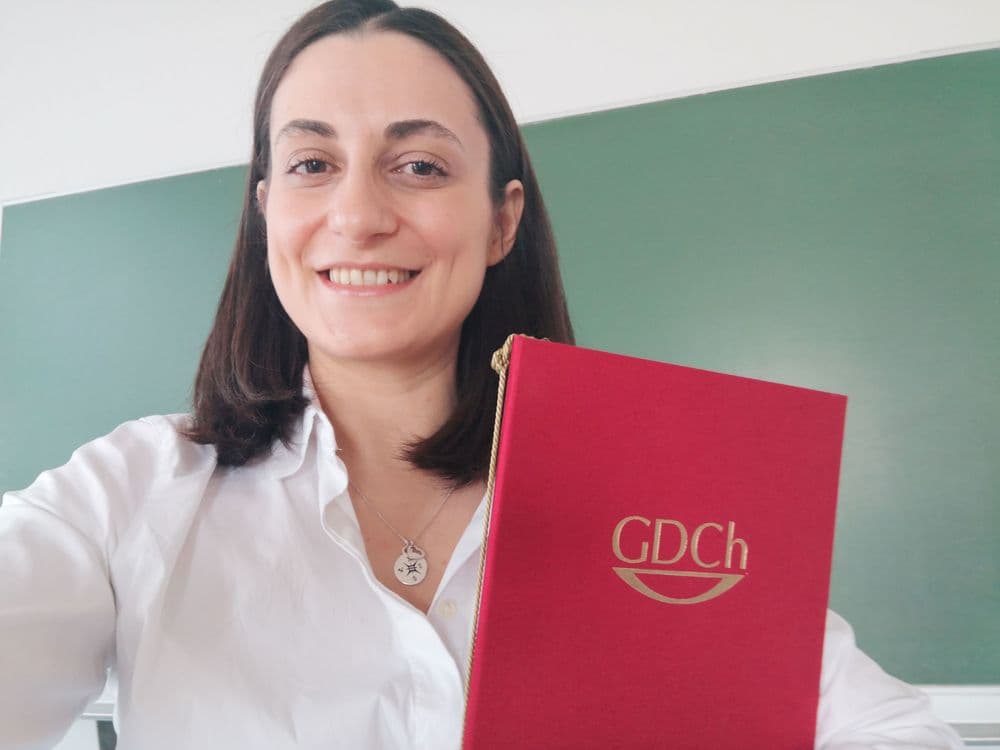
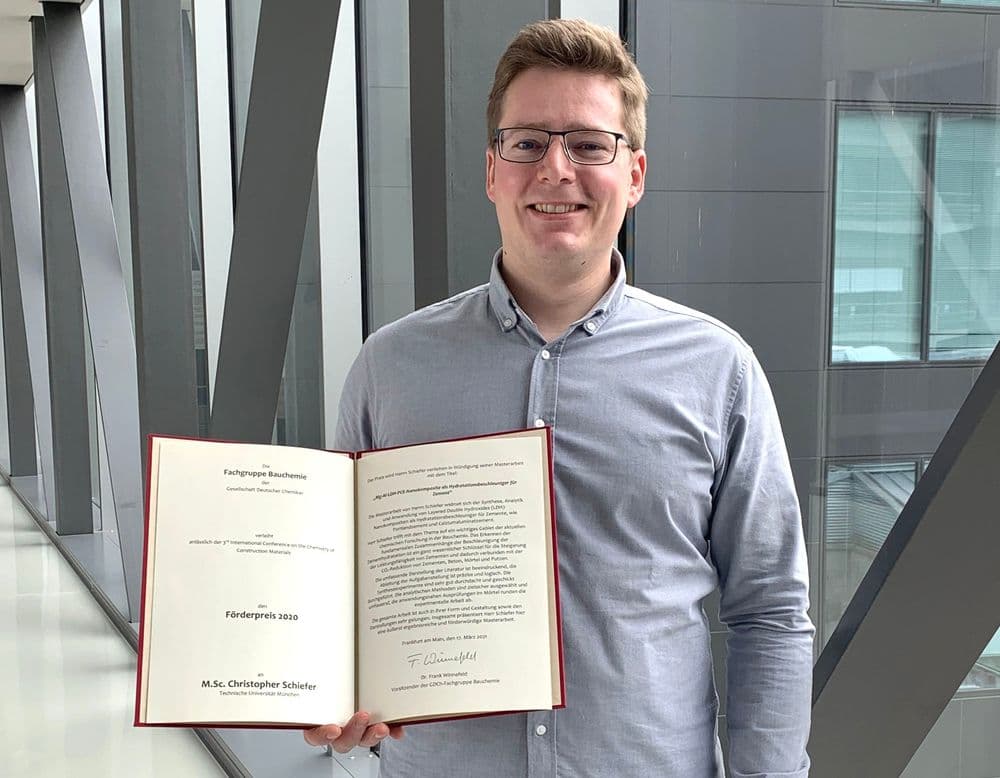
The Young Scientist Award for chemistry of construction materials 2020 was presented to Dr. Elsa Qoku and M.Sc. Christopher Schiefer at the 3rd International Conference on the Chemistry of Construction Materials (ICCCM).
Dr. Elsa Qoku: In recognition of her dissertation entitled “Characterization and quantification of crystalline and amporphous phase assemblage in ternary binders during hydration”. The central objective of the work is to deepen understanding of the hydration mechanisms of ternary binders, with particular consideration of the role of X-ray-amorphous phases. Thus, this work addresses a current research topic in chemistry of construction materials. It stands out for its rigorous methodological investigation, which follows the structure of the dissertation – chemical reaction – analytics – modelling – in a consistent manner. Ms Qoku addresses highly complex issues clearly, coherently and in a very accessible way. An excellent overview of the international literature, as well as very strong references to it in the evaluation, distinguish this work. A particular strength of the work is the methodological comparison between QXRD, NMR, TGA and stoichiometric calculations. The model concepts further developed by Ms Qoku on the basis of her experimental results, supported by thermodynamic modelling, are novel for the hydration of alumina-cement-rich binders. Overall, this dissertation considerably expands knowledge of the temporal development of hydration phases in complex ternary systems. The dissertation submitted therefore represents an outstanding scientific achievement.
Christopher Schiefer: In recognition of his Master's thesis entitled “Mg-Al-LDH-PCE nanocomposites as hydration accelerators for cement”. Mr Schiefer's Master's thesis is devoted to the synthesis, analysis and application of Layered Double Hydroxides (LDH) nanocomposites as hydration accelerators for cements such as Portland cement and calcium aluminate cement. With this topic, Mr Schiefer addresses an important area of current chemical research in chemistry of construction materials. Recognising the fundamental relationships underlying the acceleration of cement hydration is a crucial key to increasing the performance of cements and is therefore linked to the reduction of CO2 emissions from cement, concrete, mortar and renders. The comprehensive presentation of the literature is impressive, and the derivation of the research objectives is precise and logical. The synthesis experiments are very well thought through and skilfully conducted. The analytical methods are selected with precision and are comprehensive, while the application-oriented tests in mortar round off the experimental work. The work as a whole is also highly successful in terms of its form and design, as well as its presentation. Overall, Mr Schiefer presents here a highly productive and award-worthy Master's thesis.
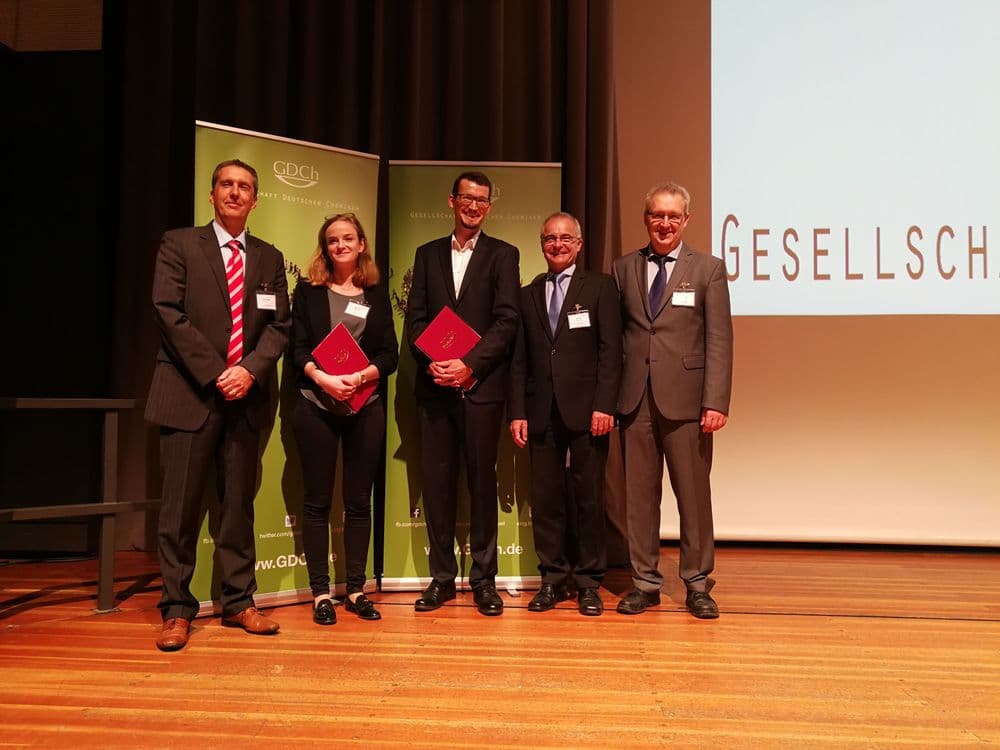
Dr Ellina Bernhard, Empa, Dübendorf (Switzerland), received the Young Scientist Award 2018 in recognition of her dissertation on the topic:
"Magnesium silicate hydrate (M-S-H) characterization: temperature, calcium, aluminum and alkali”
The work focuses on magnesium silicate hydrate, its formation and interaction with calcium, aluminium and alkali ions. In her dissertation, Ms Bernhard established missing thermodynamic data for M-S-H structures. For the first time, these provide a broad basis for modelling M-S-H structures. The work is very well structured, and its systematic approach is exceptionally convincing. The extensive analytical work is impressive; the methods are well coordinated and complement one another superbly. The detailed interpretation remains focused and is accompanied by very well-structured summaries and very good “main findings”. The chemistry of magnesium silicate hydrate structures is rather limited to specific applications and fields of use. However, this work represents an outstanding scientific achievement, and it can be expected that the findings obtained here will also have an impact on chemistry of construction materials. This work has made a major contribution to understanding the M-S-H system.
Dr-Ing Henning-Felix von Daake, Technische Universität Berlin, received the Young Scientist Award 2018 in recognition of his dissertation on the topic:
“Possibilities for optimising the mode of action of construction chemical additives through mechanisms of controlled active-substance release”
The work addresses the problem of the temporal development of active-substance concentrations. This is often not adapted to the prevailing conditions, meaning that its use is not effective. Mr von Daake tackles this problem through encapsulation and controlled release. Despite the extensive use of the results, the work is presented as a monograph. The work is to be regarded as highly innovative because it was consistently conceived and carried out on an interdisciplinary basis. It is particularly noteworthy that, in solving the problem, Mr von Daake had to employ several methods (encapsulation, release) for which, as a trained civil engineer, he lacked both the theoretical and practical foundations. However, he mastered this challenge brilliantly. Overall, he successfully transferred an approach from other disciplines in an original way to solve a common practical problem in the construction sector. An outstanding achievement with a clear practical focus.
The award ceremony took place as part of the Conference chemistry of construction materials on 1 October 2019 in Aachen.
| 2024 | Dr. Kathrin Otten | Dissertation: „Investigation of water transport mechanisms in hydrophobised mineral building materials” |
| 2024 | Simon Skibbe | Master's thesis: „Investigation of the effects of functional molecules on the carbonation of calcium hydroxide” |
| 2022 | Dr. Elisabeth John | Dissertation: „The Effect of Artificial Calcium Silicate Hydrate on Cement Hydration” |
| 2022 | Serena Mingione | Master's thesis: „Investigation on the reactivity of slag as supplementary cementitious material” |
| 2020 | Dr. Elsa Qoku | Dissertation: „Characterization and quantification of crystalline and amporphous phase assemblage in ternary binders during hydration” |
| 2020 | Christopher Schiefer | Master's thesis: „Mg-Al-LDH-PCE nanocomposites as hydration accelerators for cement” |
| 2018 | Dr. Ellina Bernhard | Dissertation: "Magnesium silicate hydrate (M-S-H) characterization: temperature, calcium, aluminum and alkali” |
| 2018 | Dr.-Ing. Henning-Felix von Daake | Dissertation: „Ways of optimising the effectiveness of construction chemical admixtures through controlled active-substance release mechanisms” |
| 2016 | Dr. Delphine Marchon | Dissertation: "Controlling Cement Hydration Throught the Molecular Structure of Comb Copolymer Superplasticizers" |
| 2016 | Cordula Weiß | Master's thesis: "Application of AFM on Cementitious Surfaces" |
| 2014 | Dr.-Ing. Manuela Marschetzky | Dissertation: „Influence of alkali salts and plasticisers on the hydration of calcium sulphate hemihydrate“ |
| 2014 | Grit Losch | Master's thesis: „Comparative investigations into the setting behaviour of thermal and synthetic anhydrite“ |
| 2012 | Dr. Ueli Michael Angst | Dissertation: „Chloride induced reinforcement corrosion in concrete“ |
| 2012 | Andrea Winkler | Diploma thesis: „The effect of gypsum additives on gypsum crystallisation“ |
| 2012 | Iris Paschke | Diploma thesis: „Investigations into the existence and stability of calcium sulphate and calcium selenate subhydrates“ |
| 2010 | Melanie Oestreich | Diploma thesis: „Investigations into phase formation in basic MgCl2 solutions“ |
| 2010 | Dr. Severin Seifert | Dissertation: „Spatially resolved phase analysis of self-levelling floor compounds“ |
| 2009 | Dr. Alexander De Gasparo | Dissertation: „Fractionation Behavior of Organic Additives and Resulting Microstructural Evolution of Mixed-Binder Based Self-Leveling Flooring Compounds“ |
| 2009 | Dr. Sebastian Wistuba | Dissertation: „Influence of Na2O doping of tricalcium aluminate and Portland cement clinker on the interaction with polycarboxylate-based plasticisers“ |
| 2007 | Dr. Andreas Brandl | Dissertation: „The interaction between CaAMPS®-co-NNDMA and acetone-formaldehyde-sulphite polycondensate during adsorption on cement: an example of admixture incompatibilities and ways of resolving them“ |
| 2007 | Sebastian Seufert | Diploma thesis: „Investigations into phase development during hydration in the white cement-calcium aluminate cement model system“ |
| 2006 | Dr. Ingo Müller | Dissertation: „Influence of Cellulose Ethers on the Kinetics of Early Portland Cement Hydration“ |
| 2006 | Markus Gretz | Diploma thesis: „Synthesis and properties of inorganic, organic and hybrid nanoparticles with a core-shell structure“ |