Klaus Grohe Foundation
The Klaus Grohe Foundation is dedicated to advancing pioneering research in medicinal chemistry and drug discovery. Since its establishment in 2001 by Klaus Grohe and his wife Eva, it has pursued the goal of recognising outstanding scientific achievements while also providing fresh impetus for drug development.
Administered in trust by the German Chemical Society (GDCh), the Foundation stands for foresight and sustained support in a research field of great social relevance. Its particular aim is to raise the profile of scientific innovation and to accompany and support outstanding researchers on their career paths.
Through its awards, the Klaus Grohe Foundation recognises outstanding scientific achievements while also providing targeted support for the next generation of excellent researchers. Since 2026, the Foundation has awarded two prestigious prizes that rank among the most important distinctions in their fields in Europe.
and the
The Klaus Grohe Foundation stands for a culture of support that unlocks potential and shapes the future. Through its awards, it makes a valuable contribution to strengthening innovative research and advancing the development of new therapeutic solutions.
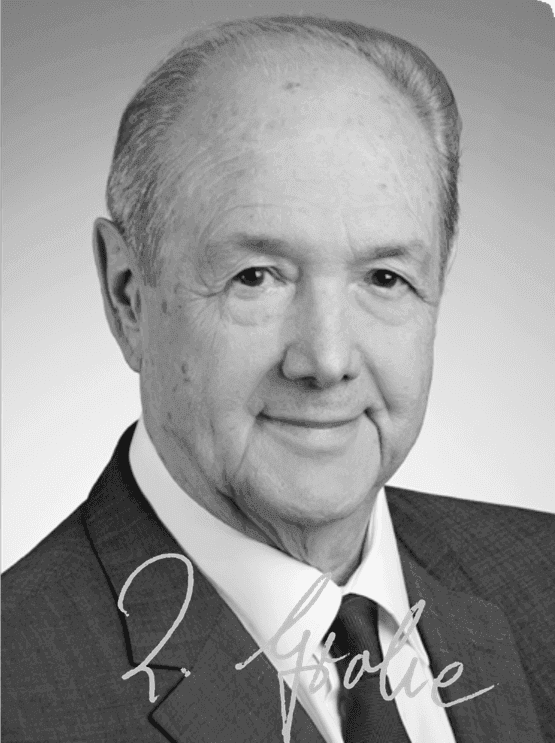
The founder Prof. Dr. Klaus Grohe (born 1934) developed important innovative medicines with great success during his career as a research chemist at Bayer AG. In 2001, Klaus and Eva Grohe established the Klaus Grohe Foundation at the German Chemical Society, with the aim of encouraging highly qualified young people to pursue the demanding interdisciplinary field of medicinal chemistry/drug discovery.
The Klaus Grohe Prize is one of Europe’s most prestigious awards in the fields of medicinal chemistry and drug discovery. It recognises scientists whose excellent work in researching new principles of drug discovery has opened up new avenues in pharmaceutical research and who demonstrate creativity, visionary thinking and scientific excellence. The prize is worth €75,000 and is awarded every two years.
The Klaus Grohe Young Scientist Award is aimed at outstanding early-career researchers at European research institutions. It supports independent scientists at a crucial stage in their careers and gives them the freedom to pursue the further development of innovative research approaches. The award is worth €25,000 for research purposes.
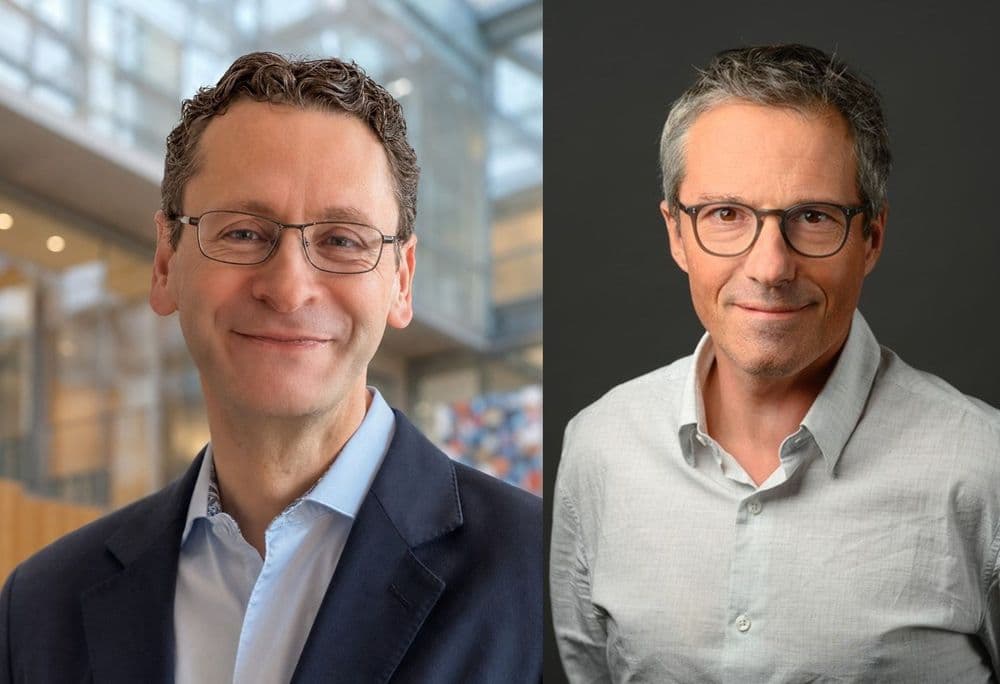
The Klaus Grohe Foundation honours Prof. Edward Tate for his pioneering work in the chemical biology of protein lipidation. Through the development of highly precise bioorthogonal tools, he has significantly advanced our understanding of this important post-translational modification and opened up new avenues for drug discovery. Also noteworthy is the founding of a company that is advancing novel N-myristoyltransferase inhibitors towards clinical trials. His research exemplifies how fundamental chemical innovations can lead to new therapeutic approaches with tangible clinical potential.
The Klaus Grohe Foundation honours Prof. Nicolas Winssinger for his original and pioneering research programme at the interface of medicinal chemistry and nucleic acid chemistry. For more than two decades, he has used nucleic acids as functional building blocks to control chemical reactivity and molecular self-assembly with precision. One of his outstanding recent discoveries is a programmable anticoagulant whose effects can be controlled and made reversible using nucleic-acid-directed molecular logic. His work thus opens up a novel therapeutic strategy.
| 2026 | Edward W. Tate, Imperial College London/United Kingdom Nicolas Winssinger, University of Geneva /Switzerland |
| 2024 | Yimon Aye, University of Oxford/United Kingdom |
| 2022 | Raphaël Rodriguez, Institut Curie, Paris/France |
| 2020 | Stepan A. Sieber, Technical University of Munich |
Prof. Dr. Daniel Rauh, TU Dortmund University (Chair)
Prof. Dr. Karl-Heinz Altmann, ETH Zurich, Switzerland
Dr. Yves Auberson, Novartis Institutes for BioMedical Research, Basel, Switzerland
Prof. Dr. Dorothea Fiedler, Leibniz Research Institute for Molecular Pharmacology, Berlin
Dr. Annika Jenmalm Jensen, SciLifeLab, Stockholm, Sweden
Prof. Dr. Stefan Knapp, Johann Wolfgang Goethe University
Dr. Raphaël Rodriguez, Institute Curie Paris, France
Prof. Dr. Stephan Sieber, Technical University of Munich
Prof. Dr. Daniel Rauh, Technische Universität Dortmund (Vorsitzender)
Prof. Dr. Karl-Heinz Altmann, ETH Zürich, Schweiz
Dr. Yves Auberson, Novartis Institutes for BioMedical Research, Basel, Schweiz
Prof. Dr. Dorothea Fiedler, Leibniz-Forschungsinstituts für Molekulare Pharmakologie, Berlin
Dr. Annika Jenmalm Jensen, SciLifeLab, Stockholm, Schweden
Prof. Dr. Stefan Knapp, Johann Wolfgang Goethe-Universität
Dr. Raphaël Rodriguez, Insitute Curie Paris, Frankreich
Prof. Dr. Stephan Sieber, Technische Universität München