
Karl Ziegler Foundation
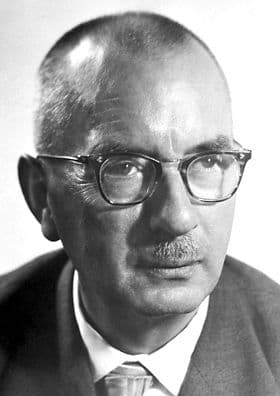
The Karl Ziegler Foundation was established in 1993 as a non-independent foundation within the German Chemical Society and was brought to public attention in 1998, on the occasion of the namesake’s 100th birthday, through its first foundation activities. The founder is Karl Ziegler’s daughter, Dr. Marianne Witte, who established this foundation in memory of her father, the 1963 Nobel laureate, Professor Dr. Dr h.c. Karl Ziegler (1898–1973).
With prize money of EUR 50,000.00 and a gold medal, the Karl Ziegler Award is one of the most highly endowed German distinctions in the field of chemistry.
Since 1998, the foundation has also awarded the Karl Ziegler Young Scientist Awards, preferably to younger scientists. The Karl Ziegler Young Scientist Award was redesigned in 2022. Through the award, the foundation enables early-career group leaders to fund a postdoc for one year. All Karl Ziegler awardees are expected to work in the wide-ranging research fields of the namesake: inorganic and organic chemistry, catalysis and polymer chemistry.
Karl Ziegler was the first Chair of the German Chemical Society after its foundation.
The award is presented to scientists working in Karl Ziegler’s fields of research, particularly organometallic and inorganic chemistry, organic and applied chemistry, polymer chemistry and catalysis. It recognises both outstanding lifetime achievements and excellent contributions by early-career researchers. With €50,000, the award is one of the most highly endowed honours of the GDCh. It consists of a certificate and a gold medal.
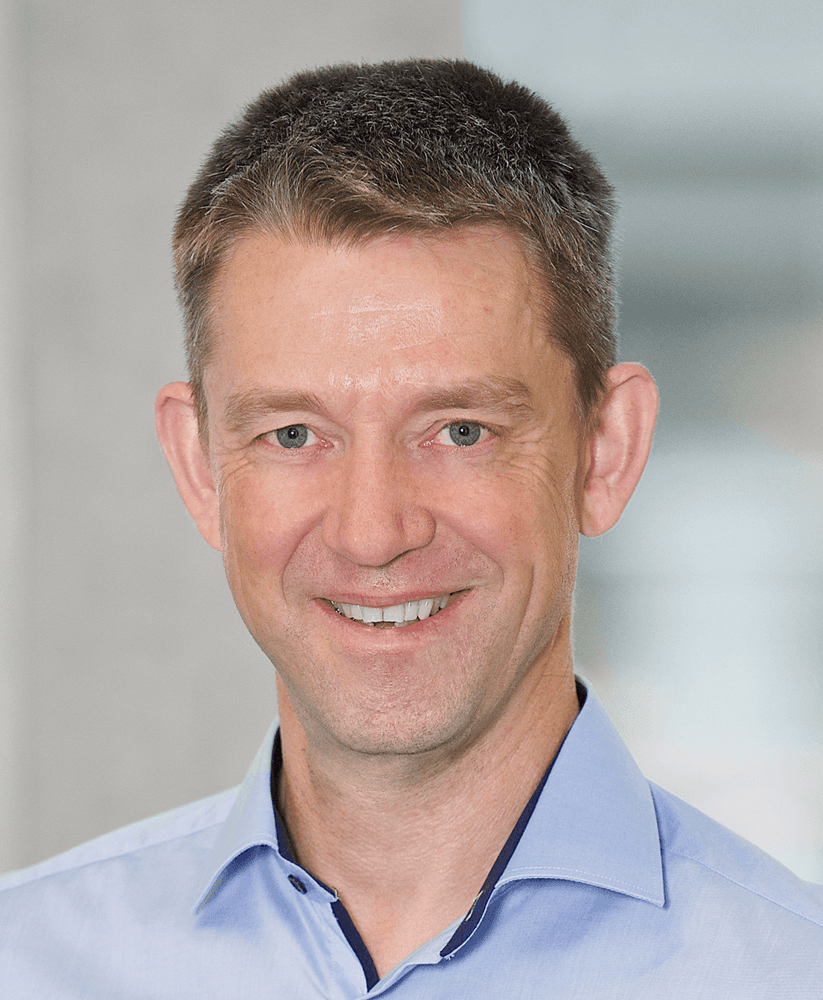
Prof. Dr. Stefan Mecking from the University of Konstanz was awarded the prize in recognition of his outstanding and pioneering work. In this work, he uniquely combines an in-depth mechanistic understanding of transition-metal polymerisation catalysts with the synthesis and characterisation of novel, recyclable polymer materials. The prize, endowed with 50,000 euros and a gold medal, was presented to him as part of the Science Forum Chemistry on 29 September 2025.
| 2025 | Stefan Mecking, Konstanz |
| 2023 | Tanja Weil, Mainz |
| 2021 | Evamarie Hey-Hawkins, Leipzig |
| 2019 | Klaus Müllen, Mainz |
| 2017 | Matthias Beller, Rostock |
| 2015 | Helmut Schwarz, Berlin |
| 2013 | Alois Fürstner, Mülheim |
| 2011 | Hans-Joachim Freund, Berlin |
| 2009 | Paul Knochel, Munich |
| 2007 | Martin Jansen, Stuttgart |
| 2005 | Manfred T. Reetz, Mülheim/Ruhr |
| 2003 | Tobin J. Marks, Evanston, Ill./USA |
| 2000 | Hans-Herbert Brintzinger, Konstanz |
| 1998 | Gerhard Ertl, Berlin (2007 Nobel Prize in Chemistry) |
| 2025 | Lisa Vondung, Hamburg |
| 2023 | Christopher Teskey, RWTH Aachen University |
| 1998 | Rüdiger Beckhaus, Oldenburg Thisbe Kerstin Lindhorst, Hamburg Roland Krämer, Münster Michael Famulok, Munich Hans-Jörg Krüger, Hamburg |
The Karl Ziegler Award was originally established at the GDCh in 1974 in recognition of outstanding achievements in the field of organometallic chemistry. The award, jointly funded by Hoechst AG and Hüls AG, was presented to seven scientists from Germany and abroad between 1975 and 1992.
In 1998, on the occasion of the 100th birthday of the 1963 Nobel Prize winner, the Karl Ziegler Award was taken over by the eponymous foundation administered in trust by the GDCh, which was established by Dr. Marianne Witte (1923 - 2012), Karl Ziegler’s daughter (see Karl Ziegler Foundation).
Recipients of the Karl Ziegler Award
| 1992 | Malcolm L.H. Green, Oxford/England |
| 1989 | Jean-Marie Lehn, Strasbourg/France |
| 1987 | Dieter Seebach, Zurich/Switzerland |
| 1981 | Jürgen Smidt, Munich Walter Hafner, Munich |
| 1978 | Günther Wilke, Mülheim/Ruhr |
| 1975 | Georg Wittig, Heidelberg |
Prof. Dr. Ruth Bieringer, Freudenberg FST GmbH, GDCh President 2026/27 (Chair)
Prof. Dr. Dieter Jahn, Hamburg (for the founder’s family)
Prof. Dr. Barbara Albert, Technical University of Darmstadt
Dr. Tom Kinzel, GDCh Executive Director
Prof. Dr. Ingo Krossing, University of Freiburg
Prof. Dr. Ferdi Schüth, Max Planck Institute for Coal Research
Prof. Dr. Brigitte Voit, Leibniz Institute for Polymer Research Dresden