Dr. Ralph Wieneke
Chemistry – (Y)Our Passion, (Y)Our commitment

© 2026 Gesellschaft Deutscher Chemiker. All rights reserved.
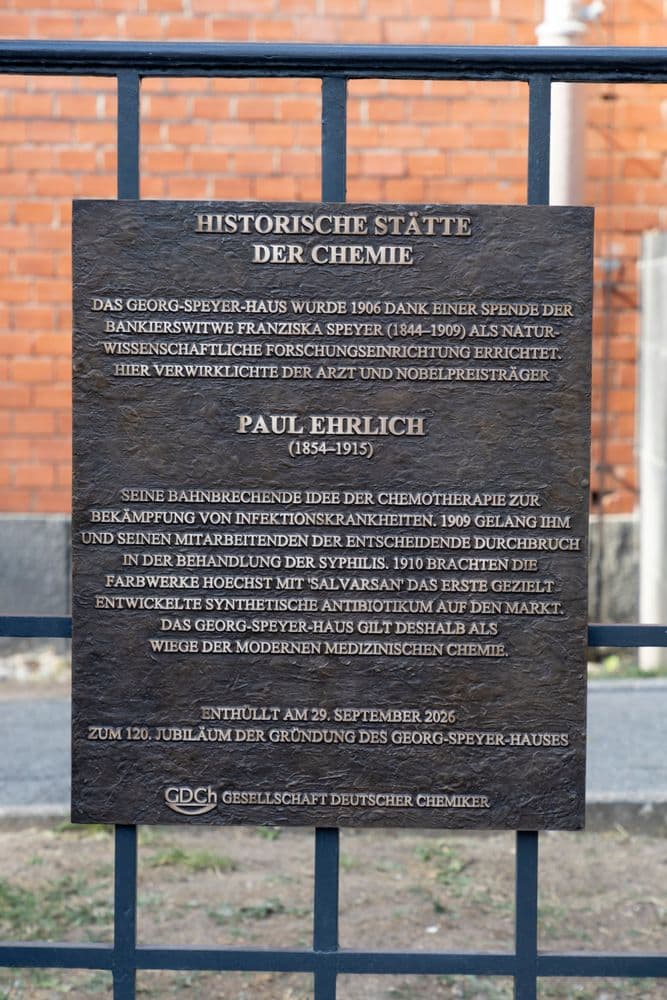
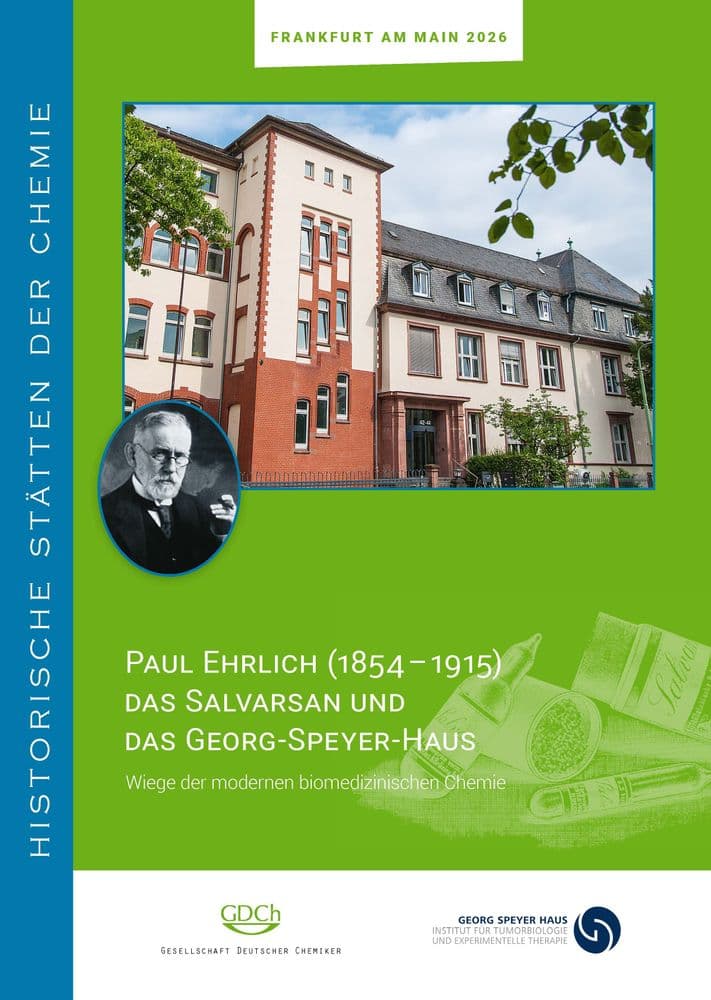
The institute, established in 1906 thanks to a donation from the banker’s widow Franziska Speyer (1844–1909), became one of
the most important research centres in the early modern era of biomedical chemistry. It was here that the physician, immunologist
and future Nobel Prize winner Paul Ehrlich (1854–1915) put into practice his groundbreaking idea of chemotherapy to target
infectious diseases.
In 1909, Ehrlich and his colleagues at the Georg-Speyer-Haus achieved the decisive breakthrough in the treatment
of syphilis. The compound developed as “Preparation 606” was the first targeted drug to be discovered
for this disease, which had previously been almost impossible to treat. In 1910, Farbwerke Hoechst launched the drug under the
name Salvarsan. It is regarded as the first deliberately developed synthetic medicine and marks a
turning point in the history of medicine and chemistry.
The Georg-Speyer-Haus is therefore regarded as the birthplace of modern medicinal chemistry. The research successes achieved here
laid the foundations for a new understanding of drug development, in which chemical substances are used to target
specific pathogens. By designating it a “Historic Site of Chemistry”, the GDCh commemorates
a place where chemistry and medicine worked together in a unique way and which has had a lasting impact on the development
of modern therapeutic approaches.
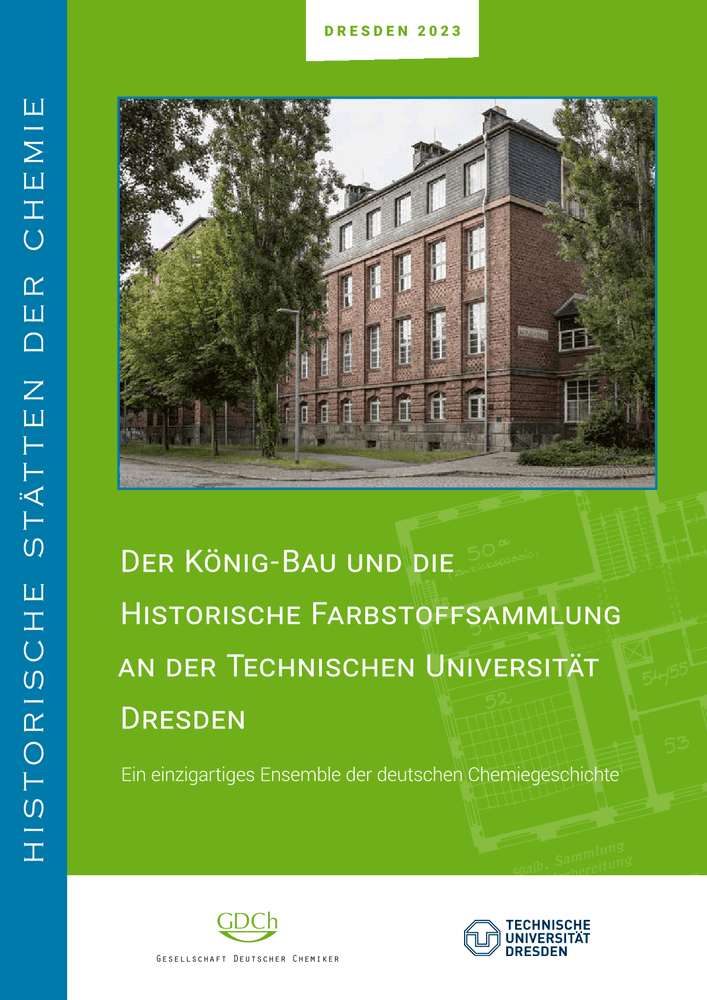
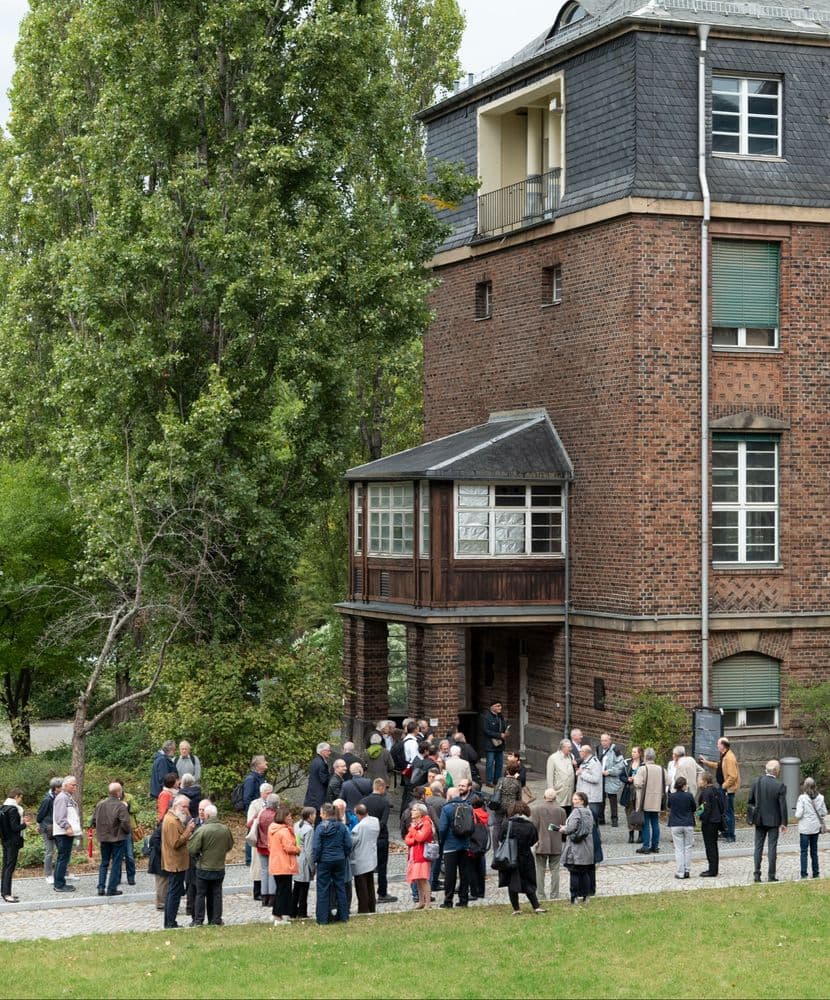
The building was inaugurated in 1926 as a laboratory for colour and textile chemistry and as the home of the institute of the same name. The laboratory had been founded as early as 1893 by RICHARD MÖHLAU (1857–1940), the first university laboratory of its kind in Germany; he directed it until 1911. HANS THEODOR BUCHERER (1869–1949) succeeded MÖHLAU as director of the laboratory from 1911 to 1913. Under the leadership of WALTER KÖNIG (1878–1964), from 1913 to 1954, the institute developed into a world-leading centre for research into synthetic dyes and their applications. KÖNIG’s work on polymethine dyes was groundbreaking for the development of colour photography. The building was named König-Bau in 1953, during his tenure. When it opened in 1926, König-Bau also became home to the dye collection, whose oldest holdings date back to the mid-19th century. Systematic collecting for research at the Institute for Colour and Textile Chemistry resulted in a unique collection documenting the development of synthetic dyes from the discovery of mauveine in 1856 to the present day.
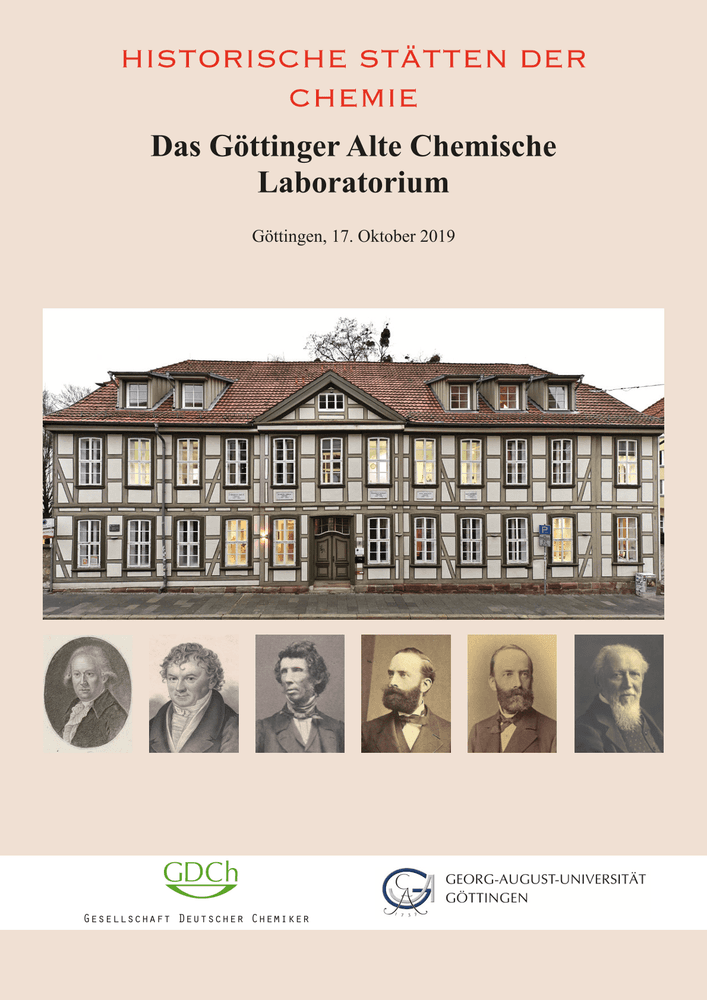
Johann Friedrich Gmelin (1775–1804) came to Göttingen in 1775, initially as a full professor of philosophy. In 1778, he was appointed full professor in the Faculty of Medicine, where he held the first nominal professorship for chemistry and pharmacy at Göttingen until his death. This put Göttingen ahead of other universities in establishing professorships specialising in chemistry and the natural sciences. In 1781, funds were approved for the University of Göttingen to build a chemical laboratory. Plans for the building began in 1782, and construction started in 1783. The two-storey half-timbered house has stood in Hospitalstraße in Göttingen ever since and is now known as the ‘Wöhler House’. Under the directorship of the distinguished institute directors who succeeded Gmelin—Friedrich Stromeyer (1776–1835), Friedrich Wöhler (1800–1882), Hans Hübner (1837–1884), Victor Meyer (1848–1897) and Otto Wallach (1847–1931)—Göttingen developed into a centre of modern chemical research and a world-class training institution.
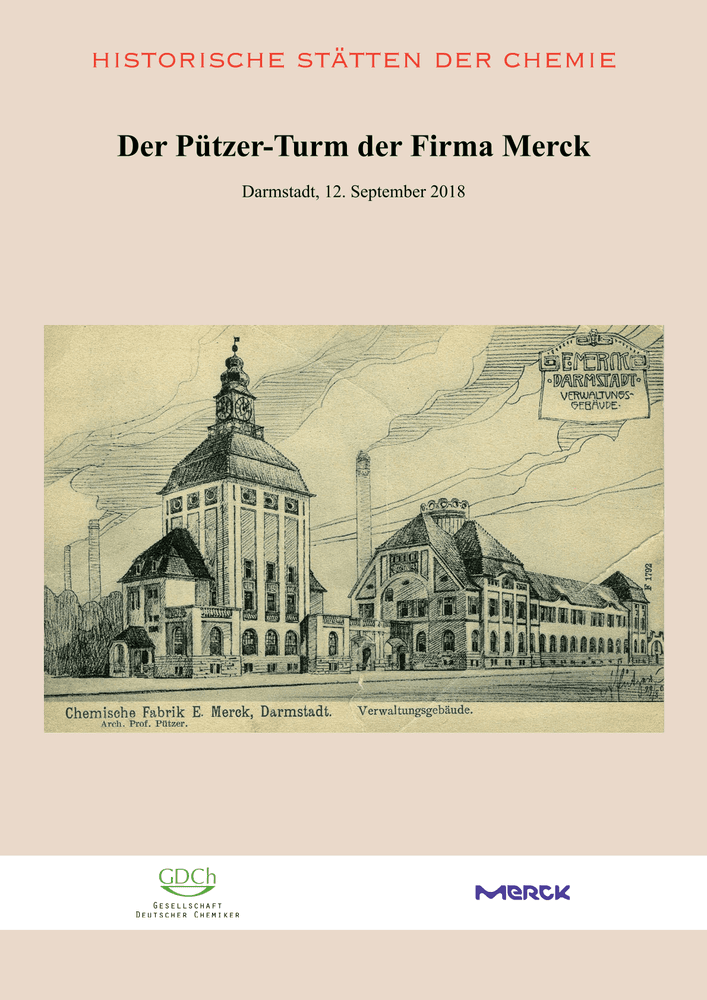
In 1668, the pharmacist Friedrich Jacob Merck received permission from Landgrave Ludwig VI to run the pharmacy on the Schloßgraben in Darmstadt. In retrospect, this pharmacy was the seed from which the Merck company grew; in 2018, the company celebrated its 350th anniversary. The pharmacy would have deserved our ‘Historic Site of Chemistry’ plaque, if it were still standing. Instead, the Pützer Tower has received this distinction. Since its construction in 1904, the tower has symbolised the continuity of the Merck company, which moved its premises to 250 Frankfurter Straße at that time, leaving the cramped site in Darmstadt city centre. Space for the company to expand was created outside the city, to the north of Darmstadt. The Pützer Tower at the entrance to the factory is now a well-preserved treasure of the Merck company and an industrial monument. At the interface between the company and the public, it symbolises the company’s importance — for Darmstadt and for the world. Over 350 years, Merck grew from a pharmacy in a small, impoverished landgraviate ravaged by the Thirty Years’ War into a publicly listed global player that is still family-run, and it has remained loyal to Darmstadt. In turn, Darmstadt gradually became the flourishing city of science we know today. Friedrich Pützer (1871–1922), appointed Professor of Architecture at TU Darmstadt in 1902 and later its rector, was one of the defining architects of his time, working as an academic, conservationist, and designer of cities and churches. He became an important partner to Merck in designing its new premises. Of his ensemble of buildings, only the Pützer Tower survives today. The tower had no technical function within the chemicals company; instead, it was designed as a ‘sick fund, gatekeeper’s and staff residential building’. Bearing in mind that a building as tall as the Pützer Tower was something utterly modern and unprecedented at the time, it is easy to imagine that the tower then served as an expression of the company’s identity even more than it does today: imposing, towering, confident and hungry for the future.
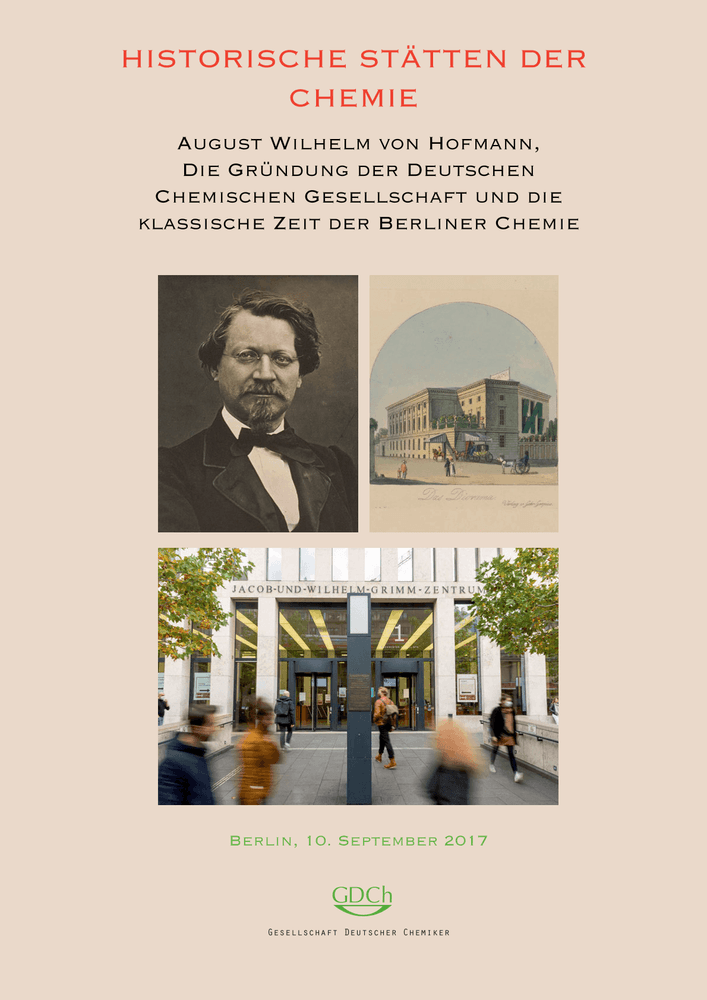
2017 was an anniversary year for the GDCh. The first national chemical societies emerged across Europe in the 19th century. Germany was among them. The Deutsche Chemische Gesellschaft zu Berlin was founded on 11 November 1867. Its founding president was August Wilhelm von Hofmann, and it was founded at the Diorama of the Gropius brothers. This was reason enough to establish a ‘Historic Site of Chemistry’ in Berlin in the anniversary year. Although the Diorama building no longer exists, an exception was made to the rules of our ‘Historic Sites of Chemistry’ programme, and a commemorative plaque was installed elsewhere, not far from the former site of the Diorama. If you travel to Berlin today, visit the square in front of the Humboldt University library, close to Friedrichstraße station. There, on the central lamppost, our plaque commemorates August Wilhelm von Hofmann and the founding of the Deutsche Chemische Gesellschaft in November 1867. After the Second World War, chemists in Germany reorganised and, as a sign of a new beginning, gave their society a new name: since 1949, we have followed in the footsteps of the first chemical society as the German Chemical Society. Many buildings and monuments in Berlin fell victim to the Second World War. The Diorama had already made way for the construction of the Stadtbahn in 1876. When reading our plaque on the lamppost in front of the Jakob-und-Wilhelm-Grimm-Zentrum in Berlin-Mitte, you will have your back to the Stadtbahn railway line and will therefore be very close to the site where the Diorama once offered its visitors exciting experiences.
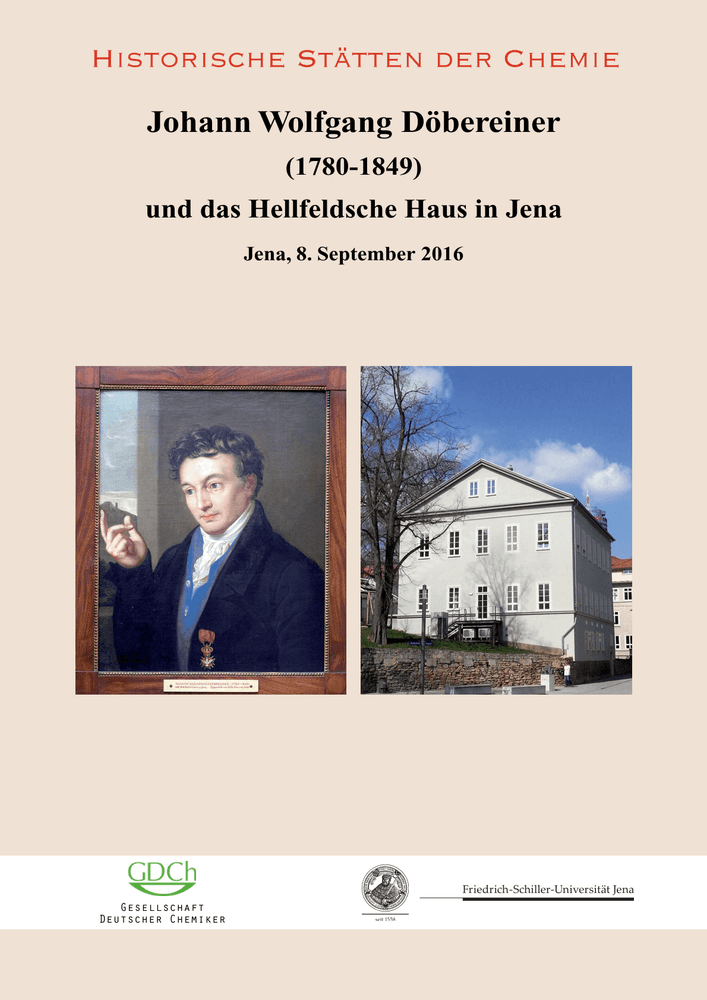
In 1817, Goethe noted in the “Records of Official Activity”: “After Göttling’s death, His Serene Highness acquired his estate of apparatus and books, which was placed in Döbereiner’s hands and substantially supplemented with French glassware and other equipment required by modern chemistry. A laboratory was established, and a house and garden were purchased to provide more spacious accommodation and greater freedom in handling dangerous substances.” In: Georg Schwedt, Goethe als Chemiker, Springer, Heidelberg 1998, p. 146
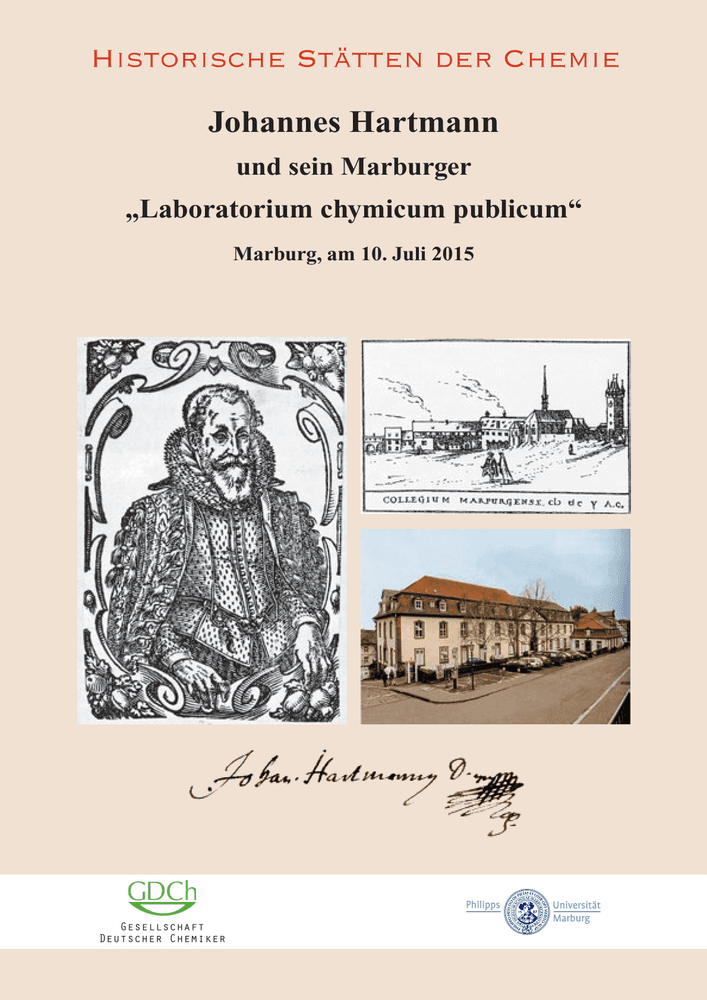
On 10 July 2015, the GDCh and the University of Marburg invite you to Marburg for the unveiling of the “Historical Site of Chemistry” commemorative plaque. Johannes Hartmann (1568–1631) was appointed “Professor Publicus Chymiatriae” at the then still young University of Marburg by Landgrave Moritz of Hesse-Kassel, a scholar, and established the world’s first “Laboratorium Chymicum Publicum”. He taught there until 1621, when he moved to Kassel to serve as personal physician to the Hessian landgraves. The University of Marburg began in three secularised churches. Hartmann’s laboratory was located in the Franciscan monastery founded in 1234, also known as the Barefoot Monastery. The buildings of the former Franciscan monastery, which have belonged to the university since 1528, have survived to the present day with only a small part of their medieval structure intact; the “Institute of Sport Science and Motology” at Philipps University of Marburg, at Barfüßer-Straße 1, now stands above some of the surviving foundations. At that time, chemistry existed at universities only as an auxiliary science of medicine. Hartmann’s practical course participants were therefore medical students. Chymiatria refers to the branch of chemistry devoted to medicine. Students could attend lectures on chymiatria while also preparing chymiatrical formulations in the laboratory, thereby gaining practical experience in chemistry and the preparation of medicines. A vivid insight into Hartmann’s work is provided by his laboratory diary, written in Latin in 1609.
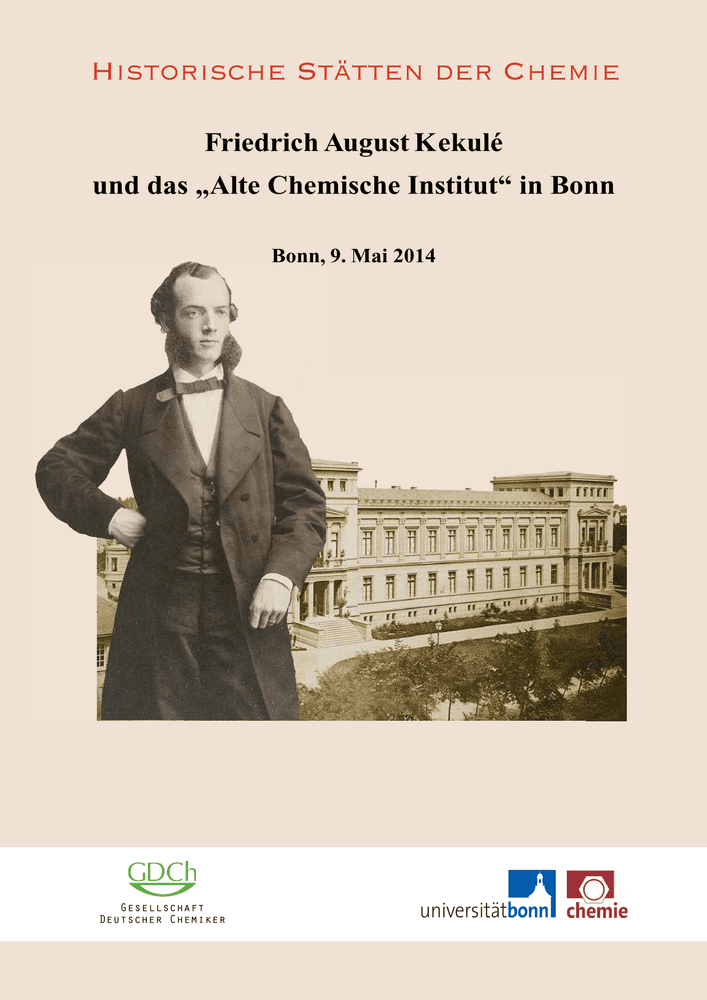
On 9 May 2014, the Old Chemical Institute in Bonn—where Friedrich August Kekulé began his work in 1867 and where he lived, taught and conducted research until his death—was included in the GDCh’s “Historic Sites of Chemistry” programme. You can also download the invitation flyer. Friedrich August Kekulé von Stradonitz (1829–1896) was a German chemist and natural scientist who laid the foundations for the modern structural theory of organic chemistry. He is famous for his daydream, which is said to have inspired his theory of benzene and the benzene ring, and which he described in his speech at the Benzene Festival in Berlin in 1890.
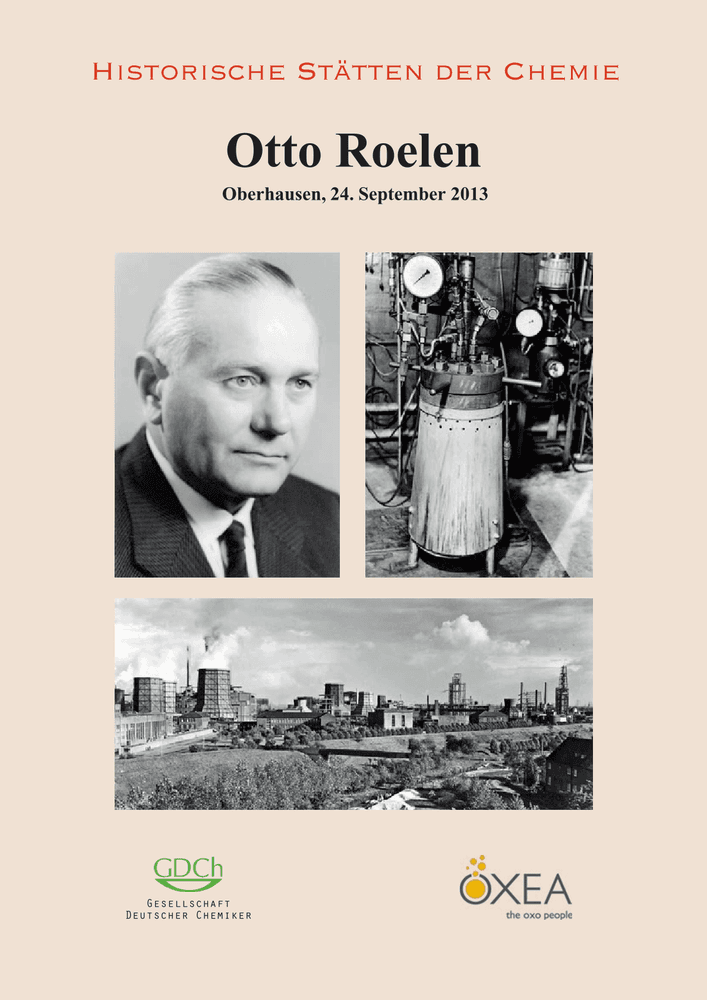
More than twelve million tonnes of so-called oxo alcohols are produced every year in Oberhausen-Holten and around the world using the oxo synthesis (hydroformylation), discovered by Otto Roelen in 1938. Many chemists know of his discovery, but few know the inventor. On 24 September 2013, the GDCh and OXEA will honour the groundbreaking work of Otto Roelen (1897–1993) in the field of hydroformylation (oxo synthesis). This discovery—a reaction of olefins with carbon monoxide and hydrogen—paved the way for producing aldehydes and their downstream products (carboxylic acids and alcohols) from fossil feedstocks. Also being honoured are the Fischer–Tropsch process, first practised on an industrial scale at the Ruhrchemie plant (producing hydrocarbons from carbon monoxide and hydrogen), and the large-scale production of high-molecular-weight polyethylene using Karl Ziegler’s process (1898–1973). The application of oxo synthesis and Ziegler polymerisation marked the beginning of the era of industrial homogeneous catalysis.
On 18 July 2013 in Wiesbaden, the GDCh designated the chemical laboratory Fresenius Wiesbaden, opened by Carl Remigius Fresenius in 1848, as the twelfth “Historic Site of Chemistry”, recognising the beginnings of Analytical Chemistry. When Carl Remigius Fresenius was born in Frankfurt am Main on 28 December 1818, Frankfurt was a Free City. His grandfather was a pastor in Frankfurt and, worth mentioning, Goethe’s baptismal pastor; his father was an advocate. With C.R. Fresenius, a tradition of chemists spanning generations began in the Fresenius family. Many members of subsequent generations have taken on the task of becoming chemists and carrying the laboratory into the future, right up to the present day. C.R. Fresenius carried out his first chemical experiments in his parents’ garden house, joined the Stein pharmacy in Frankfurt as an apprentice, and studied chemistry and natural sciences in Bonn in 1840. And he was already publishing. The first edition of his “Guide to Qualitative Analysis” was published. In 1842, Fresenius became a state assistant at the university laboratory in Gießen, where he earned his doctorate under—Justus Liebig! In 1844, when he was barely 26 years old, he became a Privatdozent in Gießen, and just a year later, in 1845, he was appointed professor at the Ducal Nassau Agricultural Institute at Hof Geisberg near Wiesbaden. He married and moved to Wiesbaden. He and his wife Charlotte Rumpf had three sons and four daughters. Two of his sons, Theodor Wilhelm and Remigius Heinrich Fresenius, would later continue his laboratory. His great entrepreneurial idea was to establish his own modern chemical laboratory, one that would overcome the obstacles and fill the gaps he saw at the time in the advancement of the chemical sciences. The development of modern analytical chemistry took root in his laboratory, founded and shaped by C.R. Fresenius to this day. He acquired the building at Kapellenstraße 11 in Wiesbaden at his own expense for his project and was not deterred even by the turmoil of the March Revolution of 1848. With the approval of the Ducal Nassau Ministry, he opened his laboratory on 1 May 1848 with five students and one assistant. The institute grew; a few years later, it had 38 students and three assistants. In 1863 he founded the pharmaceutical training institute alongside it, and in 1862 the journal Zeitschrift für Analytische Chemie, which continues to this day under the name “Analytical and Bioanalytical Chemistry”. In 1876/77 he organised systematic training for food chemists in his laboratory, and in 1884 a bacteriology department was opened. From 1895, candidates could prepare for the food chemist examination at the Wiesbaden laboratory. C.R. Fresenius, the chemist, teacher, author and entrepreneur, counted among his students many future founders of the emerging chemical industry. Here, too, he left a lasting mark. His working life came to an end in 1897. He died, and his descendants ensured the laboratory’s continued development through changing times and right up to the present day. Since 1961, the GDCh has awarded the Fresenius Award for outstanding achievements in Analytical Chemistry, thereby commemorating C.R. Fresenius.
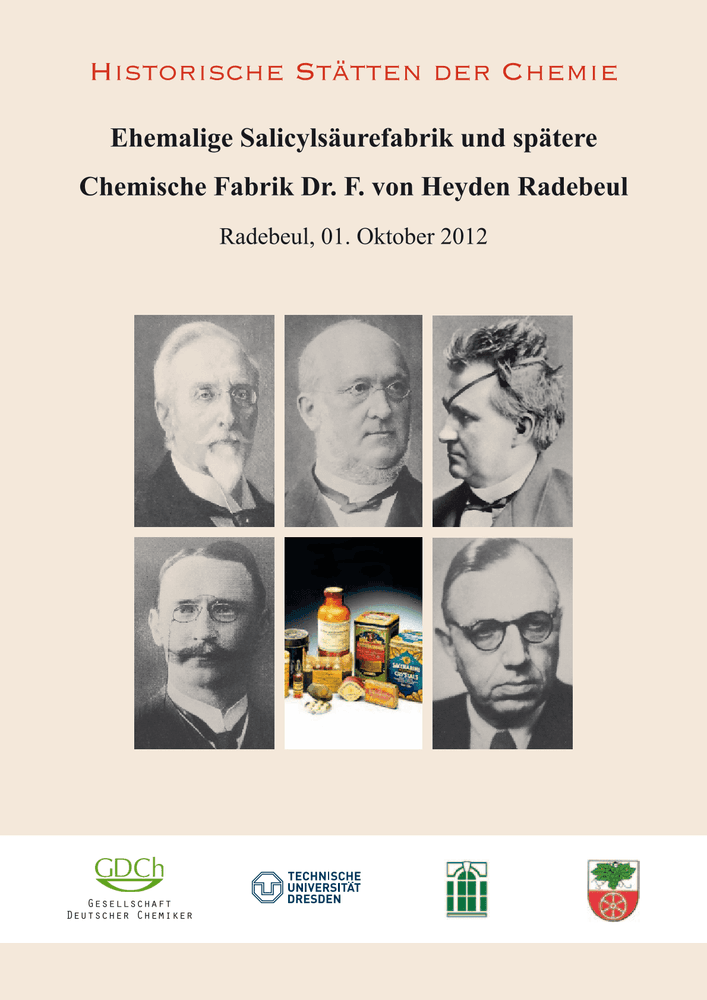
On 1 October 2012, the GDCh honoured the site where Friedrich von Heyden, Hermann Kolbe (aspirin), Richard Seifert (Odol) and, in particular, Richard Müller (silicones) worked, at 01445 Radebeul, Meißner Str. 35 (formerly the Salicylic Acid Factory of Dr F. v. Heyden). More than 130 years ago, Dr Friedrich von Heyden was the first to produce a synthetic pharmaceutical active ingredient on an industrial scale: salicylic acid. He is therefore regarded as one of the founders of the modern pharmaceutical industry. A chemical factory was built in the village of Radebeul, near Dresden, to manufacture it. The old production and administration building, which currently houses Arevipharma GmbH, is a listed building. Processes for producing active ingredients are still being developed and optimised here. The chemist Schmitt, together with his students Richard Seifert and Friedrich von Heyden, improved the salicylic acid synthesis presented by Hermann Kolbe (the Kolbe–Schmitt reaction). Kolbe’s son Carl Kolbe, also a chemist, first took over as Head in 1884 and then acquired the factory from its founder in 1885. His daughter Johanna married the chemist Ernst von Meyer (University of Leipzig, later Dresden University of Technology), who was also closely associated with the factory. After Hermann Kolbe, a partner and scientific Head of von Heyden’s Salicylic Acid Factory in Radebeul, died, Schmitt took over his duties. He was also one of the co-founders of the German Chemical Society, whose Board elected him in 1896. After attending the G. E. Lessing Gymnasium in Döbeln, Richard Müller studied chemistry at the University of Leipzig, where he received his doctorate in 1931. From 1933, he worked as a laboratory Head in Radebeul at the von Heyden Chemical Factory. During his research there, he succeeded in producing methylchlorosilanes on an industrial scale in 1941; these are starting materials for the manufacture of silicones. At the same time, the American chemist Eugene G. Rochow developed the same process. As they developed it independently of one another, the process is now known as the Müller–Rochow synthesis. Müller played a major role in rebuilding the chemical industry in Radebeul after the end of the Second World War. In 1951, he received the National Prize of the GDR. In 1952, he became Head of VEB Silikon-Chemie in Nünchritz, a spun-off branch of the von Heyden Chemical Factory, and in 1953 scientific Head of the entire company. He showed great civic courage during the uprising of 17 June 1953, when he spoke on behalf of the workforce at the now state-owned von Heyden Chemical Factory. From 1954 to 1972, Müller taught as Head of the Institute of Silicone and Fluorocarbon Chemistry at Dresden University of Technology, which awarded him an honorary doctorate in 1992.
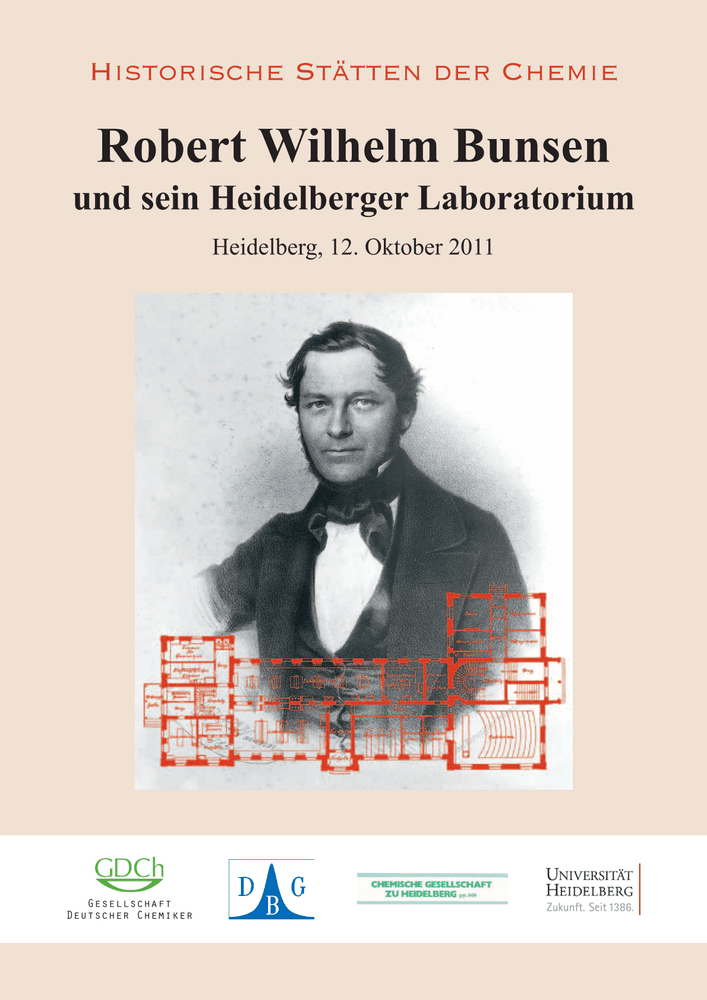
Robert Wilhelm Eberhard Bunsen (* 30 March 1811 in Göttingen; † 16 August 1899 in Heidelberg) was a German chemist. Together with Gustav Robert Kirchhoff, he developed spectral analysis, which can be used to identify chemical elements with great specificity. He perfected the Bunsen burner, named after him, and invented the Bunsen cell and the Bunsen photometer. In 1852, Bunsen took over Leopold Gmelin’s chair at the University of Heidelberg. Here, too, he was given a new laboratory (with living quarters). Using nitric acid, he succeeded in producing pure metals such as chromium, magnesium, aluminium, manganese, sodium, barium, calcium and lithium by electrolysis. From 1852 onwards, he worked with Sir Henry Roscoe to investigate the light-induced formation of hydrogen chloride from hydrogen and chlorine. After seven years, Bunsen ended his collaboration with Roscoe in 1859 and began working with Kirchhoff on the spectral analysis of chemical elements. Spectroscopy made it possible to study the characteristic spectral lines produced when chemical substances were heated in flames. For this purpose, Bunsen perfected a special gas burner, originally invented by Michael Faraday, which would later bear Bunsen’s name. Through spectral analysis of the mineral water from Bad Dürkheim, Bunsen and Kirchhoff discovered the alkali metals caesium and rubidium in 1860/61. Their studies also made it possible to explain the Fraunhofer lines, thereby laying one of the most important foundations of modern astronomy.
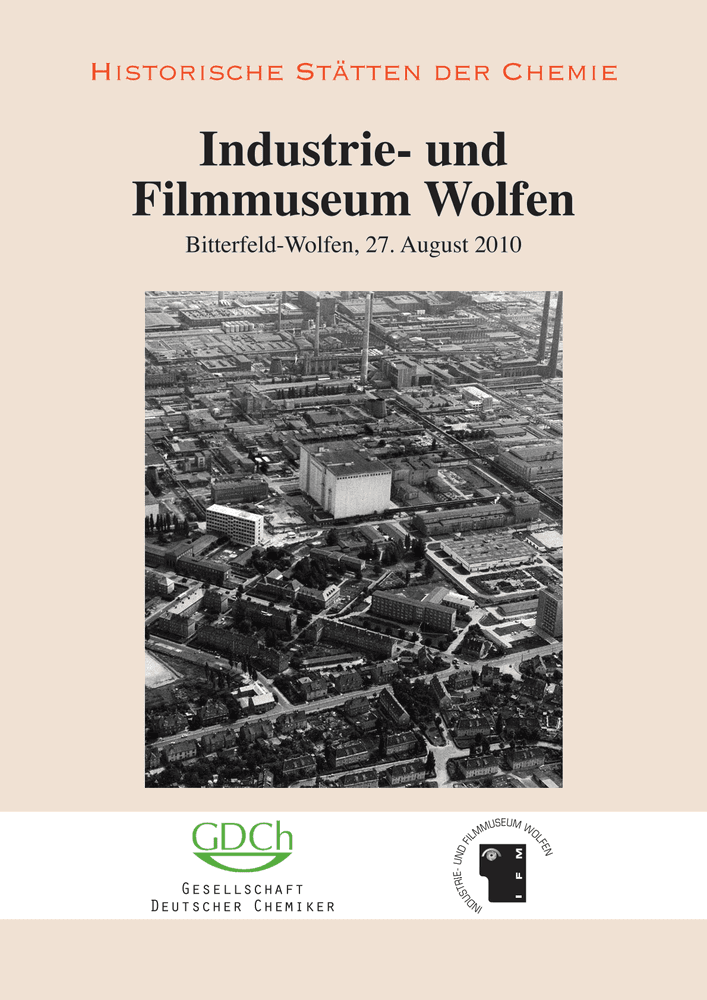
The Wolfen Film Factory is of great importance as a “Historic Site of Chemistry”, as production began here in 1910, initially with cine film. By the mid-1920s, the Wolfen Film Factory had become the largest film factory in Europe. Today’s museum was established in 1993 in a former coating plant. Visitors can see the entire manufacturing process for photographic film, using original machines at the original site. The outstanding exhibit is the original coating machine, on which the world’s first multilayer colour film (Agfacolor-Neu) was produced in 1936. The combination of a historic production site and an extensive archive is unique in the world.
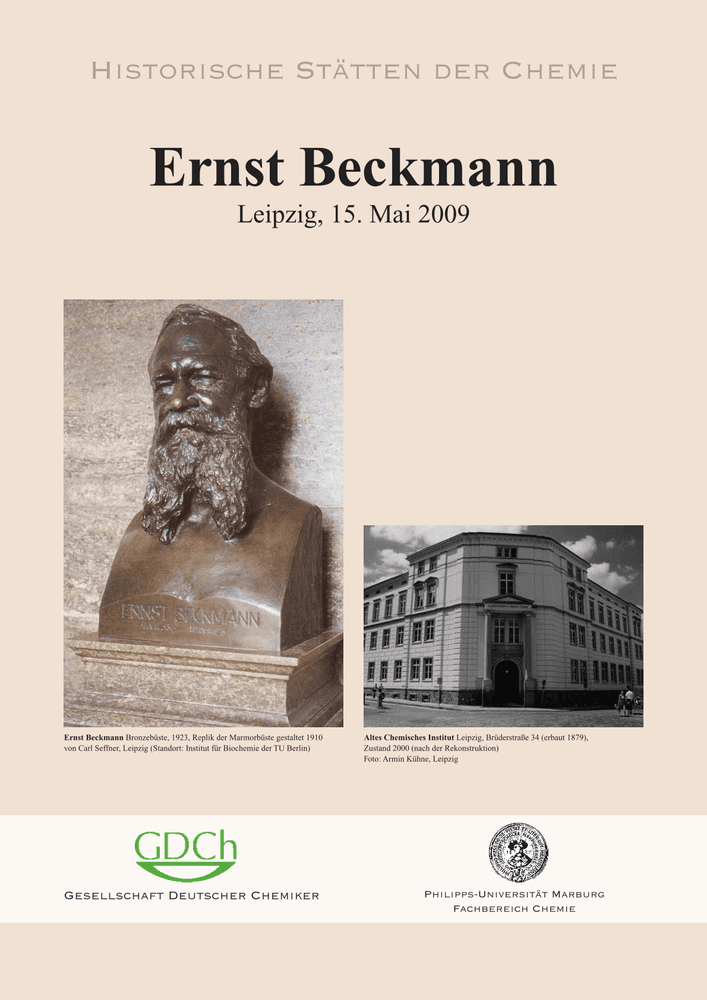
Honouring the workplace of Ernst Beckmann and other renowned Leipzig scientists On 15 May 2009, the GDCh and the Faculty of Chemistry and Mineralogy at Leipzig University commemorated the pioneering work of Ernst Beckmann (1853–1923) in physical and synthetic organic chemistry.
Max Planck Institute for Coal Research, Mülheim/Ruhr On 8 May 2008, the GDCh and the Max Planck Institute for Coal Research in Mülheim an der Ruhr honoured Karl Ziegler’s (1898–1973) pioneering work in organic and organometallic chemistry, as well as in chemical catalysis. The patent, filed in 1953, for producing high-molecular-weight polyethylene at normal pressure and room temperature using “organometallic mixed catalysts” made from aluminium alkyls and transition metal compounds sparked rapid progress in the large-scale production of polyolefins, which are used in many ways as inexpensive plastics. Research and development in the field of “Ziegler chemistry” remains of great economic and technical importance to this day. Karl Ziegler received the Nobel Prize in Chemistry in 1963, jointly with Giulio Natta, who elucidated the stereochemistry of the polymerisation of propylene using Ziegler catalysts. Karl Ziegler co-founded the GDCh in 1946 and was its first president until 1951. The GDCh awards the Karl Ziegler Award and the Karl Ziegler Young Scientist Award, endowed by his daughter, Dr Marianne Witte.
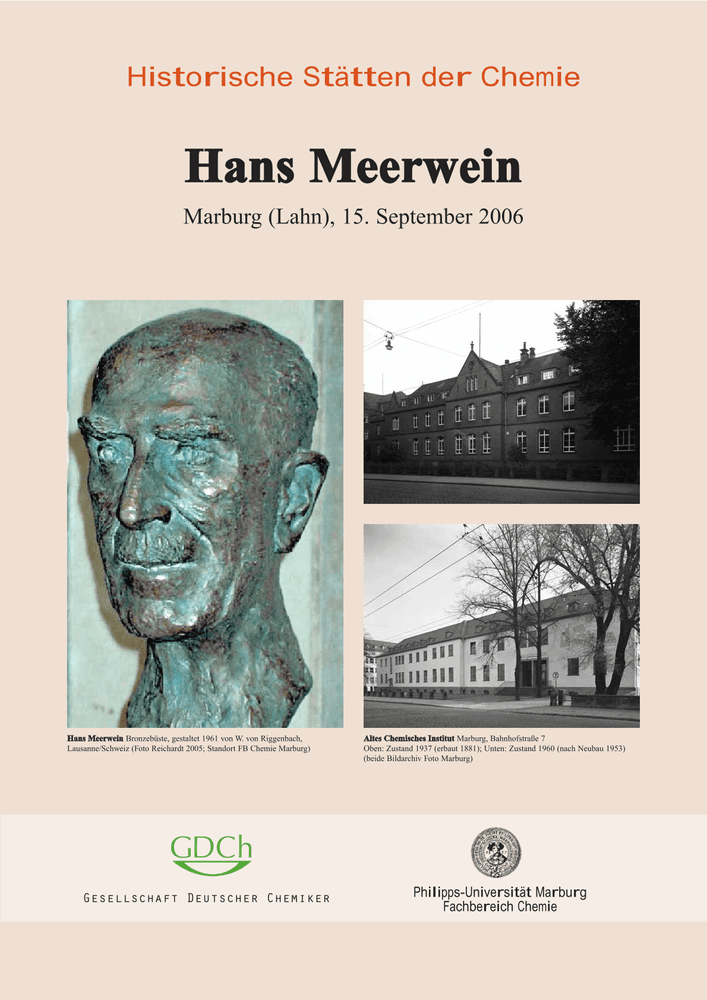
Old Chemical Institute of the University of Marburg Hans Meerwein (1879–1965) carried out pioneering work in the field of synthetic and mechanistic organic chemistry in this building. The discovery that carbenium ions occur as intermediates was a milestone in understanding the course of organic chemical reactions. Many of the reactions he investigated now bear his name, such as the Wagner–Meerwein rearrangement. Hans Fischer, Adolf Butenandt, Otto Hahn, Karl Ziegler and Georg Wittig, who later won Nobel Prizes in Chemistry, also worked here as students and young scientists. Programme for the commemorative event on 1 September 2006.
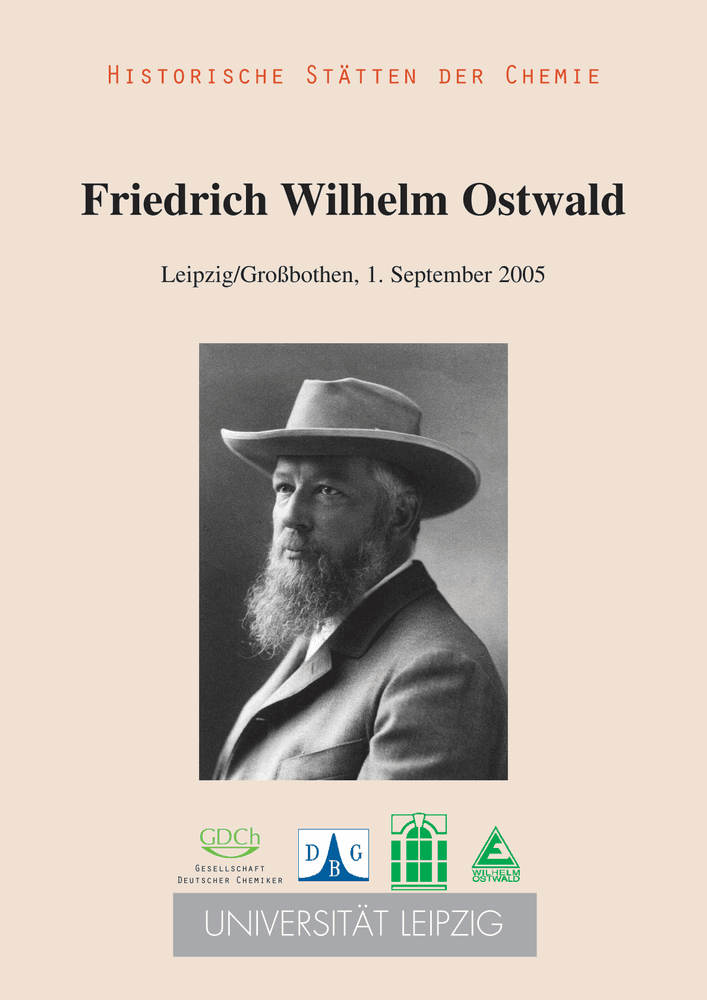
Country estate Haus "Energie" in Großbothen near Leipzig Wilhelm Ostwald (1853–1932) was one of the most important chemists of his time, and many terms are still associated with his name today. He was awarded the Nobel Prize in 1909 for his work on catalysis, chemical equilibria and reaction rates, i.e. for establishing physical chemistry.
Old Chemical Institute of the Technical University Bergakademie Freiberg To mark the 100th anniversary of the death of Clemens Winkler (1838–1904), the Old Chemical Institute of the Technical University Bergakademie Freiberg was included in the ‘Historic Sites of Chemistry’ programme. The event took place in Freiberg on 20 and 21 October 2004. From 1873 to 1902, Clemens Winkler was Professor of Inorganic and Analytical Chemistry at the Bergakademie Freiberg, where, among other things, he discovered the element germanium in 1886.
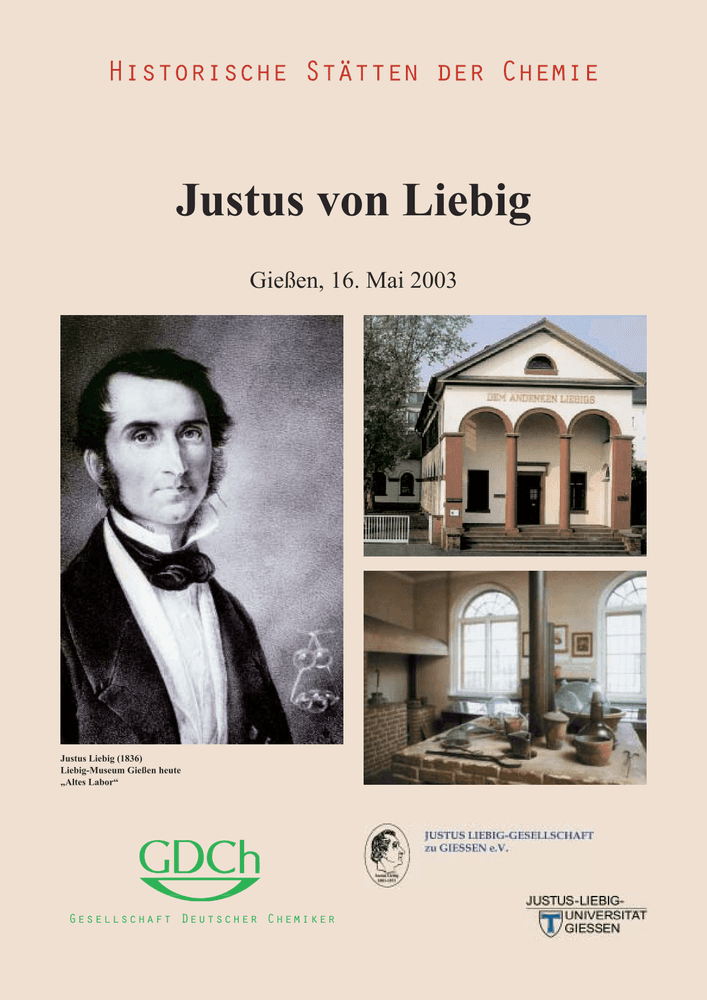
Liebig Museum Gießen As one of the GDCh events marking the Year of Chemistry 2003, the former Liebig laboratory, now the Liebig Museum, was included in the GDCh programme "Historic Sites of Chemistry" on Friday, 16 May 2003, during the week of celebrations marking the 200th birthday of Justus von Liebig. In this building, Justus von Liebig (1803–1873) designed and established the first modern university laboratory for chemistry. Here he founded the practice-oriented study of chemistry and taught and conducted research from 1824 to 1852. During this period, together with his students, he carried out pioneering and groundbreaking work in the fields of analytical, organic, agricultural and physiological chemistry.
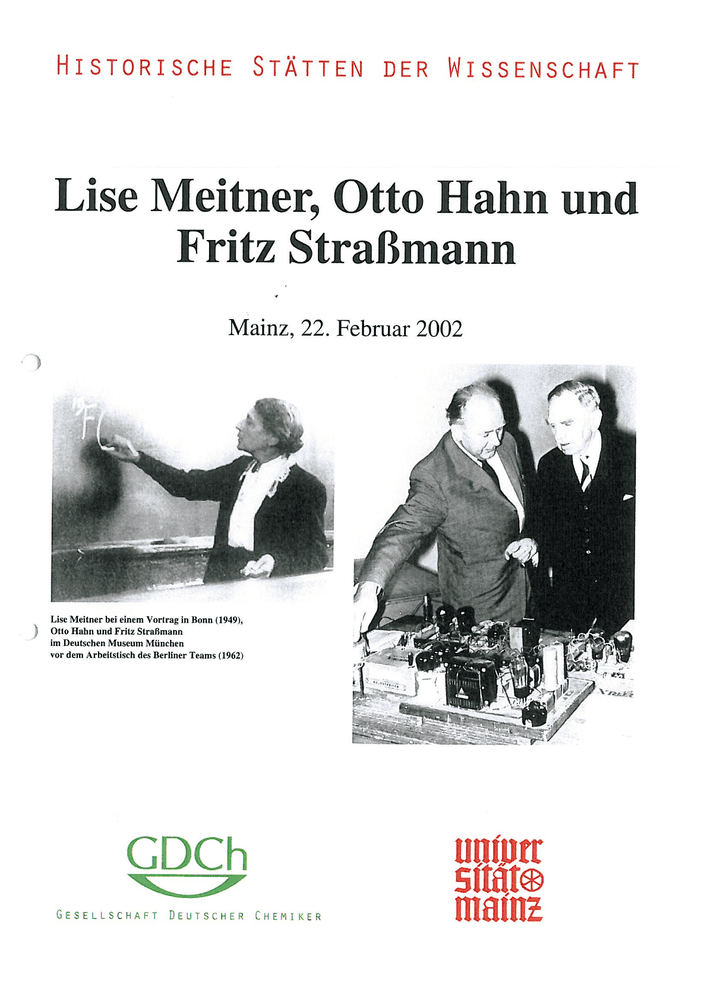
Institute of Nuclear Chemistry at Johannes Gutenberg University Mainz Unveiling of a plaque commemorating the joint work of Lise Meitner, Otto Hahn and Fritz Straßmann. On 22 February 2002, the 100th anniversary of Fritz Straßmann’s birth, the GDCh paid tribute to the joint work of Lise Meitner, Otto Hahn and Fritz Straßmann. In 1938, their work led to the discovery and interpretation of nuclear fission. At a celebratory event at Johannes Gutenberg University Mainz, where Straßmann taught and conducted research from 1946 to 1970, the “Historic Sites of Science” plaque was unveiled—the second of its kind in Germany. The university’s Institute of Nuclear Chemistry has set up a dedicated website for the occasion.
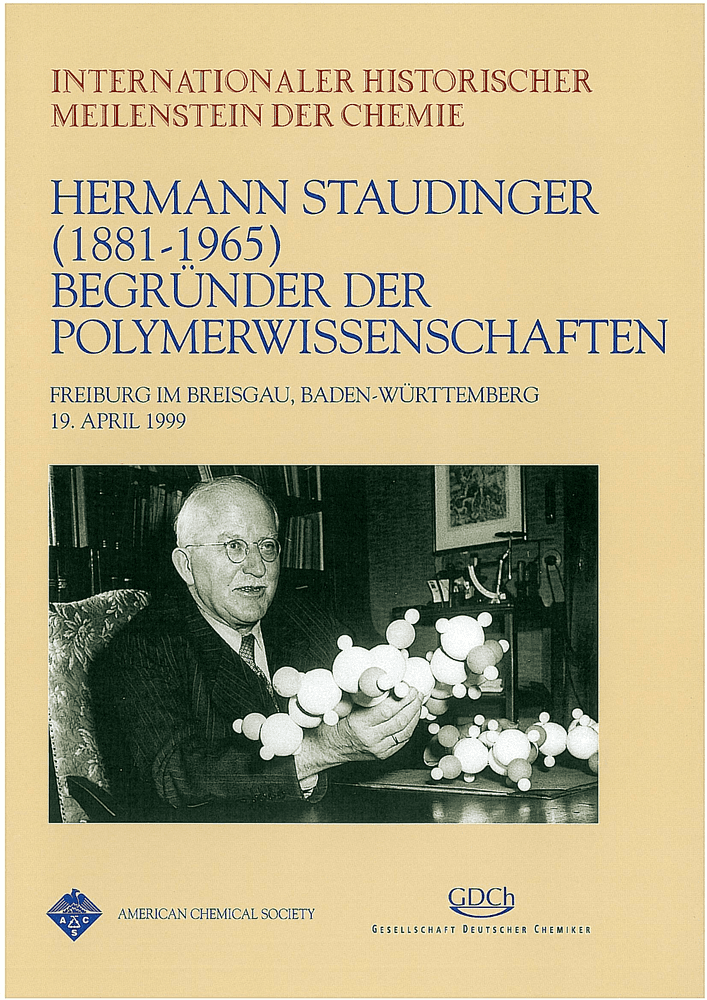
Institute of Macromolecular Chemistry at the University of Freiburg Hermann Staudinger (1881–1965) is regarded as the “father” of macromolecular chemistry. In 1999, the GDCh and the American Chemical Society (ACS), as part of the ACS Historic Chemical Landmarks Program, recognised Nobel laureate Hermann Staudinger’s (1881–1965) establishment of polymer science as an “International Historic Chemical Landmark”. A commemorative plaque was installed at the Institute of Macromolecular Chemistry at the University of Freiburg on 19 April 1999.