Wolfgang J. Hönle Foundation
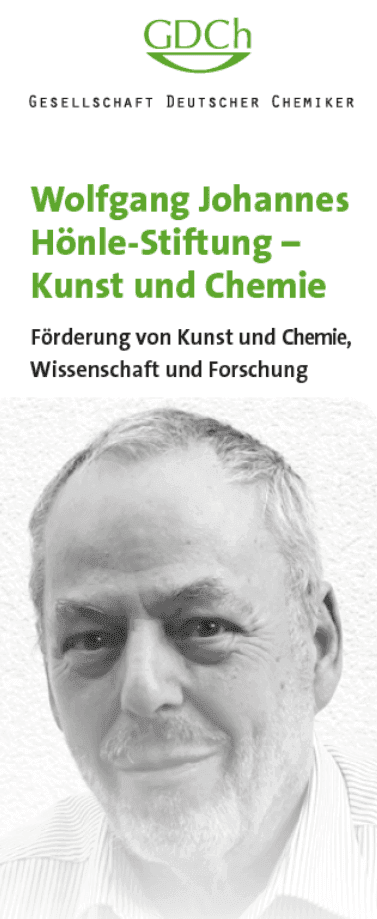
The foundation was established in December 2016 as a charitable, non-independent foundation at the German Chemical Society. The idea behind it: art and chemistry should enrich one another. The founder, Dr. Wolfgang Johannes Hönle, therefore sees the GDCh as the perfect trustee.
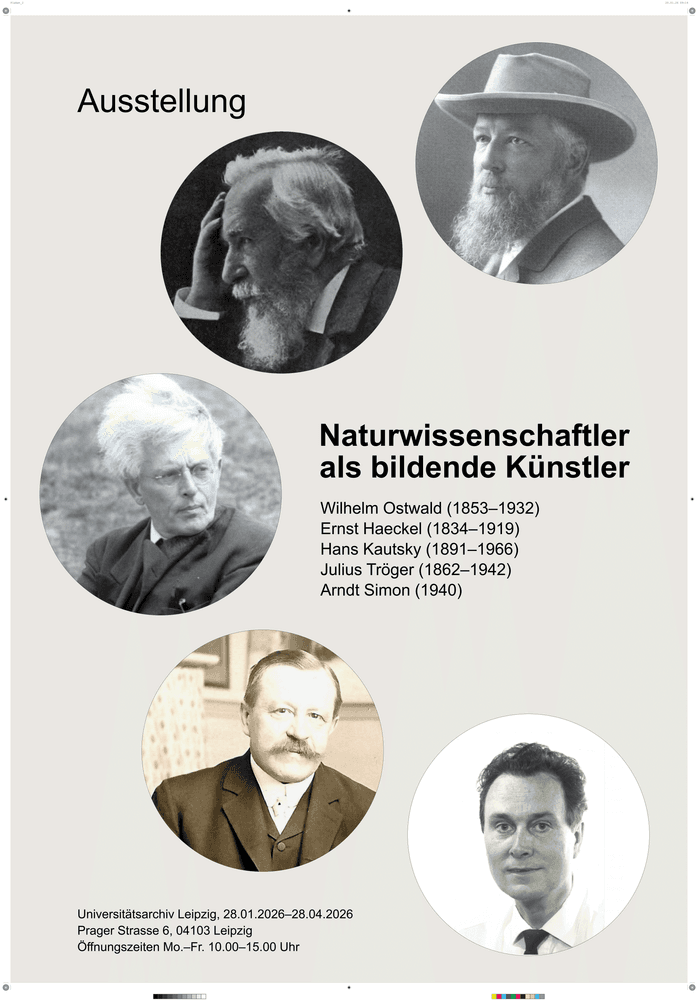
In keeping with Wilhelm Ostwald’s vision of building bridges across disciplines, the foundation aims to foster interaction and a better understanding between art and culture on the one hand and chemistry in science and research on the other by funding a wide range of projects.
The founder, Dr. Wolfgang Johannes Hönle, worked in the fields of inorganic chemistry and solid-state research. For many decades, he worked in solid-state research for the Max Planck Society and was involved in the planning, construction and operation of research institutes.
The founder, Dr Wolfgang Johannes Hönle, is particularly keen to make quick, straightforward decisions on funding. The decision-making body is the Board of Trustees. Projects that bring together different disciplines are particularly eligible for funding.
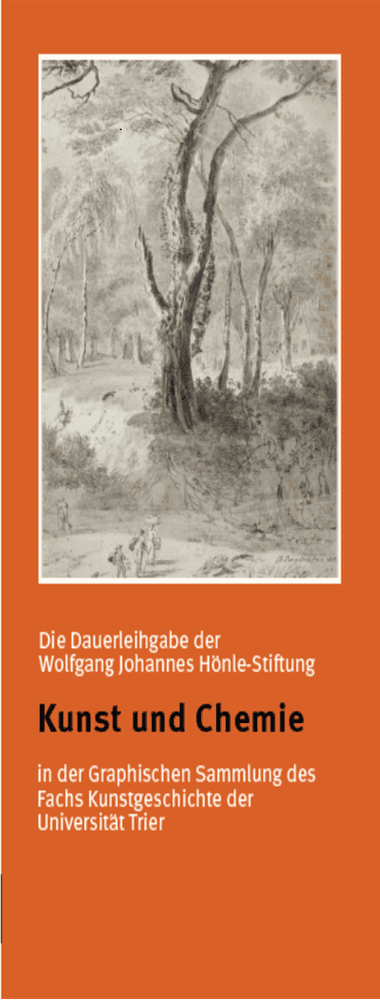
by developing the collections from the founder’s private holdings, which were transferred to the foundation’s assets and placed on permanent loan to the University of Trier. The value of the collections can be increased through acquisitions and exchanges. Exhibitions and/or permanent loans to other suitable institutions are envisaged. Plans also include producing publications about these collections and researching the objects in them as part of projects.
Awarding grants for research work/projects by diploma students, doctoral candidates, postdoctoral researchers and professors (m/f/d) in the field of solid-state research (chemistry, physics and materials research), as well as disseminating findings in solid-state research through suitable public relations and press coverage.
Extensive art collections and financial assets were contributed to the Foundation. The art collections comprise approximately 6,500 prints in total and come from the founder’s private collection. They were transferred to the Foundation’s assets and placed on permanent loan to the University of Trier. Most of the Foundation’s financial assets derive from the inheritance of the founder’s mother, Edith Hönle (1923–2009), who selflessly preserved and passed on the family inheritance. This inheritance also made it possible to build up the art collections.
In the middle of the First World War, in October 1916, Wilhelm Ostwald (1853–1932) wrote the preface to his “Colour Primer” in Großbothen, Saxony. It was published that same year in a print run of 1,200 copies and soon became a bestseller in the modern sense of the word. It contained eight drawings and 192 colour samples, which were not printed but made from pigment swatches, some by the author himself and some “by hand under his direct supervision, and are therefore much more accurate than printed ones could be at this time”. In 1917, Ostwald was able to publish the second and third editions within just a few months; the fourth and fifth editions followed in May 1920.
Published to mark Ostwald’s 170th birthday, the new edition of the “Colour Primer”, based on the fourth and fifth editions, which Ostwald himself described as an edition thoroughly revised from the ground up, contains nine drawings and 238 colour samples. This new edition is “enhanced” by an extensive afterword by Eckhard Bendin (*1941), a recognised expert on Ostwald’s work on colour and himself the author of numerous contributions to colour theory. The double cone based on Wilhelm Ostwald, shown on page 57 in fig. 5, has been part of the permanent loan from the Wolfgang Johannes Hönle Foundation “Art and Chemistry” to the Custody of TU Dresden since 2022.
Chair: Evamarie Hey-Hawkins, Prof. Dr. Dr. h.c. mult. (ret.) University of Leipzig
Deputy Chair: Dr. W.J. Hönle, Ettlingen
Members:
Prof. Dr. Ruth Bieringer, Freudenberg FST GmbH, GDCh President 2026/27
Dr. Michael Maeder, Dresden State Art Collections Dresden
Dr. Susanne Bauer, qualified cultural studies graduate
These funding guidelines apply to the award.
The special issue can be downloaded from the Wilhelm Ostwald Society website..