
Dres.-Münch Foundation
To promote science and research in the field of chemistry and the patent protection of the results of science and research, Dr. rer. nat. Volker Münch and Dr. paed. Elke Münch founded the Dres. Volker and Elke Münch Foundation. Its purpose is the annual award of the

Dr. rer. nat. Volker Münch was a co-inventor on numerous patent applications and patents. He has been working in the field of intellectual property (IP) protection since 1985. He began in the patent department of BASF AG, then worked as a self-employed patent attorney at a law firm near Düsseldorf, and has run his own firm since 2013. For many years, the benefactor taught “patent law for chemists and pharmacists” at universities in Germany and abroad. He was actively involved in training patent attorney candidates and is an honorary judge at the Patent Attorney Chamber of the Higher Regional Court of Munich and an alternate member of the Board of the Institute of Professional Representatives before the European Patent Office (epi). One of the guiding principles of his professional work is to familiarise young potential inventors with the protection of their IP and actively support them in obtaining intellectual property rights, helping them and society to progress.
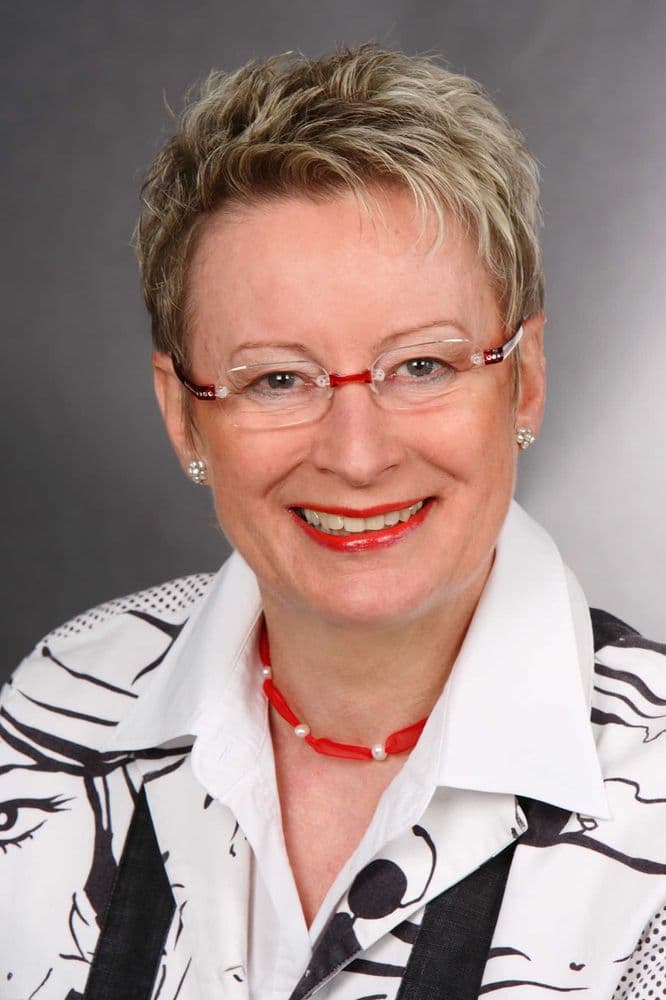
Dr. paed. Elke Münch worked as a headteacher and later as an adviser at the Rhineland-Palatinate State Institute for Education, at the interface between schools and the world of work. Her main focus was on building contacts and cooperation with institutions in the business sector. As a part-time trainer, she ran seminars for trainers in the chemical industry for more than 20 years. As an education consultant in the coatings industry, she developed a new training concept. She has published her experience of schools, young people and training issues in numerous specialist articles. Since 2013, she has managed the office of her husband’s patent law firm. The guiding principle of her professional work is to support young people in particular in developing their diverse talents, enabling them to lead fulfilling lives, both personally and professionally, in a free society.
The prize is worth €7,000 and is awarded preferably to young inventors who have made a pioneering invention in the field of chemistry and chemical process engineering. The prize money supports the filing of a German patent application establishing priority for the invention with the German Patent and Trade Mark Office. The prize money is unrestricted, and there is no obligation to the donors or the foundation.
The aim is to recognise pioneering research and development whose results are so significant that they merit patent protection, thereby also making them known to the public and encouraging further research and development.
awardees are considered particularly deserving if they have conducted research and development in the field of chemistry and chemical process engineering whose results
Important: Applicants must hold the sole rights to the invention and be certain that it is patentable. Patentability is also lost if the invention has been published previously, for example in competitions such as "Jugend forscht".

This year, the Dres.-Volker-und-Elke-Münch-Stiftung is recognising the team comprising Dr. Melanie Walther (University of Bremen), Dr. Pascal Böwer and Tim Thiedemann (both Carl von Ossietzky University of Oldenburg). The team is receiving the award for developing an innovative biotechnological process that, combined with a general purification technology, can be used to produce biofuels for petrol engines from organic waste.
The purification technology for fermentation processes combines the advantages of simple synthesis and easy scalability. Compared with the more than 100 components of varying compositions found in petrol, the process releases just three chemical components in a defined mixture. The process becomes economically viable at a significantly smaller scale. By using organic residues in combination with carbon capture and storage (CCS) technologies, the biofuel is produced with a negative CO2 balance, actively removing CO2 from the atmosphere on a large scale. In addition, the new biotechnological process is energy self-sufficient and produces a fertiliser for agriculture as a by-product.
| 2024 | Melanie Walther (University of Bremen), Pascal Böwer, Tim Thiedemann (both Carl von Ossietzky University of Oldenburg) | |
| 2023 | Sebastian Hasenstab-Riedel, Rainer Haag, Olaf Wagner, Merlin Kleoff, Alejandro Jose Lorente Sánchez (all FU Berlin) | |
| 2022 | Maximilian Röhrl, Josef Breu (both University of Bayreuth), Pier-Lorenzo Caruso and Emily Boswell (both Procter & Gamble) | |
| 2021 | Rainer Ostermann, Felix Leven and Johannes Limberg, Westphalian University of Applied Sciences Recklinghausen |
Applications received will be treated in strict confidence in order to preserve the patentable novelty of the inventions. This also applies to the experts who may be consulted to assess the inventions. Legal recourse is excluded.
The deadline for applications is 30 April each year.
Applications must include the following documents, totalling a maximum of 10 pages :
Applications must be submitted via the Online form.
The advisory board has four to five members and, during the founders’ lifetimes, consists of the founders themselves, a member of the GDCh Patent Law Division and other experts in the field. The advisory board may consult specialists with expertise in the relevant field to assess the applications.
Current members are:
Dr. Volker Münch, Dorsheim (founder)
Dr. Elke Münch, Dorsheim (founder)
Dr. Stefan Horstmann, Merck/Darmstadt (Chair, Patent Law Division)
Dr. Stefanie Hering, LyondellBasell