
School and University

    Students and Apprentices

    Undergraduate and PhD Students

    Teachers

    Higher Education Statistics

    Scholarships

Career

    Career Guidance

    Job Vacancies

    Salary Information and Income Survey

    Academy

    Mentoring

Community

    Divisions

    Young Chemists’ Forum (JCF)

    Local Sections

    Regulars' Get-Togethers

    Chem_Connect

    Equal Opportunities and Diversity

    Partnerships and International Activities

    Volunteering

    Membership

Discover Chemistry

    Top Topics

    “Nachrichten aus der Chemie” – Members’ Magazine

    Scientific Journals

    Statements and Position Papers

    Press Releases

    Brochures and Academic Publications

    Books, Videos and Podcasts

    The Fascination of Chemistry

    Cartoons

    Biographies of Female Chemists

Events

    Conferences

    Academy

    Lectures

    Further Events

Awards

    Prices

    Historical Sites of Chemistry

About Us

    Board and Other Bodies

    The Office

    Statutes and Code of Conduct

    Charities

    Press and Public Relations

    Sustainability

MyGDCh

GDCh

Chemistry for a better world

© 2026 Gesellschaft Deutscher Chemiker. All rights reserved.

NewsletterDownloadsPressContactGDCh Shop
Legal NoticeData PrivacyTerms & Conditions
Homepage/Career/Careers guidance/Diversity of Career Profiles in Chemist.../Career interviews/University lecturer

I AM: University lecturer

"Chemistry is essential for life as we know it. In teaching, I show why this is so – and as a researcher, I contribute to solving current challenges."
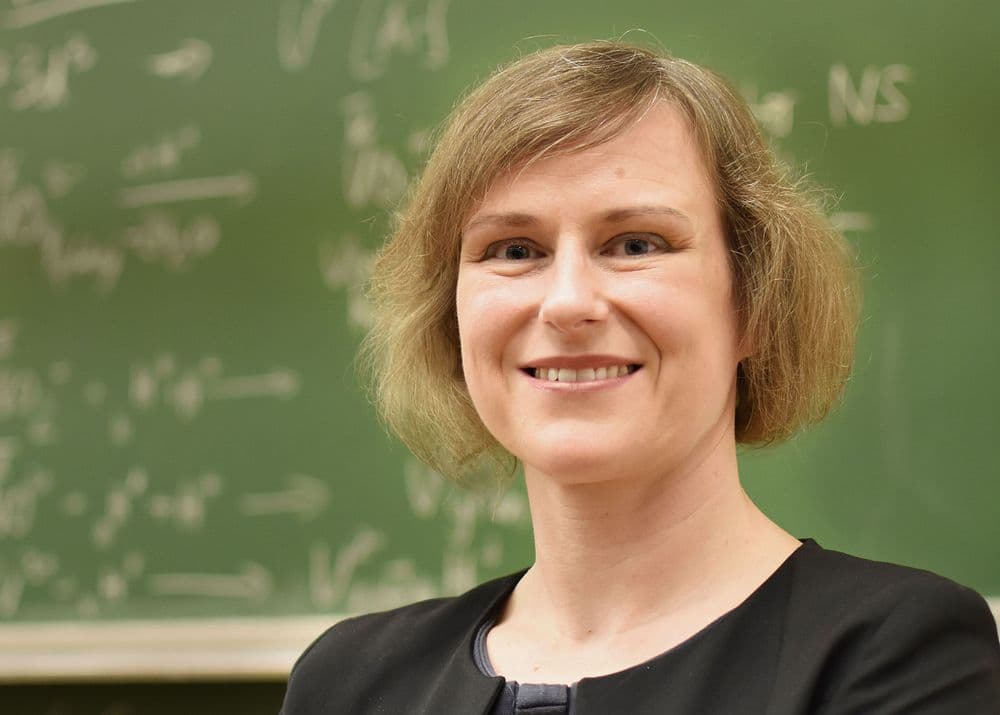
Prof. Dr. Birgit Weber | University of Bayreuth

Prof. Dr Birgit Weber ...

She already greatly enjoyed chemistry at school. It is therefore not surprising that she chose to study chemistry. After completing her studies, she obtained her doctorate and decided to pursue an academic career. Today, she is a university lecturer and holds a professorship at the University of Bayreuth.

The career interview

Even at school, I enjoyed chemistry – alongside mathematics – very much, so when it came to choosing my degree, I opted for chemistry rather than mathematics. During my studies, it became clear that this had been a very good decision, because chemistry is not a purely theoretical science and I greatly enjoyed the practical work in the laboratory.

The path from studying and completing a doctorate to becoming a university lecturer is somewhat longer than in other professions. Traditionally, it also includes periods abroad and the postdoctoral qualification. In my case, this took around seven years in total. It should be noted that during the postdoctoral qualification, you already work independently and receive an appropriate salary or, in my case at the time, a scholarship. One disadvantage of this route was all the fixed-term contracts and scholarships, which offered little security for planning ahead. Towards the end of my postdoctoral qualification, I began applying for vacant positions. There were relatively many of these at the time, and I soon had an offer for my first permanent position, a professorship, in my hands.

By the end of my PhD, I already knew that I found the combination of research and teaching exciting and wanted to pursue this path.

A university lecturer’s responsibilities cover three major areas: research, teaching and academic self-administration. Research initially involves establishing your own field of research. At first, I couldn’t really imagine where all the questions came from, but in fact every question answered leads to at least three new questions that can be investigated. Applications then have to be written to fund the research, either alone or with colleagues. The results are then presented at Conferences and published in writing as specialist articles.

In addition to lectures, teaching also includes organising practical classes and seminars. In academic self-administration, you can contribute to many different committees.

You should enjoy research, which you can already establish during your doctorate. This also includes exchanging ideas and working with others – colleagues, students and university management. A willingness to communicate is therefore essential. As not everything always works first time, a certain tolerance for frustration and perseverance are also advantageous. English is essential – research in particular is international, and without English you will not get far. For teaching, didactic skills are also beneficial. That is a lot to ask, but the profession is very varied.

A typical working day during the lecture period starts with a lecture in the morning. Students or colleagues often come to me with questions about their studies, the lecture or their research projects. In the afternoons, there are often meetings (2–4 hours), examinations (e.g. for a doctoral thesis) or, in the late afternoon, a lecture given by a guest.

In the “free” time in between, one usually writes reports. During the lecture-free period, the day is not as tightly scheduled. This leaves time to write a publication in peace and quiet. You work very closely with colleagues on many things: in committees, on joint research projects and on applications and publications. It is advantageous if you work well together as a team and support one another. Particularly during the lecture period, there are often enquiries from students that cannot be predicted in advance.

During a doctorate, you gain an insight into research, but generally not yet into writing project proposals to fund that research. During your studies, you see how a lecture is conducted, and during your doctorate you often already supervise interns – these are initial insights into the everyday work of a university lecturer.

You can also try committee work during your studies, for example by getting involved in the student representation. A significant difference is that, as a university lecturer, you have considerably more freedom to decide what should be done in research and teaching. Of course, you then also bear responsibility for these decisions.

I am passionate about research – no one can dictate that to you, and you can drive forward topics that are important to you. This also includes collaborating with colleagues in Germany and abroad. I also enjoy giving lectures and particularly value the fact that my job is so varied and offers excellent opportunities for personal fulfilment. However, this is not possible with a conventional 40-hour week.

Yes, the longer you are involved, the more committee work there is.

As a university lecturer, you have already achieved quite a lot and have a very diverse range of responsibilities. You can take on more administrative duties (working towards university management), focus more strongly on research so that the working group grows, or apply for a larger professorship.

You need to be very enthusiastic about basic research and have a great deal of perseverance for the long journey.

Gender notice

For reasons of readability, gender-specific language forms are not used simultaneously. All references to persons apply to all genders.