
School and University

    Students and Apprentices

    Undergraduate and PhD Students

    Teachers

    Higher Education Statistics

    Scholarships

Career

    Career Guidance

    Job Vacancies

    Salary Information and Income Survey

    Academy

    Mentoring

Community

    Divisions

    Young Chemists’ Forum (JCF)

    Local Sections

    Regulars' Get-Togethers

    Chem_Connect

    Equal Opportunities and Diversity

    Partnerships and International Activities

    Volunteering

    Membership

Discover Chemistry

    Top Topics

    “Nachrichten aus der Chemie” – Members’ Magazine

    Scientific Journals

    Statements and Position Papers

    Press Releases

    Brochures and Academic Publications

    Books, Videos and Podcasts

    The Fascination of Chemistry

    Cartoons

    Biographies of Female Chemists

Events

    Conferences

    Academy

    Lectures

    Further Events

Awards

    Prices

    Historical Sites of Chemistry

About Us

    Board and Other Bodies

    The Office

    Statutes and Code of Conduct

    Charities

    Press and Public Relations

    Sustainability

MyGDCh

GDCh

Chemistry for a better world

© 2026 Gesellschaft Deutscher Chemiker. All rights reserved.

NewsletterDownloadsPressContactGDCh Shop
Legal NoticeData PrivacyTerms & Conditions
Homepage/Career/Careers guidance/Diversity of Career Profiles in Chemist.../Career interviews/Process Developer

I AM: Process Developer

“As a ‘chemist through and through’, I can thrive in a medium-sized company. Developing or optimising new processes in a small team is not only a challenge as a scientist, but also creates and secures jobs.”
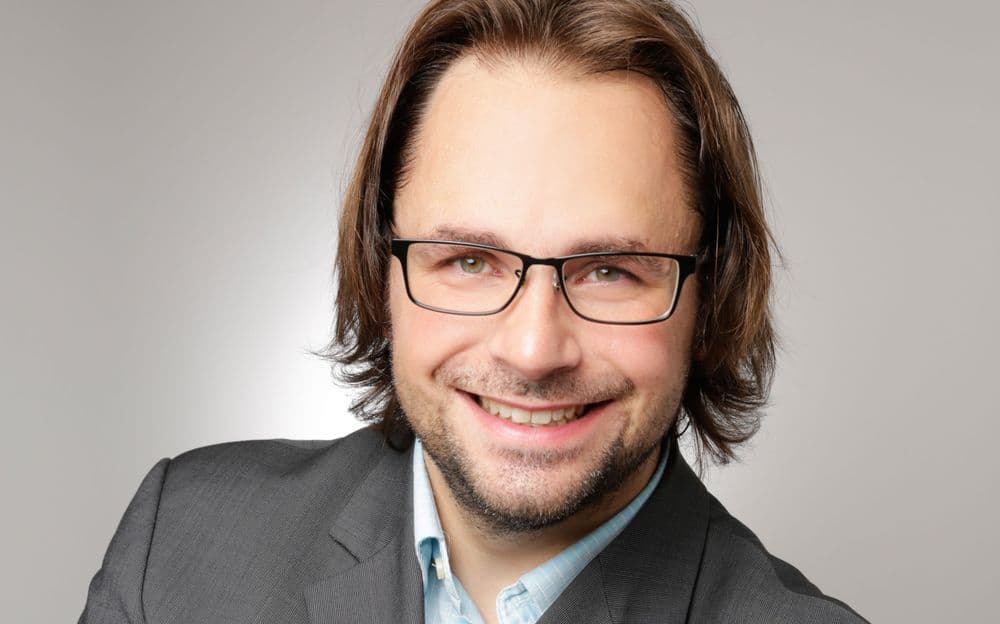
Dr Timo Ott | Grillo-Werke AG

Dr Timo Ott ...

joined Grillo-Werke AG after a one-year postdoctoral position abroad. Initially a Project Head R&D, he is now responsible for managing the R&D chemistry laboratory and the chemistry pilot plant as Head of Product and Process Development.

The career interview

In the field of chemistry, I have always been fascinated by the actual process of a substance transformation. Observing chemical reactions, developing explanatory models, refining them and applying them in new ways has held a special appeal for me in chemistry from a very early stage. That is why I found my interest in the field of “synthetic chemistry”. I do not see myself as a conventional “organic chemist”, “organometallic chemist” or “inorganic chemist”. Rather, I see myself as someone who develops new concepts and applies established ones in order to seemingly outwit nature on the way to new substances and new synthetic routes. Developing a new synthesis is an exciting journey that can take years – and at the end there may perhaps be a small contribution towards a sustainable future.

After completing my doctorate, I spent a year as a postdoctoral researcher at the "Center for Catalysis Research and Innovation" in Ottawa, Canada. Grillo became aware of me through the GDCh applicant database* and brought me back to Germany with a job offer before the application phase I had originally planned. I accepted the offer without any great expectations. In retrospect, I am very surprised and also extremely grateful for the opportunities, trust and flexibility I was afforded at the medium-sized family business. During my studies, I was led to believe that high-level research was only possible at "the chemical giants", research institutions or universities. This turned out to be fundamentally wrong.

* Editorial staff note: The applicant database is no longer active

I had narrowed my choice down early on to two options: an academic career or research in industry. By now, I know that working as a chemist can take on so many different forms and that the range of career profiles can be so diverse – across the most varied industries. I had spent little time finding out more about this and sometimes regret it, because I simply ruled out many opportunities without seeing them. Ultimately, however, I always had a clear idea of what I wanted my future work to look like and, although I got the position at Grillo through a series of coincidences, that vision has so far been fulfilled completely.

Currently, I am Head of Product and Process Development. In this role, I manage the R&D chemistry laboratory and the chemistry pilot plant. I am also the operations manager of a pilot plant for producing a “green acid” for applications in the electroplating, pharmaceutical or cleaning products industries. In these roles, I manage the pilot plant operations team as well as the pilot plant and laboratory teams. These include engineers, chemists, laboratory technicians, mechanics and chemical operators.

The tasks cover three areas: a) Supporting production operations & optimising existing production processes b) Answering chemical questions c) Developing innovative & advanced production processes.

Alongside sound knowledge in all areas of chemistry, proficiency in English, perseverance, resilience, creativity and a willingness to continue learning and think outside the box are important. It is also helpful to look beyond one’s immediate surroundings and demonstrate openness, tolerance and empathy. A willingness to travel is also important.

A certain degree of “practical” aptitude in the laboratory and pilot plant is also significant, even if one may no longer be directly involved in “practical work”. In conclusion, it can be said that success cannot be expected from a “9-to-5 job”. Ideas usually arise outside working hours and are lost if they are not immediately thought through to the end. Flexibility is therefore very important.

After initially dealing with accumulated emails, I usually take a tour of the laboratory and pilot plant to discuss the latest results and other processes, as well as clarify any questions. I then return to my desk to deal with enquiries and messages. I generally use my lunch break to exchange ideas with colleagues.

The afternoon is initially set aside for meetings: I discuss evaluations and analysis data with the laboratory team. Afterwards, I update my manager on the progress of the projects, and we discuss budgets, personnel matters and the next steps. I then return to my desk: planning budgets, placing orders, delegating tasks and so on.

Later on, we discuss the latest results again with colleagues from other departments and managers, and I deal with other outstanding tasks. Once I get home, I devote myself to ideas or other topics relating to chemistry. I am on call for the pilot plant on a weekly basis.

In general, it can be said that the working environment has become more diverse. This is not only due to areas beyond chemistry, such as personnel management, controlling and project management. Communication is also more important and more demanding than it used to be – particularly communication with non-chemists in a wide range of fields (engineers, business economists, lawyers, patent attorneys ...). It is important to bring colleagues up to speed on the substance and inform them about the progress of projects without going into too much depth. Even in larger meetings, it can be challenging to reach all colleagues without boring one half while simultaneously overwhelming the other half. Practical laboratory work has been reduced to a minimum. However, as we often carry out demanding syntheses, it is necessary for me to support the laboratory occasionally, check certain things or try them out myself.

The opportunity to test and develop new chemical reactions after completing my studies, implement them in the pilot plant and ultimately “simply do chemistry” gives me a great deal of pleasure. Working with a productive, well-trained laboratory and pilot plant team is highly motivating. So is the trust placed in me by my superiors. After all, the money and resources invested in research and development (R&D) today produce reliable results at the earliest in the medium term, and these generally only bear sweet fruit in the long term. Without this trust, as well as the necessary perseverance and confidence on all sides, successful R&D cannot be pursued effectively.

My area of responsibility has broadened over the years. Initially, it was mainly limited to one project; then further projects, duties and responsibilities were added. The team has also grown. At first, there were three of us; today, 17 employees work in the laboratory and pilot plant. This allowed me to grow along with my responsibilities over time. R&D is often just a starting point. After a few years, many colleagues in most companies move into a wide variety of areas, which is both necessary and absolutely sensible. However, this overlooks the fact that professional experience also pays off in R&D, particularly when more extensive projects have to be handled.

When thinking of a "classic Career" in an industrial company, in addition to the possibility of becoming Head of Research, there may also be the opportunity to take responsibility for further analytical or research laboratories. Likewise, a later move out of R&D is conceivable, for example to manage or establish your own business unit or even a division.

There is also the possibility of pursuing a specialist career. This is not possible everywhere and, in my opinion, is regarded as a "sidetrack". However, this also depends heavily on the particular division, among other things. Finally, personal development always offers an opportunity to progress – whether in industry or at a university.

First of all: Get a clear idea of what you actually want and gather as much information as possible.

In my view, it is helpful initially to block out all prejudices and well-intentioned advice from friends, family, university lecturers, etc. Then: Plan the application phase.

Do not apply only to the large chemical companies; also include small companies and businesses from other sectors in your search. Almost everyone needs materials development, for example – and who knows more about the properties of polymers or metals than a chemist?! Even if companies formally address other target groups in their job advertisements, as a chemist you certainly have a chance to convince them! However, also give companies the opportunity to find you themselves through suitable profiles.

Gender notice

For the sake of readability, the simultaneous use of gender-specific forms of language is dispensed with. All references to persons apply to all genders.