
School and University

    Students and Apprentices

    Undergraduate and PhD Students

    Teachers

    Higher Education Statistics

    Scholarships

Career

    Career Guidance

    Job Vacancies

    Salary Information and Income Survey

    Academy

    Mentoring

Community

    Divisions

    Young Chemists’ Forum (JCF)

    Local Sections

    Regulars' Get-Togethers

    Chem_Connect

    Equal Opportunities and Diversity

    Partnerships and International Activities

    Volunteering

    Membership

Discover Chemistry

    Top Topics

    “Nachrichten aus der Chemie” – Members’ Magazine

    Specialist Journals

    Statements and Position Papers

    Press Releases

    Brochures and Academic Publications

    Books, Videos and Podcasts

    The Fascination of Chemistry

    Cartoons

    Biographies of Female Chemists

Events

    Conferences

    Academy

    Lectures

    Further Events

Awards

    Prices

    Historical Sites Relating to Chemistry

About Us

    Board and Other Bodies

    The Office

    Statutes and Code of Conduct

    Foundations

    Press and Public Relations

    Sustainability

MyGDCh

GDCh

Chemistry for a better world

© 2026 Gesellschaft Deutscher Chemiker. All rights reserved.

NewsletterDownloadsPressContactGDCh Shop
Legal NoticeData PrivacyTerms & ConditionsSubmit a revocation
Homepage/Career/Careers guidance/Diversity of Career Profiles in Chemist.../Career interviews/Officer for STEM Student Marketing and...

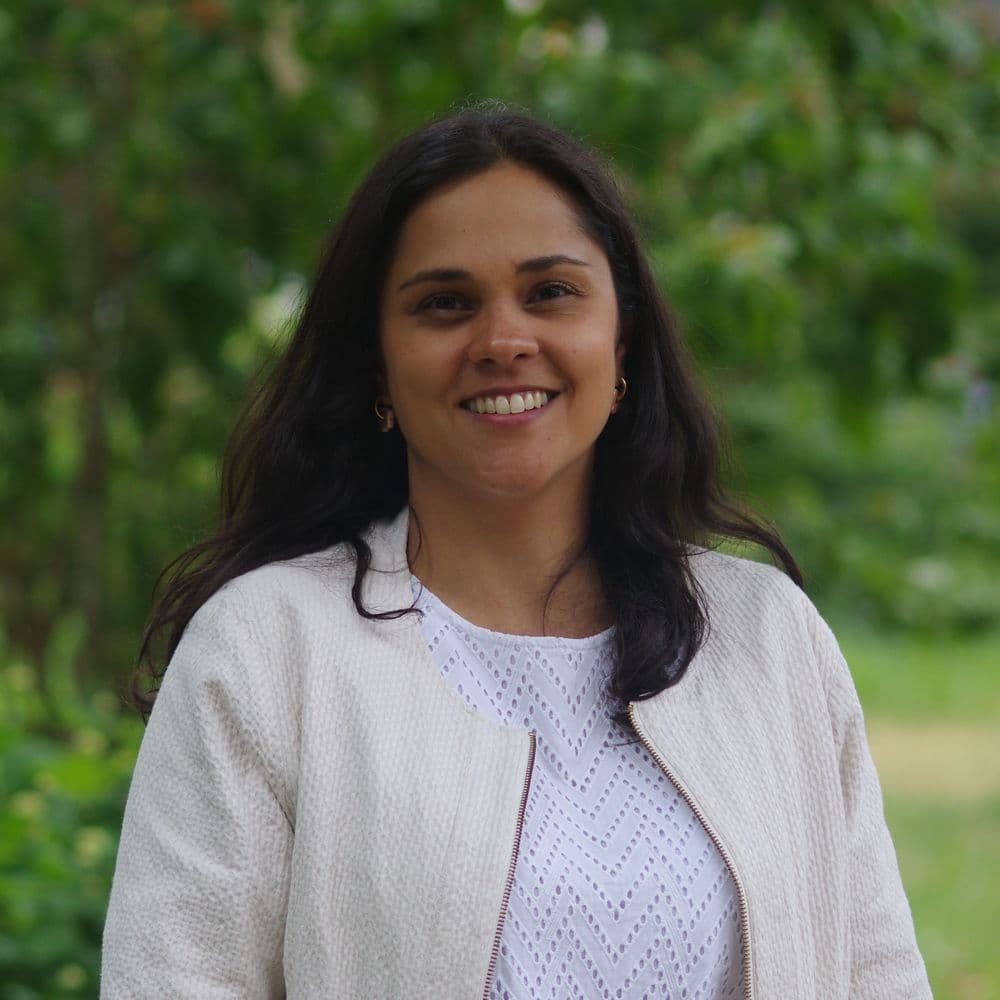
I AM: Student Marketing and Communications Officer – STEM

“Above all, what matters to me in my role as an advisor for STEM student marketing is giving young people a realistic picture of studying STEM subjects and the career prospects that come with it.”
Dr. Chrischani Perera-Bobusch | Freie Universität Berlin

#Dr. Chrischani Perera-Bobusch ...

She studied chemistry and completed a doctorate in bioinorganic chemistry. After initial career positions in project management and pharmaceutical and healthcare communications, she subsequently moved into science communication and then into student marketing.

The career interview

For my PhD, I chose a topic with a biological/medicinal chemistry focus because I have always been fascinated by the life sciences. The interface with inorganic chemistry also gave me deep insight into various analytical methods and synthesis strategies.

It was difficult to make myself attractive to the job market with only a PhD and no relevant professional experience, which is why I initially gained project management experience in a completely unrelated field at a food start-up. Only then was I attractive enough to the job market to work closer to my field again, in pharmaceutical and healthcare communications. I can only advise everyone to gain professional experience while still studying or to choose internships that could be relevant to future positions.

No, I hadn’t considered a career in science communication or student marketing at all. During my studies, I simply didn’t associate it with what I had learnt. But communication has always come naturally to me, and I enjoyed co-organising outreach projects, such as the programme for the department’s Long Night of the Sciences.

I plan and organise events for prospective students at Freie Universität Berlin to give them a closer look at studying STEM subjects. I also develop communication formats to foster a better understanding of what it means to study STEM subjects and what career prospects the degree programmes offer. My own experience certainly helps me with that.

It certainly helps to understand how “university works”, and a general understanding of the natural sciences is also useful when communicating with prospective students who would like to find out more about the course content, on the one hand, and when communicating with students and female staff members, on the other, because I can understand their everyday lives.

My tasks are very diverse, and the same applies to my day-to-day work. Shortly before events, I communicate extensively with everyone involved: staff from the STEM departments, students and those responsible for organising events.

Otherwise, I create content for a website intended to give prospective students an insight into studying STEM subjects. To do this, I regularly liaise with the departments. However, I most enjoy communicating directly with students and prospective students – for example, at trade fairs or various event formats. This is, of course, where I get the most important input on what could help prospective students, but it is also simply fascinating to find out directly which topics are important to young people when choosing what to study and how they are planning their future.

In my case, of course, this is a huge difference – I have swapped the laboratory for the office, conferences for trade fairs and writing papers for developing website content. Research and communication are two completely different professional fields. Nevertheless, my training continues to help me with various aspects of my current work. Because I studied chemistry myself, I can naturally also bring my own experiences into conversations with prospective students. In addition, my doctoral thesis was my most extensive project to date and certainly provided a good initial foundation for all the project management tasks that followed. The network I built up during that time also helps me to convey a realistic picture of career prospects.

What excites me most is the direct exchange with students and prospective students and finding out which topics relating to studying and starting university concern them. Quite a lot has changed in recent years, for example as a result of coronavirus and AI.

Sometimes it is challenging to bring together everyone involved from different subject areas and projects, with their differing capacities and needs, but there is always a solution.

There would certainly be opportunities for advancement in various projects or agencies, for example as a department head. However, this is of secondary importance to me. In future, I would also like to continue developing projects and formats myself, and I see myself less in coordination and administration.

Nowadays, there are opportunities to try your hand at science communication even during your studies, for example as part of your Master's thesis. In general, I would advise STEM students to explore different career prospects at an early stage – the opportunities are far more diverse than one might think.

#Gender notice

For reasons of readability, the simultaneous use of gender-specific language forms has been omitted. All references to persons apply to all genders.