
School and University

    Students and Apprentices

    Undergraduate and PhD Students

    Teachers

    Higher Education Statistics

    Scholarships

Career

    Career Guidance

    Job Vacancies

    Salary Information and Income Survey

    Academy

    Mentoring

Community

    Divisions

    Young Chemists’ Forum (JCF)

    Local Sections

    Regulars' Get-Togethers

    Chem_Connect

    Equal Opportunities and Diversity

    Partnerships and International Activities

    Volunteering

    Membership

Discover Chemistry

    Top Topics

    “Nachrichten aus der Chemie” – Members’ Magazine

    Scientific Journals

    Statements and Position Papers

    Press Releases

    Brochures and Academic Publications

    Books, Videos and Podcasts

    The Fascination of Chemistry

    Cartoons

    Biographies of Female Chemists

Events

    Conferences

    Academy

    Lectures

    Further Events

Awards

    Prices

    Historical Sites of Chemistry

About Us

    Board and Other Bodies

    The Office

    Statutes and Code of Conduct

    Charities

    Press and Public Relations

    Sustainability

MyGDCh

GDCh

Chemistry for a better world

© 2026 Gesellschaft Deutscher Chemiker. All rights reserved.

NewsletterDownloadsPressContactGDCh Shop
Legal NoticeData PrivacyTerms & Conditions
Homepage/Career/Careers guidance/Diversity of Career Profiles in Chemist.../Career interviews/Headteacher, Chief Fire Officer

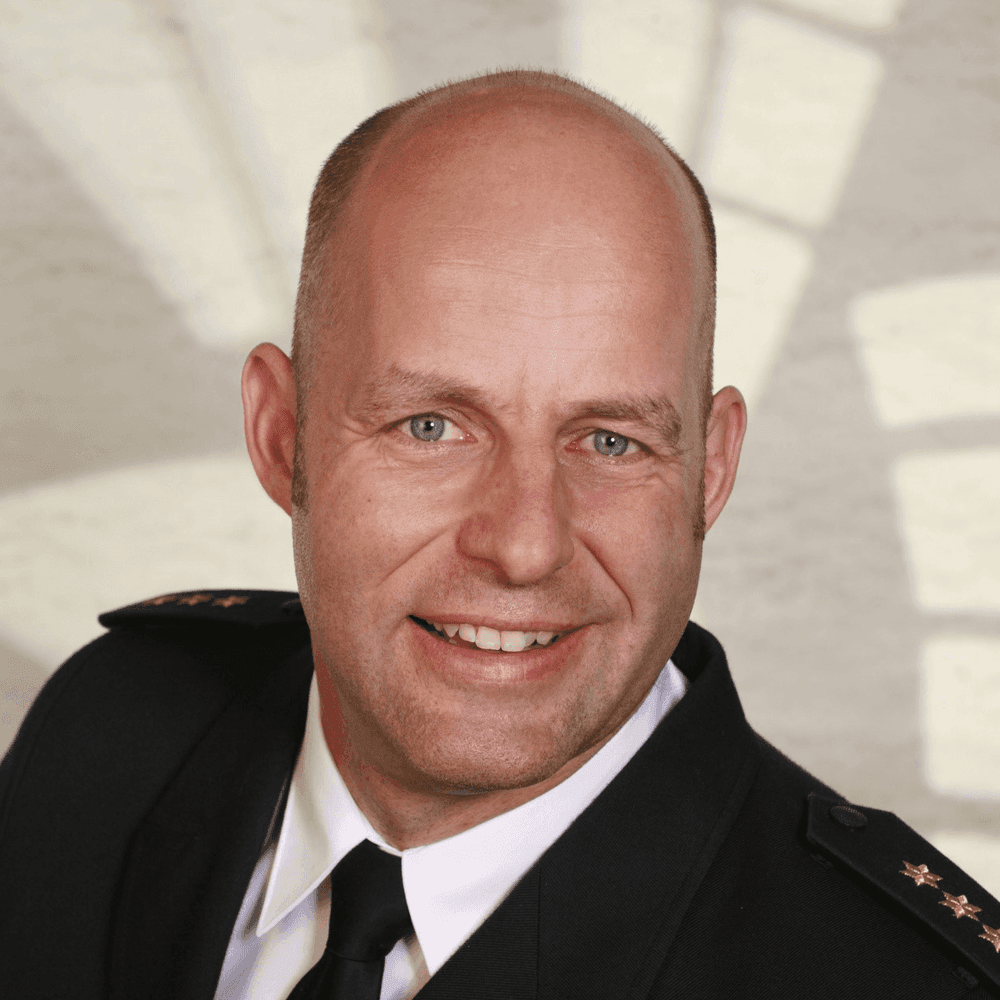
I AM: Headteacher and Director of Fire Services

"I love working as head of the Saxony State Fire and Disaster Protection School. This role requires not only my expertise as a chemist, but also that of a manager in a modern administrative organisation."
Dipl.-Ing. Markus Morgenstern | Saxony State Fire and Disaster Protection School

Dipl.-Ing. Markus Morgenstern ...

After studying chemistry, he initially began his professional career as a chemical engineer and subsequently completed training for a career in the fire service. He joined the Saxony State Fire and Disaster Protection School in 2018 as Head of the Training Department and has been Head of the School since 2019.

The career interview

From an early age, I was interested in firefighting and in literature, audiobooks and films about earthquake disasters and the sinking of the Titanic. During my time in the youth fire brigade, I became increasingly enthusiastic about books on chemistry, physics, mathematics in firefighting and fire investigation. These books led me to specialist chemistry literature at a relatively early age. Experiments during my youth were naturally also part of this. To this day, the combination of scientific and technical questions and organising assistance for people remains a highly motivating task for me.

After completing my apprenticeship as an industrial electronics technician, studying chemistry and starting my career as a chemical engineer in paint development, I completed a fire service career training programme at the Fire Service Institute in Münster. Following this training, I joined the Bundeswehr Fire Service’s Centre for Fire Protection as a department head. My responsibilities included managing the Information and Communications and Regulations departments. During this time, I was responsible, among other things, for refugee-related matters, developing a cleaning concept for systems contaminated with fluorine-containing firefighting foams, and introducing digital radio communications in the Bundeswehr Fire Service. In 2018, I moved to the Saxony State Fire and Civil Protection School as Head of Training, and have been its director since 2019—a role which continues to give me great pleasure.

At the age of 10, I had a strong desire to become a firefighter initially and then, quite early on, a fire chief. Despite my terrible school grades at the time, I asked myself: What do I need to do to become a fire chief? This question stayed with me until I reached my current position.

I am Head of a state fire and civil protection school and am therefore responsible for the training of, among others, managers in volunteer fire services, professional fire services, members of administrative staffs and civil protection units—in short, those involved in civil protection. I see my most important task as optimising the processes at the state fire and civil protection school and motivating and developing the team.

You should have a good scientific education. Vocational training in a skilled trade or technical profession is not essential, but it does make day-to-day collaboration with practitioners easier. You should be actively involved in voluntary work in order to gain experience that will significantly improve your understanding of volunteering. It is also important that you enjoy seeing yourself and feeling like a team player.

A typical working day looks like this: First, I briefly check my emails and inbox, followed by a review of the day’s upcoming appointments and future commitments. There are often smaller and larger coordination meetings within the organisation. Alongside these, there are conceptual tasks, such as organisational development (optimising processes and continually developing how we work together). Everyday life is characterised by a very high degree of flexibility, as I also make time for ad hoc questions from employees and customers. Through committee work at national level, we help shape the professional field. I am in close contact with school principals from the other federal states. There is also professional cooperation with the State Fire Brigade Association, district fire chiefs, the heads of professional fire services in Saxony and the Ministry of the Interior.

Studying chemistry provides excellent preparation for a Management position, as organisational skills are both required and developed during the degree through the daily volume of lectures and laboratory practicals. The rigours of everyday life as a chemistry student are comparable to those of a demanding working life. Studying chemistry significantly strengthens analytical thinking skills and the ability to prioritise, which are very important foundations for making focused and swift decisions. Another major advantage is that it broadens one’s personal threshold for frustration. A key difference is the high degree of flexibility when dealing with changing questions.

As part of my current teaching work, I am employed, among other things, in delivering knowledge of chemistry, physics and many other subjects to the target groups of career applicants and volunteer firefighters.

I am passionate about contributing significantly to the safety of the people of the Free State of Saxony and, through committee work, to important initiatives nationwide. I am passionate about taking responsibility in support of a good cause. However, shouldering responsibility also means taking the risk of making mistakes. The particular challenge in my day-to-day work is constantly prioritising tasks while also maintaining a good working relationship within the team across the entire department.

You can apply for career training as a fire service trainee with a Master’s degree. Positions are advertised by the state administration, district administrations, professional fire services or state fire service schools. As part of the training, you will take the examination to become a fire service assessor after two years. Further details are governed by Regulation VAP2.2-FEU. Afterwards, opportunities are open to you up to and including becoming a State Fire Service Director, head of a fire service school, district fire service inspector, head of a professional fire service, etc.

Getting involved in the fire service and disaster relief is a wonderful and rewarding thing, because you can help people in emergency situations. Always remain curious on your journey, be curious about all kinds of topics and motivate yourself with your goals. Make it clear to yourself that, especially in difficult times, it is important to be emotionally connected to your goal. You should genuinely love your goals.

Gender Notice

For reasons of readability, the simultaneous use of gender-specific language forms is omitted. All references to persons apply to all genders.