
School and University

    Students and Apprentices

    Undergraduate and PhD Students

    Teachers

    Higher Education Statistics

    Scholarships

Career

    Career Guidance

    Job Vacancies

    Salary Information and Income Survey

    Academy

    Mentoring

Community

    Divisions

    Young Chemists’ Forum (JCF)

    Local Sections

    Regulars' Get-Togethers

    Chem_Connect

    Equal Opportunities and Diversity

    Partnerships and International Activities

    Volunteering

    Membership

Discover Chemistry

    Top Topics

    “Nachrichten aus der Chemie” – Members’ Magazine

    Specialist Journals

    Statements and Position Papers

    Press Releases

    Brochures and Academic Publications

    Books, Videos and Podcasts

    The Fascination of Chemistry

    Cartoons

    Biographies of Female Chemists

Events

    Conferences

    Academy

    Lectures

    Further Events

Awards

    Prices

    Historical Sites Relating to Chemistry

About Us

    Board and Other Bodies

    The Office

    Statutes and Code of Conduct

    Foundations

    Press and Public Relations

    Sustainability

MyGDCh

GDCh

Chemistry for a better world

© 2026 Gesellschaft Deutscher Chemiker. All rights reserved.

NewsletterDownloadsPressContactGDCh Shop
Legal NoticeData PrivacyTerms & ConditionsSubmit a revocation
Homepage/Career/Careers guidance/Diversity of Career Profiles in Chemist.../Career interviews/Head of Training

I AM: Head of Training

“Chemistry fascinates me because it takes place all around us. I want to share this enthusiasm and show that chemistry is not something alien from the laboratory, but something natural that we encounter every day.”
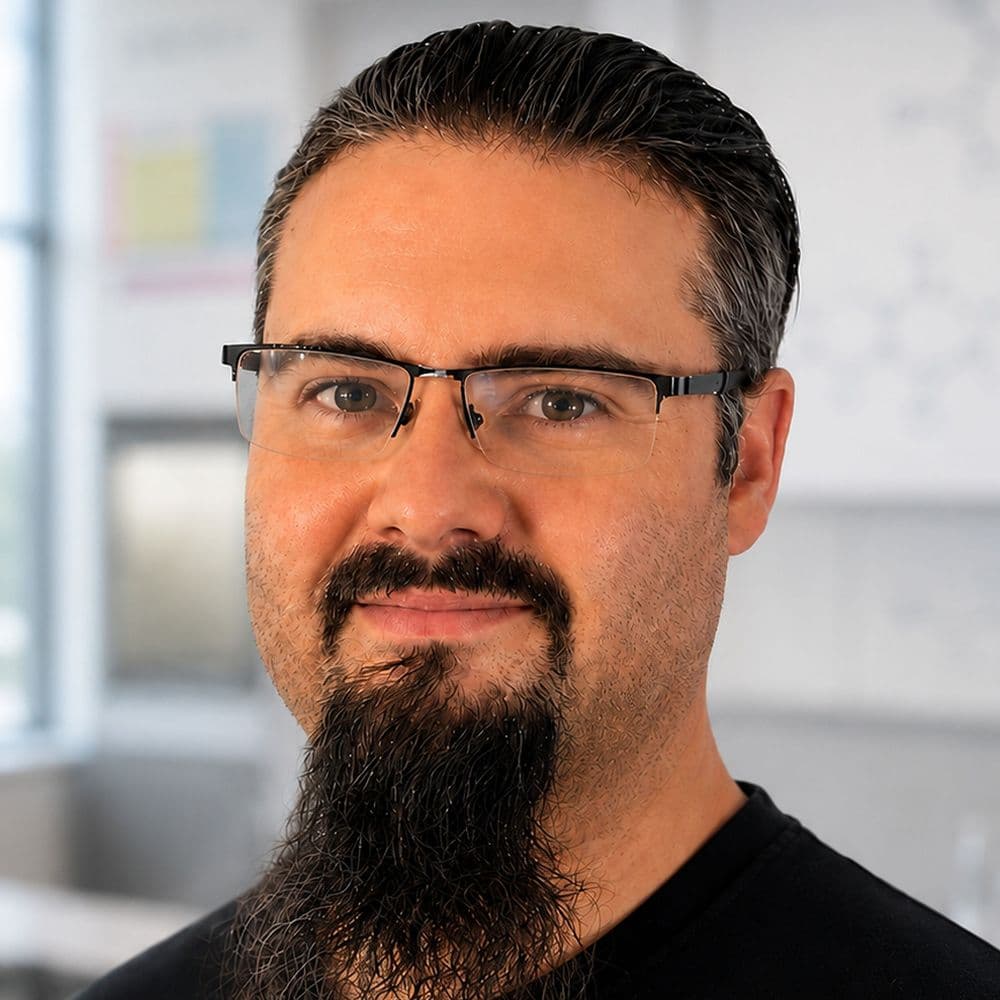
Denis Taige | SGS Germany GmbH

Denis Taige ...

After completing his training as a chemical-technical assistant, he started directly in food analysis and progressed towards training and leadership through vocational training and additional responsibilities. Today, he heads training at a laboratory site, is responsible for sample preparation as Group Leader, and also works part-time as a lecturer.

The career interview

A purely office-based job was out of the question for me towards the end of my time at school, but I did not want to work entirely in a trade either. Laboratory occupations seemed to me to offer a good mix of both areas. I have always been interested in how the things around me are put together and why they have certain properties. A job that would help me to understand substances from nature and everyday life better therefore sounded very appealing. As I was fascinated by the transformations of substances—the phenomenon of creating a completely new product from substances—chemistry soon became my first choice. Training as a chemical-technical assistant was the perfect introduction for me because theory and practice were closely linked.

I was thrown in at the deep end. After completing my training, I started working in food analysis and was immediately integrated into the routine. The number of samples, the analyses running in parallel and the pace of work required were a challenge. During the first few weeks, I could feel every evening what I had achieved during the day. Once I had mastered the procedures, I was able to engage more intensively with the food products. It was fascinating to see what they were made up of and to gain insights into recipes and the development of products I knew from the supermarket. There was always something new to discover, and all of this confirmed that I had chosen the right path. However, what I missed alongside the routine laboratory work was attending classes. Although there was always something new to learn professionally, that was not enough for me. That is why, after just one year, I began vocational training alongside my job to become a state-certified chemical engineering technician.

No, I was not aware of that at first. My original goal was to develop my specialist skills and continue my education. In addition to qualifying as a technician, I also obtained the AEVO certificate and the entrance qualification for a university of applied sciences. At the same time, I became familiar with the areas of nutritional analysis and many wet-chemical analyses in the laboratory. This was also my first contact with our trainees. I enjoyed passing on my knowledge to people starting out in their careers and gaining experience in the laboratory together with them. The expansion of my area of responsibility happened rather by chance, but also as a result of my curiosity and willingness to take on new tasks. In this way, individual training tasks developed into further activities in training and management.

Today, I carry out several activities in parallel. My main task is managing training at our laboratory site. This includes planning and organising training, supporting trainees, recruiting new junior staff and working with vocational schools and chambers. In addition, I am responsible for sample preparation as Group Leader. In this role, I lead a team, plan workflows and help create the staffing, technical and organisational conditions for the daily work. I also work part-time as a lecturer. I give specialist presentations and teach chemistry and mathematics to adults who wish to obtain a school-leaving qualification.

At the very top of the list for me is a healthy curiosity. An interest in the natural sciences, a willingness to ask questions and a desire to understand how things work make it considerably easier to get started in this field. Since a large part of my work involves training and sharing knowledge, enthusiasm is also important. If you genuinely believe in a subject yourself, it is easier to get others interested in it. Organisation skills, flexibility and a certain resilience to stress are also helpful. Several tasks are often running simultaneously, and unexpected events are part of everyday life. You do not have to be an extrovert, but you should enjoy working with a wide range of people and be open to continually learning new things.

I don’t have a typical working day. On some days, I supervise trainees in the laboratory, discuss technical topics or plan training content. On other days, I conduct interviews, liaise with vocational schools and specialist departments, or deal with personnel and organisational matters within my team. But there are also completely different days. For example, I might prepare for a trade fair, develop interactive activities for pupils or provide information about laboratory professions at careers guidance events. Unforeseen events are a regular part of the job. Staff may be absent, equipment may develop faults or trainees may need support at short notice. Priorities then have to be reassessed. I work with many different people every day: trainees, laboratory professionals, managers, teachers, HR departments and chambers. This mixture is what makes the profession interesting to me.

As a newcomer to the profession, I really did work directly at the laboratory bench and carry out analyses – just as you imagine working in a chemistry laboratory. Today, I spend a large part of my working time at a desk, which I originally wanted to avoid. My CTA training prepared me very well for my first years in the laboratory. The vocational training to become a state-certified technician, the AEVO certificate and my professional experience subsequently opened the way for me into training and management. However, it is only possible to prepare for my current role in a targeted way to a limited extent. Many tasks only arise through new projects, areas of responsibility or unexpected situations. Above all, you learn to set priorities, organise larger tasks and familiarise yourself with new topics. In the past, I carried out analysis orders. Today, I plan and organise processes, but I have not lost touch with the laboratory and continue to work there when required.

Despite clear objectives, I have considerable freedom in shaping my area of work. From setting up training rooms to developing teaching units, I can contribute my own ideas. I am particularly inspired by the challenge of explaining chemical processes clearly and opening other people’s eyes to chemistry in everyday life. Feedback from learners who suddenly find chemistry interesting motivates me time and again. I also enjoy developing experiments that illustrate chemical relationships. It is especially rewarding to witness trainees’ development and see their achievements. One challenge is bringing together different people and interests and pursuing common goals.

The career opportunities are more diverse than many people assume. Traditionally, for example, a CTA can go on to qualify as a state-certified technician specialising in chemistry and later as a Technical Business Economist or Master Professional. Many people are only familiar with the academic education pathway. What is less well known is that the vocational education system also offers further qualifications that are classified at the same level as bachelor’s and master’s degrees in the German Qualifications Framework (DQR). There are also numerous opportunities for professional specialisation, for example in quality management, instrumental analysis, occupational safety or auditing. With increasing professional experience, management responsibilities, training or teaching roles may also develop.

As with many people, my path has often been shaped by chance – and chance is difficult to plan. Anyone who wants to pass on specialist knowledge and teach should first acquire knowledge and experience themselves, whether through training, university studies or professional practice. This process never ends: one should always retain curiosity, an interest in new things and the realisation that one never stops learning. I also see advantages in not pursuing a goal too straightforwardly, as taking detours brings valuable experience. There are opportunities to pass on knowledge in training as well as in vocational training. That is why one should try out as much as possible and find out what one really enjoys. Once you have found it, it is also easier to find your own path in it.

Gender notice

For reasons of readability, the simultaneous use of gender-specific language forms has been omitted. All references to persons apply to all genders.