
School and University

    Students and Apprentices

    Undergraduate and PhD Students

    Teachers

    Higher Education Statistics

    Scholarships

Career

    Career Guidance

    Job Vacancies

    Salary Information and Income Survey

    Academy

    Mentoring

Community

    Divisions

    Young Chemists’ Forum (JCF)

    Local Sections

    Regulars' Get-Togethers

    Chem_Connect

    Equal Opportunities and Diversity

    Partnerships and International Activities

    Volunteering

    Membership

Discover Chemistry

    Top Topics

    “Nachrichten aus der Chemie” – Members’ Magazine

    Scientific Journals

    Statements and Position Papers

    Press Releases

    Brochures and Academic Publications

    Books, Videos and Podcasts

    The Fascination of Chemistry

    Cartoons

    Biographies of Female Chemists

Events

    Conferences

    Academy

    Lectures

    Further Events

Awards

    Prices

    Historical Sites of Chemistry

About Us

    Board and Other Bodies

    The Office

    Statutes and Code of Conduct

    Charities

    Press and Public Relations

    Sustainability

MyGDCh

GDCh

Chemistry for a better world

© 2026 Gesellschaft Deutscher Chemiker. All rights reserved.

NewsletterDownloadsPressContactGDCh Shop
Legal NoticeData PrivacyTerms & Conditions
Homepage/Career/Careers guidance/Diversity of Career Profiles in Chemist.../Career interviews/Head of Bioanalytics

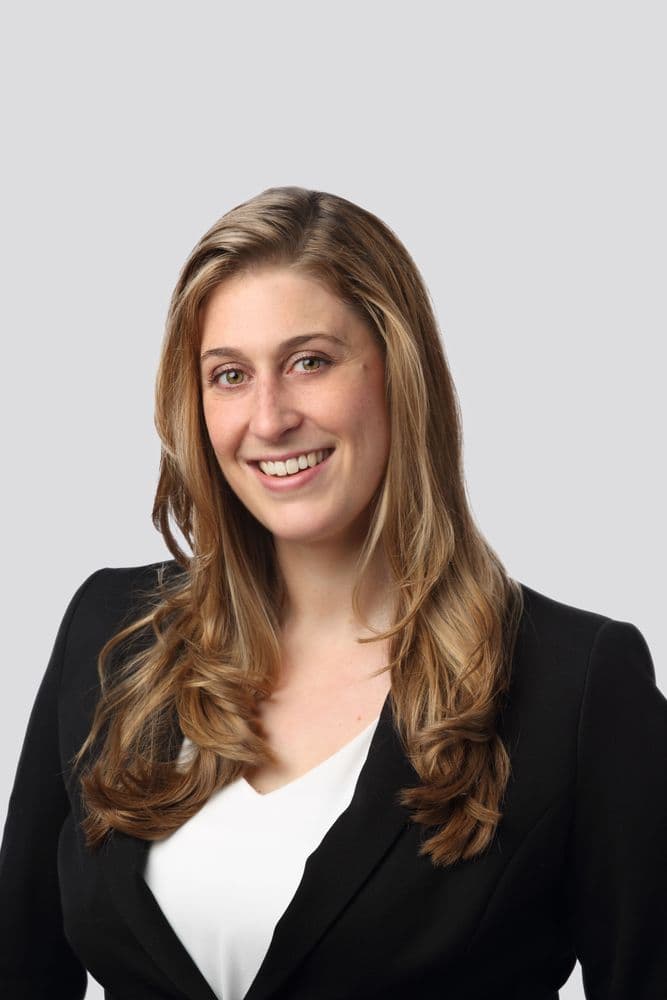
I AM: Group Leader, Bioanalytics

“Reviewing new medicines and making them safe is an exciting challenge. Sharing ideas within the team enriches not only my work but also me personally.”
Dr Lisa Steinhauser | Nuvisan GmbH

Dr Lisa Steinhauser ...

After completing her doctorate in Analytical Chemistry, she initially joined a Japanese mid-sized company as Customer Support Manager. Further positions as Regional Sales Manager and Team Leader Food Analysis led her to her current role as Group Leader Bioanalytics at Nuvisan GmbH. Here, she analyses samples on behalf of major pharmaceutical companies for drug development.

The career interview

At school, I was interested in many subjects, but I found chemistry and biology particularly fascinating. I had very dedicated teachers who were able to explain the material well. I can no longer say exactly why I ultimately chose chemistry. I still remember that enrolling on the diploma course was very straightforward at the time, and I had looked at career statistics showing that the job and career prospects were good. I had no idea at all what my work would look like later on, but I knew that there were a wide range of opportunities for chemists.

During my PhD, I specialised in analytical chemistry. Using liquid chromatography, I separated and identified constituents of plants and other matrices. I began my career with a Japanese manufacturer of liquid chromatography accessories (columns). To be honest, I had expected to start as a laboratory manager at a large chemical or pharmaceutical company – at least, that was what I had been told at university. In hindsight, it turned out that this was a real stroke of luck.

As Customer Support Manager, I was the point of contact for all technical customer enquiries. In a very short time, I became familiar with many different applications and industries. I also supported our sales partners with training and was able to travel with the Sales Managers to visit customers and attend trade fairs in Europe and the Middle East.

After another position as Regional Sales Manager, I had the opportunity to take on a leadership role as Team Leader Food Analysis. There, I was able to develop further and learn what it means to be responsible for a team. When this laboratory was closed, I moved to my current role as Group Head Bioanalysis. My department analyses samples on behalf of major pharmaceutical companies for drug development.

My task is to plan the various customer orders and distribute the work optimally within the team. Especially when a problem arises, I am the contact person for making a quick decision and finding a solution. I coordinate appointments internally and with the customer and keep an eye on the processes in the laboratory and the progress of the projects. Many discussions are scientifically very demanding, so as a group we make sure to provide training and continuing professional development.

I liked no longer having to work in the laboratory myself, as my talent lies very much in organising. Naturally, there was no lecture on this at university. During my doctorate and in my six years of professional experience, I completed vocational training every year on various topics, including project management, business administration for chemists, GLP/GMP courses and personal development for managers. I consider this knowledge very important for my current job. I also continue to attend seminars voluntarily, depending on which skill I would like to deepen at any given time.

We start the morning with a ten-minute team meeting in the laboratory, where we discuss the results from the previous day and clarify the day’s tasks and appointments. Afterwards, I review the scientific data and discuss any necessary tests with the laboratory technicians if a method is not working. Of course, I also have some emails to deal with and phone calls to make. Together with the project managers, I write reports and communicate with the client. I also take care of planning new projects.

My working day is completely different from how it used to be. My studies and doctorate provided me with specialist and academic training. I believe it is perfectly normal for one’s previous daily routine to change. Today, my job is entirely practice-oriented. It is no longer about basic research, but about current applications. Our aim is to obtain meaningful analysis results immediately. The associated quality management also involves a different approach.

I enjoy solving complex problems and finding answers. Some tasks in chemical analysis should work in theory, but in practice there is often a problem. Our team then faces the challenge of deciding which further tests to carry out under a certain amount of time pressure. This requires perseverance and a certain tolerance for frustration. In the end, however, we always manage to complete the project successfully. This makes me proud of our work.

My current professional field is part of the pharmaceutical industry. As an entry-level professional, you can start there as a project manager or laboratory manager. Depending on your preference, you can specialise in a particular area or further develop your management and leadership skills.

I would advise you to give unusual job offers a chance too. These include, for example, lesser-known small and medium-sized companies and start-ups.

Changing jobs can also help you to develop if, after two or three years, you are looking for a new challenge. In addition to chemistry, continue your training in other subject areas too; a basic understanding of business, IT or Management will set you apart. And don’t be afraid to take on tasks that may currently seem a little too demanding for you personally.

Gender notice

For reasons of readability, the simultaneous use of gender-specific language forms is avoided. All designations of persons apply to all genders.