School and University

    Students and Apprentices

    Undergraduate and PhD Students

    Teachers

    Higher Education Statistics

    Scholarships

Career

    Career Guidance

    Job Vacancies

    Salary Information and Income Survey

    Academy

    Mentoring

Community

    Divisions

    Young Chemists’ Forum (JCF)

    Local Sections

    Regulars' Get-Togethers

    Chem_Connect

    Equal Opportunities and Diversity

    Partnerships and International Activities

    Volunteering

    Membership

Discover Chemistry

    Top Topics

    “Nachrichten aus der Chemie” – Members’ Magazine

    Specialist Journals

    Statements and Position Papers

    Press Releases

    Brochures and Academic Publications

    Books, Videos and Podcasts

    The Fascination of Chemistry

    Cartoons

    Biographies of Female Chemists

Events

    Conferences

    Academy

    Lectures

    Further Events

Awards

    Prices

    Historical Sites Relating to Chemistry

About Us

    Board and Other Bodies

    The Office

    Statutes and Code of Conduct

    Foundations

    Press and Public Relations

    Sustainability

MyGDCh

GDCh

Chemistry for a better world

© 2026 Gesellschaft Deutscher Chemiker. All rights reserved.

NewsletterDownloadsPressContactGDCh Shop
Legal NoticeData PrivacyTerms & ConditionsSubmit a revocation
Homepage/Career/Careers guidance/Diversity of Career Profiles in Chemist.../Career interviews/Co-founder and CEO of a start-up

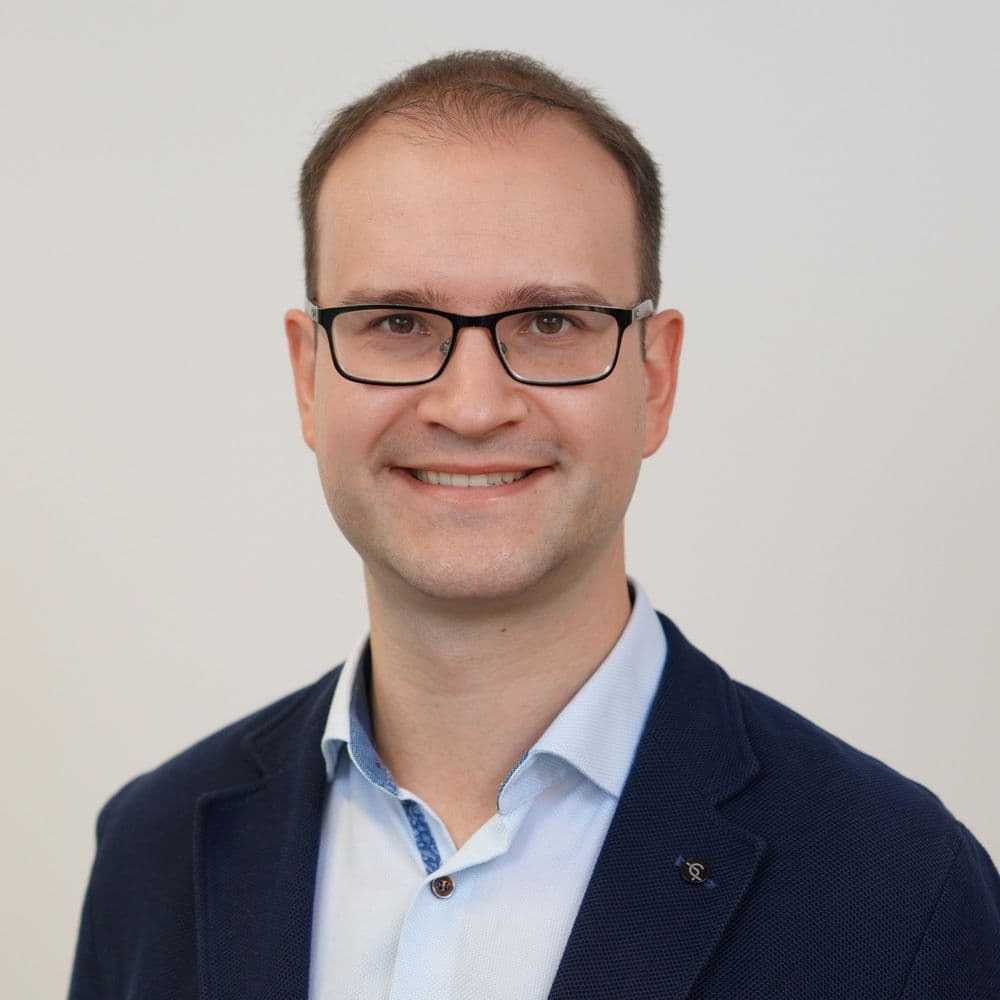
I AM: Co-founder and CEO of a start-up

“I built a startup based on my doctoral thesis that develops new antibiotics. I value the freedom of running my own company while also contributing to solving a major societal problem.”
Dr. Robert Macsics | smartbax GmbH

Dr. Robert Macsics ...

After studying chemistry and biochemistry and completing a Master’s degree in pharmacology, he obtained his doctorate in the field of bacterial resistance. Based on his research, he later co-founded a start-up, which he now leads as Executive Director.

The career interview

I have always been interested in the interface between chemistry and biology; at the same time, it was important to me to develop a comprehensive understanding of chemistry. That is why I felt the combined Bachelor's degree in Chemistry and Biochemistry was ideal for my basic training. Afterwards, I wanted to broaden my horizons further towards drug development and therefore decided to pursue a Master's degree in Pharmacology. Through my Master's thesis, I came into contact with the topic of antibiotic resistance for the first time. It fascinated me so much that, during my doctorate, I also dedicated myself to new approaches to combating resistant bacteria.

It was like being thrown in at the deep end. My doctoral supervisor had already been working with several postdocs towards a possible spin-off. Towards the end of my doctorate, I was offered the opportunity to join this team. Shortly afterwards, a real investment from a renowned venture capital fund suddenly became a possibility, which caught us rather off guard. However, my doctoral supervisor and I saw this as a once-in-a-lifetime opportunity, and so we decided to establish smartbax GmbH. Two things helped to ease my transition into my new role as the startup’s Executive Director: firstly, I was initially able to retain my postdoctoral position at the chair while gradually building up the startup as a secondary occupation, which gave me greater financial security. Secondly, during the first year I had a co-Executive Director with a business background at my side, whose support enabled me to gradually get to grips with the non-scientific topics that a doctorate does not prepare you for.

I had never actually intended to start my own company before – there simply were no such role models in my family environment. But when this opportunity suddenly presented itself, I thought: “You could apply for a job now, or you could just give this a try.” So the timing, immediately after completing my PhD, was a relevant factor, as I had nothing to lose. In addition, the months towards the end of my PhD during which I had already been working within this “spin-off team” in a highly project-focused and “startup-like” way were an important “taster”, showing me how important this freedom and working in a small team actually are to me, and that I can best fulfil this need in a startup.

As CEO, one is, as the saying goes, the “Chief Everything Officer”, i.e. my responsibilities are very diverse, depending on what needs attention at any given time, and that is what I love about this job. As the company’s sole Executive Director, I come into contact with all areas of the business: R&D, project management, finance, fundraising, investor relations, HR, IP and legal, as well as much more mundane matters when something gets stuck somewhere and a solution needs to be found quickly. Of course, I do not have to take on any of this alone, but ultimately I am personally responsible for keeping the whole operation running; that is, when I can no longer make progress myself, I have to delegate to the right person or seek external advice.

One should be open to learning about new areas of work – a PhD does not prepare you for many of the things you encounter as a founder, and you should approach them with curiosity rather than allowing yourself to be put off. This also requires the courage to take responsibility and make decisions, instead of seeing only the potential risks. A certain degree of resilience is also helpful, because even if things do not go well and the company may even be on the brink of closure, you should still be able to sleep soundly. That is why I think it is important not to equate the fate of the company with your own: even the failure of the business can be an incredible gain for you personally, because you will have learnt so much in the process, and you need to remind yourself of this regularly.

No day is like any other: sometimes I spend a great deal of time in meetings, whether with my own team, investors, lawyers, collaborators or other external stakeholders. At other times, I sit at my desk answering emails, preparing pitch decks, reviewing contracts, planning finances, etc. Managing staff and conducting employee appraisals are also among my responsibilities, as is recruiting new employees. I am also often at external events to pitch, network and make contact with investors or other companies in the field. Unexpected things happen all the time, and I have to respond to them at short notice. This can range from specific requests made by investors to problems in the laboratory or issues raised by my employees that require my attention. In the latter case in particular, it is important to find a solution as quickly as possible, because the more effectively I can take care of things for the rest of the team, the more efficiently the company can operate.

My working day differs greatly from my studies. The clearest difference is certainly that I no longer work in the laboratory myself. Nevertheless, I am still very close to the science, and I greatly enjoy discussing our scientific data with the team and using it to guide our R&D strategy. However, there are also many non-scientific topics that my studies definitely did not prepare me for, such as general management matters and business and legal issues – there was a lot of learning by doing, which I also found appealing. Presenting and critically discussing one’s own data with investors, on the other hand, is something that studying and completing a PhD prepare you for quite well, even if you first have to learn to express yourself much less scientifically in an investor pitch than you are used to from scientific conferences.

What I value most is the variety: I find it incredibly rewarding that I not only conduct research but also engage with a wide range of subject areas. There is no other profession where the learning curve is so steep. I also appreciate the flexibility of being my own boss and having considerable freedom to organise my working day. Of course, being a founder also has its downsides and challenges: you are constantly responsible for keeping the operation running; in other words, when you are needed, you have to be there, even if you are currently on a business trip or on holiday. Start-ups are also often funded only for short periods, meaning that there is constant pressure to secure new funding and financial planning certainty is correspondingly low.

In the early days of founding the company, when there were only two or three of us, I was still much more involved in hands-on tasks, including practical laboratory work. Back then, everyone really did pretty much everything, depending on what needed to be done. As the company grew, each employee gradually found their own, more specialised area of responsibility. In my case, this meant withdrawing completely from the laboratory and focusing more on Management, which naturally became more complex as the number of employees and the financial resources increased. Nevertheless, I enjoy the fact that we are still a small and agile team in which most tasks can be taken on by different team members.

As a founder, there is naturally no conventional career ladder, but many remain loyal to the startup ecosystem in the long term. This can happen, for example, by founding another company, regardless of whether the first had a successful exit or not. The lessons learned during one’s entrepreneurial journey are particularly valuable for further increasing the likelihood of success in future spin-offs. Added to this is the network built up over that time. The opportunities that can arise from this are virtually limitless. The only thing that is likely to become more difficult is moving to a large corporation, because anyone who has come to appreciate the freedoms of startup life will suffer greatly under the rigid and bureaucratic processes there.

Courage and openness! Simply have the confidence to try, without being afraid of failure. Unfortunately, a culture of risk aversion still prevails in Germany, and failure is frowned upon. This puts off many potential founders, even though what you learn about yourself personally during the entrepreneurial journey is the real pay-off, regardless of whether the start-up ultimately leads to financial success. Those who realise this for themselves manage not to be crushed by responsibility and the pressure to succeed, but instead use founding a company to embark on the ultimate path to self-fulfilment. To quote Farrah Gray’s famous words: “Build your own dreams or someone else will hire you to build theirs.”

Gender notice

For reasons of readability, the simultaneous use of gender-specific forms of language is dispensed with. All references to persons apply to all genders.