Scientists must resist cancel culture
Von Wiley-VCH zur Verfügung gestellt
Science should reject all forms of censorship and defend the core principle of science – the free exchange of ideas.
Censorship – „the suppression or prohibition of any parts of books, films, news, etc. that are considered obscene, politically unacceptable, or a threat to security“ – has been used by illiberal regimes throughout history to suppress viewpoint diversity. Scientists who challenged dominant ideologies have been subjected to various forms of cancellation – ostracism, imprisonment, exile, and death.1–3)
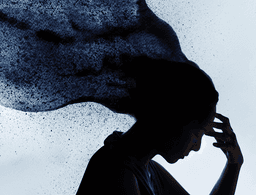
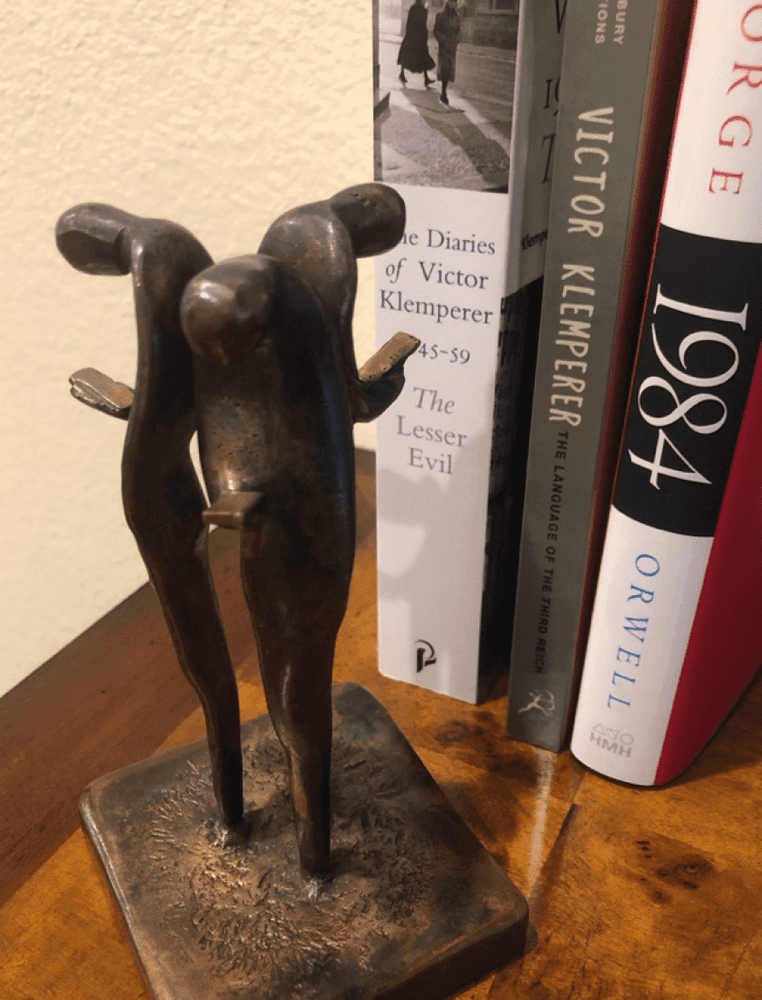
Abb. 1: Today censorship is facilitated by social media, in the form of social ostracism and bullying. Photo: Anna Krylov; Artwork: “Soziales Netzwerk” by M. Ensch, Wiesbaden, Germany
Socrates was sentenced to death for „corrupting the youth of Athens“. The discoveries of Galileo, Bruno, and Copernicus challenged the tenets of the Catholic Church, the dominant ideology of the time. The Church responded by putting Galileo under house arrest and burning Bruno at the stake. Copernicus evaded cancellation by self-censoring, and Darwin delayed the publication of his findings for decades. In Soviet Russia, the Communist Party outlawed genetics and cybernetics, declaring them „bourgeois pseudoscience“. Thousands lost their jobs, freedom, and lives for their „crimes“ against Marxist ideology.
In the 20th century, totalitarian regimes extended ideological control from suppressing scholarship because of its content to suppressing scholarship because of the political views or the identity of the scientist. In Soviet Russia, many were barred from research, jailed, or executed because of their identity, religion, or political views, by means such as quotas (e.g., on Jews) and de facto Party membership requirements for admission to university or leadership in academe. These practices persisted long after Stalin – e.g., the physicist Sakharov was ostracised and subjected to internal exile for opposing nuclear arms and supporting human rights.
The ideologues of Nazi Germany were also obsessed with the political views and identity (understood as racial purity) of scientists. Liberals were jailed and murdered. Jews (or „Aryans“ married to „Jewesses“) were expelled from academia.
Why censorship?
From antiquity, censorship has been carried out „for the greater good“. The censors are not out to suppress progress, but to protect society from ideas that their ideology deems harmful or offensive. The inquisitors burned heretics to save them and others who might be corrupted by their heresies from eternal damnation. The Soviets censored ideas and persecuted scientists to liberate the oppressed masses and build a better world.
The damage inflicted by ideological control of science by totalitarian regimes is well documented.2,3) A recent article3) reminds us: „Despite vast natural and human resources, the USSR lost the Cold War, crumbled, and collapsed. Government control over science [was] a grand failure…. Today Russia is hopelessly behind the West, in both technology and quality of life.“
Today we see a growing intrusion of illiberal ideology, which challenges the core principles of liberal epistemology, into our institutions. As with past illiberal ideologies, free speech is the first target, and censorship the main instrument, of the new bearers of Truth. Dissent is suppressed by the cancellation of non-conforming individuals.
But there are important differences from the past. In Nazi Germany and Soviet Russia, censorship was imposed from the top, by the State, and was enabled by grassroots responses ranging from complacency to enthusiastic embrace and opportunism, the faithful advancing their careers at the expense of the cancelled.
The modern form: cancel culture
Suppression today takes the form of „Cancel Culture“, censorship administered not by repressive governments but by Twitter vigilantes, an „outrage mob“ „whose goal is to sanction or punish … individuals or organization[s] they consider responsible for something that offends, insults, or affronts their beliefs, values, or feelings“.1)
Consider the cancellation of chemist Tomáš Hudlický,4,5) who in 2020 published an essay in Angewandte Chemie discussing the progress of organic synthesis and expressing his views on the hiring practices and training of scientists and the integrity of the literature.
The publication sparked a Twitter firestorm that condemned the article as „offensive“, „inflammatory“; the content as „alienating“, „hurtful“, „xenophobic“; the paper as „abhorrent“, „egregious“; and Hudlický as „racist“, „misogynist“, a „slithering insect“. Sixteen editorial board members resigned in protest of the publication. The journal removed the paper from its website (an unprecedented act), issued an abject apology, suspended two editors, and began an internal investigation. Condemnation ensued in blogs, journals, and statements issued by chemical societies.
We invite readers to read Hudlický’s essay and his elaboration to the National Academy of Scholars.5) Whether one agrees with his views or not, a civilised debate should have ensued, not an avalanche of insults. The journal could have invited a rebuttal; instead it capitulated to the mob.
Hudlický’s cancellation did not end there. A planned special issue of Synthesis in his honour was cancelled, invitations to speak at conferences and to review papers ceased, citations to his papers were deleted, and collaborators were encouraged to dissociate themselves from him.
The cancellation of geophysicist Dorian Abbot is another example of censoring an individual’s scientific contributions because of his views on non-scientific matters.6–8) Abbot had been invited to deliver a public lecture at MIT on „climate and the potential for life on other planets“. But a small group of activists, outraged by Abbot’s advocacy8) for equal opportunity, fairness, merit-based evaluation, and academic freedom, initiated a social media campaign to uninvite him. MIT quickly cancelled the event, violating their own „policy of open research and free interchange of information among scholars“.
These examples underscore authorities’ responsibility to resist outrage mobs: „Although outrage mobs often trigger the punishment process, in Western democracies, mobs no longer actually burn witches at stakes. … Mobs do not get papers retracted; that is the decision of editors and editorial boards. Thus, the key turning point in whether an academic outrage mob is effective at punishing an academic for their ideas is … the action of authorities.“1)
Institutionalisation of censorship
Our institutions and leadership are failing their missions.9) Rather than resist censorship, they enable it. In Hudlický‘s case, professional societies condemned the essay, rather than the bullying campaign and the journal’s decision to remove it. Likewise, in the Abbot case, MIT‘s leadership caved in to the mob’s demands. These precedents create a chilling effect that inhibits the expression of non-conforming ideas throughout academia.
Some institutions have actually institutionalised censorship. For example, the Royal Society of Chemistry (RSC), a major publisher, has issued guidelines10) for editors to „consider whether or not any content … might have the potential to cause offence“. An RSC memo explains that the guidelines were developed in response to the Hudlický affair.
The document elaborates: „The aim of this guidance is to help you to identify and prevent the publication of inappropriate content in our journals and books.… Words, depictions and imagery have the potential to cause offence…. There can be a disparity between the intention of an author and how their content might be received – it is the perception of the recipient that determines offence, regardless of author intent.“
The editors are instructed to be on the lookout for „[a]ny content that could reasonably offend someone on the basis of their age, gender, race, sexual orientation, religious or political beliefs, marital or parental status, physical features, national origin, social status or disability“ or are „[l]ikely to be upsetting, insulting or objectionable to some or most people“. These guidelines are so broad as to justify censoring anything in chemistry and beyond.
One might think a chemistry paper an unlikely source of objectionable content. Not so. As documented,3) „content that is ‘objectionable to some’ includes names of scientific discoveries and equations, such as the ‘Shockley-Queisser limit’ and ‘Newton’s Laws’; technical terms, such as ‘quantum supremacy,’ ‘master password,’ and ‘dummy variable’; and a slew of plain English words. For example, ‘normal’ allegedly ‘makes most people feel excluded.’ So much for ‘normal pH’ and the ‘normal distribution’.“ Some scholars are offended by capital letters – „symbol[s] of hierarchy“ and oppression.10) Following the guidelines, are RSC editors now to prevent publication of „pH“? The Guidelines undermine RSC’s mission – facilitating the communication of high-quality chemistry research and the advancement of chemical science.
Censorship is antithetical to science. Rather than turning social media censorship into policy, scientific leadership worldwide should reject cancel culture and defend the core principle of science – the free exchange of ideas in the pursuit of truth.
The authors
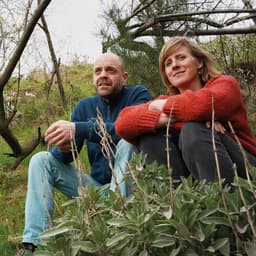
The article was written by Anna I. Krylov, Jay S. Tanzman, Gernot Frenking, and Peter M. W. Gill. Anna I. Krylov is Professor of Theoretical Chemistry at the University of Southern California. Jay S. Tanzman is a freelance statistician working in the areas of biostatistics, epidemiology, and the social science research. Gernot Frenking is currently Visiting Research Professor at the Nanjing Tech University, China and at the Donostia International Physics Center in San Sebastian, Spain as well as Professor Emeritus at Marburg. Peter M. W. Gill is currently the Schofield Professor of Theoretical Chemistry at the University of Sydney.
- 1 S. T. Stevens et al, Societies 2020, 10, 82
- 2 L. R. Graham, Science, Philosophy, and Human Behavior in the Soviet Union. Columbia U Press, 1991
- 3 A. I. Krylov , JPCL 2021, 12, 5371
- 4 L. K. Sydne , Chem. Int. 2021, 43, 42
- 5 T. Hudlický, The Case of Tomáš Hudlický – Where Now? NAS Blog, 2020; nas.org/blogs/article/the-case-of-tomas-hudlickywhere-now
- 6 D. Abbot, MIT Abandons Its Mission. And Me; bariweiss.substack.com/p/mit-abandons-its-mission-and-me
- 7 B. Stephens, What Does a University Owe Democracy?, nytimes.com/2021/10/12/ opinion/cancel-culture-college-campus.html
- 8 D. Abbot, The Views That Made Me Persona Non Grata at MIT, wsj.com/articles/cancel-culture-college-mit-dorian-abbot-university-chicago-representation-equity-equality-11635516316
- 9 Jilani Z, Our Institutions Are Undermining Themselves, persuasion.community/p/our-institutions-keep-undermining
- 10 A. I. Krylov et al., Chem. Int. 2022, 44, 32