Progress on Glycosidation via Radical Strategy
Von Wiley-VCH zur Verfügung gestellt
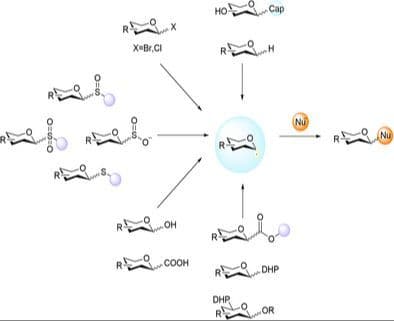
The glycation reaction via the radical pathway not only addresses the pain points of traditional methods in selectivity, efficiency, and compatibility but also provides an innovative tool for the cross-research of sugar science, life science, and materials science through its unique mechanism. It becomes an important bridge for glycation research, transitioning from “synthesis challenge” to “functional exploration”. This review summarizes the research progress of glycosylation via the radical pathway in recent years.
Abstract
Glycosyl compounds are not only essential for life but also play a significant role in various fields, including medicinal chemistry, materials chemistry, and the food industry. In recent years, radical-mediated glycosylation pathways have emerged as a transformative strategy addressing the inherent limitations of classical ionic glycosylation methods, particularly their constrained substrate compatibility and compromised stereochemical fidelity. Thus, this article summarizes the advances in glycosylation reactions that follow the radical pathway and classifies these reactions according to the different classes of glycosyl radical precursors.