Piper nigrum as a Source of Antimicrobial Agents: Bioactive Constituents, Mechanistic Insights, and Synthetic Derivatives for Antibacterial Applications
Von Wiley-VCH zur Verfügung gestellt
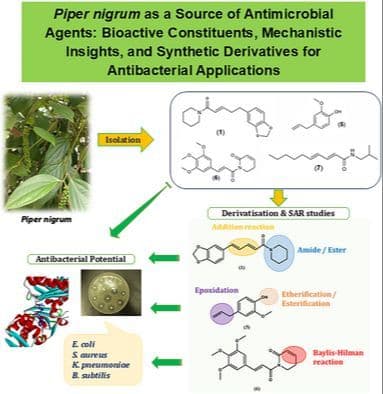
A comprehensive compilation of secondary metabolites from Piper nigrum species that possess bacteriostatic potential and a description of the inhibition mechanism of the metabolites. The work also includes the derivatization structural (analogue) of the secondary metabolites specifically targeted for antibacterial activity enhancement, which highlights the benefits of structural modification of natural product molecules as potential pharmaceutical applications.
Abstract
Piper nigrum, commonly known as black pepper, is a widely cultivated spice with a long history of medicinal use. P. nigrum exhibits a broad spectrum of antimicrobial activity because of the presence of bioactive compounds, including alkaloids, phenol, and terpenoids, which have been identified as major contributors to its antimicrobial efficacy. These compounds act through various mechanisms, including disrupting bacterial cell membranes, inhibiting enzymes vital for bacterial growth and survival, generating reactive oxygen species, and interfering with biofilm formation. To date, there has been growing interest in exploring the bacteriostatic potential of P. nigrum, focusing on the active metabolites. This results in structural modifications of the parent compound through the introduction of additional functional groups via various synthetic pathways, thereby enhancing its biological potential. This review aims to provide an overview of the antimicrobial properties and biological mechanisms of action of the isolated compounds from P. nigrum. Furthermore, some derivatization of isolated compounds has also been discussed together with their antibacterial activities. On the basis of the collected chemical constituents from P. nigrum and its analogues, this review represents a very interesting bioactive compound with broad-spectrum antimicrobial activity, highlighting its potential as a future crop to combat bacterial infections.