Modulating the Aggregation of Amyloid Proteins by Silica Nanoparticles
Von Wiley-VCH zur Verfügung gestellt
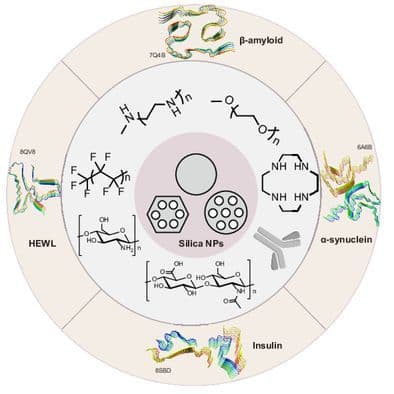
Silica nanoparticles (SNs) are well-known for their superior biocompatibility. Here, the application of SNs is summarized for modulating the aggregation of amyloid proteins, hoping to provide some insights into the structure-activity relationship.
The aggregation and deposition of amyloid proteins are considered key contributors to the pathogenesis of various diseases. In recent years, a variety of nanoparticles have been employed to modulate amyloid protein aggregation. Among them, silica nanoparticles (SNs) have emerged as particularly promising due to the excellent biocompatibility of silicon-based materials and their favorable physicochemical properties, offering significant therapeutic potential. This review summarizes recent studies on the use of SNs to regulate the aggregation of amyloid proteins. The effects of different types and surface-modified SNs on the aggregation behavior of various amyloid proteins are systematically compared, aiming to provide valuable insights for future research and potential therapeutic applications.