ARTIKEL

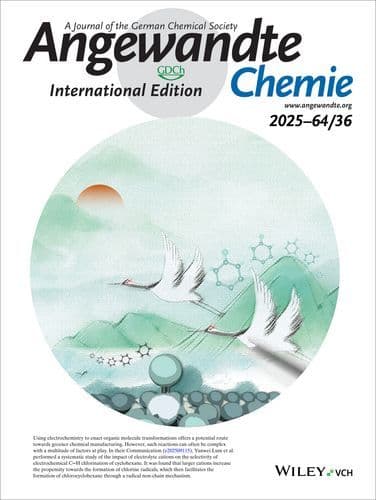
Frontispiece: Alkali Metal Cations Impact the Selectivity of Radical‐Mediated Electrochemical C─H Chlorination
02.09.2025
Frontispiece: Alkali Metal Cations Impact the Selectivity of Radical‐Mediated Electrochemical C─H Chlorination

Using electrochemistry to enact organic molecule transformations offers a potential route towards greener chemical manufacturing. However, such reactions can often be complex with a multitude of factors at play. In their Communication (e202509115), Yanwei Lum et al. performed a systematic study of the impact of electrolyte cations on the selectivity of electrochemical C─H chlorination of cyclohexane. It was found that larger cations increase the propensity towards the formation of chlorine radicals, which then facilitates the formation of chlorocyclohexane through a radical non-chain mechanism.


Verwandte Artikel

Frontispiece: Alkali Metal Cations Impact the Selectivity of Radical‐Mediated Electrochemical C─H Chlorination
Preferential Texture of Surface Coating on Zn Anodes for Advanced Aqueous Batteries: Small Change but Big Gain
Frontispiece: Alkali Metal Cations Impact the Selectivity of Radical‐Mediated Electrochemical C─H Chlorination
P450 Enzyme LyoI Performs Hydro‐2,2′‐Bifuran Oxidation in the Polyether Ionophore Lysocellin
Frontispiece: Alkali Metal Cations Impact the Selectivity of Radical‐Mediated Electrochemical C─H Chlorination
Enhancement of Emission Efficiency and Color Tuning by Mixing Platinum(II) and Palladium(II) Complexes in a One‐dimensional Chain
Frontispiece: Alkali Metal Cations Impact the Selectivity of Radical‐Mediated Electrochemical C─H Chlorination
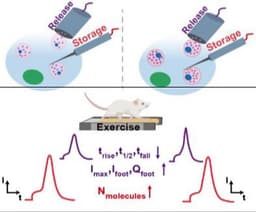
Exercise Modulates Exocytosis: Chemical Insights from the Intracellular Vesicle Perspective
Frontispiece: Alkali Metal Cations Impact the Selectivity of Radical‐Mediated Electrochemical C─H Chlorination
Bio‐Transport Regulation Inspired 5‐Fluorouracil Keto to Enol Tautomerism Achieving High Proton Conductivity