Enhancing Deoxygenation of a Biopetroleum Model Compound Using Mesoporous Beta Zeolite
Von Wiley-VCH zur Verfügung gestellt
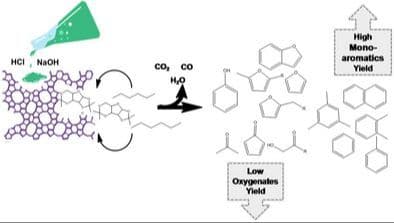
Beta zeolite with 13 SAR is modified by alkaline and acidalkaline treatments to generate mesoporosity and improve accessibility of bulky molecules. Characterization confirms enhanced silicon removal and mesopore volume. In catalytic deoxygenation of a lignocellulosic-derived model compound, treated BEA shows reduced oxygenates, higher hydrocarbon yield, and maintained coke formation, offering a sustainable biomass conversion route.
Abstract
Zeolites have been used to convert second-generation lignocellulosic biomass to fuel and chemicals. Among them, beta zeolite (BEA), which has structural and acidic properties between ZSM-5 and Y zeolite, has shown great potential. To further advance, a BEA with a particularly low silica-to-alumina ratio (SAR) of 13, prepared by seeding without an organic template, was subjected to alkaline and acid-alkaline treatment to create mesoporosity and increase the accessibility of bulky molecules. Characterization by XRD, XRF, N2 adsorption, SEM-EDS, and NH3-TPD revealed that acid pretreatment enhanced silicon removal during the subsequent base treatment, doubling mesopore volume with minimal loss of crystallinity. The mesoporous beta exhibited superior performance compared to the precursor BEA in the conversion of a model compound derived from the second-generation biomass. In converting a 30% mixture of 1,2:3,5-di-O-isopropylidene-α-d-xylofuranose (DX) in n-hexane in a fixed-bed reactor at 500 °C with a reaction mixture to catalyst ratio of 4, beta zeolite prepared by the combined treatment achieved a 10-fold reduction in oxygenates in the liquid and a 3-fold increase in liquid hydrocarbon products while maintaining similar coke formation. Hence, this work demonstrates an inexpensive and environmentally friendly route to improve beta zeolite for biomass conversion.