Kategorie
Blickpunkt Nachwuchs

ArtikelNachrichten aus der Chemie
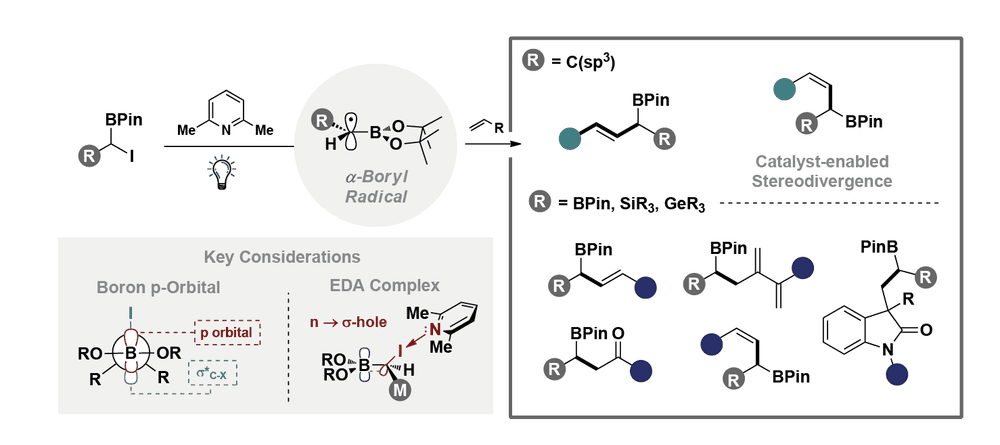
Together with his team, Aduc prize winner John Molloy explores reactivity of boron-containing compounds using light as an activation mode. Chemists can easily convert C–B bonds into many other functionalities, making them highly relevant in modern synthesis. Here, the boron group can be activated to branch off to stereospecifically explore chemical space for the discovery of next-generation functional molecules. Together with the current drive towards 3D topologies in medicinal chemistry, this creates demand for new strategies to generate C(sp 3 )–B bonds. Our research group aims to harness light to synthesize 3D organoboron frameworks. Light
ArtikelNachrichten aus der Chemie
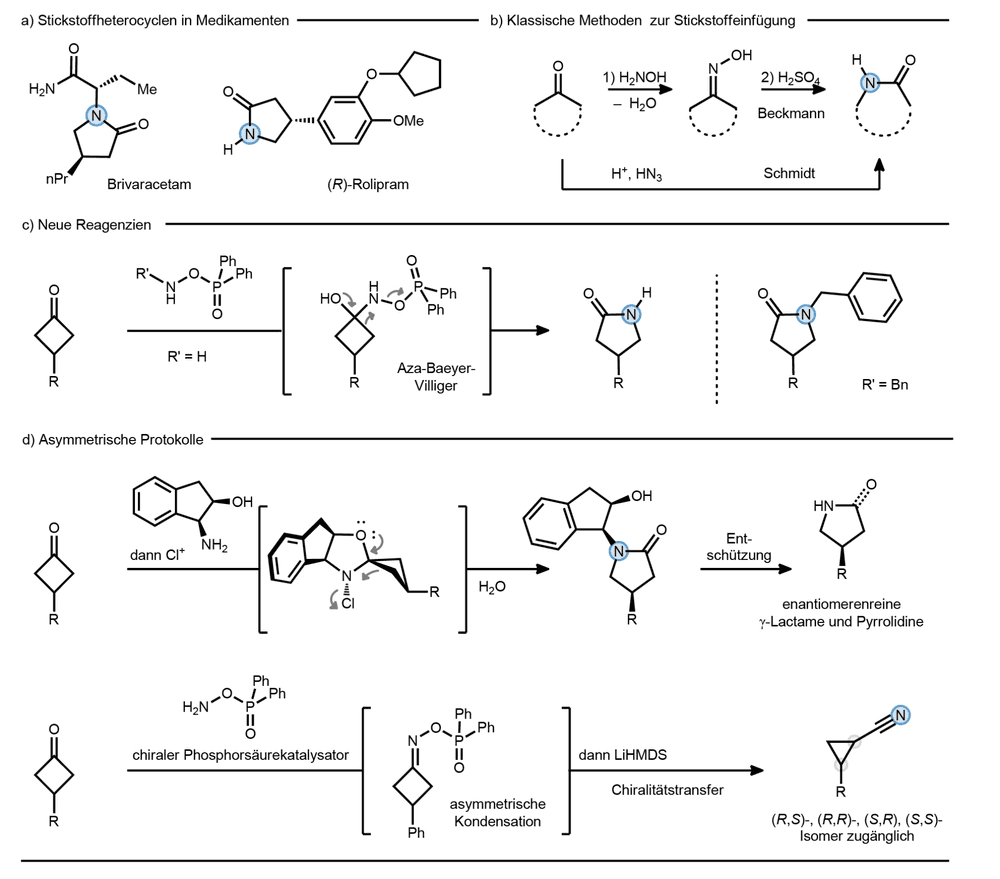
Der Aduc-Preisträger Johannes Wahl und sein Team entwickeln Strategien, um mild und selektiv Stickstoffatome in organische Moleküle einzuführen. Das dient etwa dazu, schnell potenzielle Wirkstoffe herzustellen. Rund 82 Prozent aller niedermolekularen Arzneistoffe enthalten mindestens einen stickstoffhaltigen Heterocyclus (Abbildung a). 1) Diese Cyclen werden traditionell synthetisiert, indem früh in der Synthese ein Stickstoffatom eingefügt wird, worauf chemische Modifikationen folgen. Allerdings beschränken Stickstoffatome manche Folgereaktionen, erfordern Schutzgruppen und erschweren die chromatographische Aufreinigung. Alternativ lässt sic