Voltammmetric Assessment and Examination of the Interactions between Levetiracetam and DNA: Experimental Research, Molecular Docking, and Modeling Studies
Von Wiley-VCH zur Verfügung gestellt
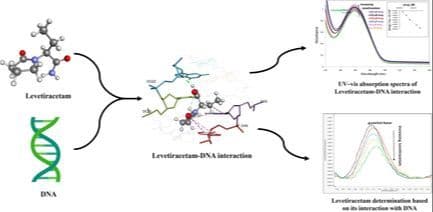
This research introduces, for the first time, a novel, efficient, cost-effective, and highly sensitive approach for the quantification of levetiracetam (LEV) through a differential pulse voltammetry technique based on its interaction with DNA. The method capitalizes on the changes observed in the oxidation current peak of the deoxyguanosine base, which are influenced by varying concentrations of LEV.
Levetiracetam (LEV) is an innovative antiepileptic medication utilized for the management of diverse seizure types associated with epilepsy. The present study aims to elucidate the molecular interaction mechanisms between LEV and fish sperm DNA (dsDNA) through a combination of spectroscopic techniques, viscosity measurements, and molecular docking analyses. Spectroscopic investigations, including UV absorption and fluorescence, confirm the formation of a complex between LEV and dsDNA. The groove binding process is indicated by the measured binding constant. Viscosity, dye-displacement test, and DNA thermal denaturing investigations are used to confirm these results. Docking studies further verify the results, which show that LEV is linked to the minor groove of dsDNA. Furthermore, an LEV–dsDNA biosensor for low-concentration LEV detection using the differential pulse voltammetry technique is created. A sensitive determination of LEV in pH 4.80 acetate buffer is made possible by the voltammetric examination of the peak current drop in the deoxyguanosine (dGuo) oxidation signals that resulted from the interaction between LEV and dsDNA. The oxidation signals of dGuo demonstrate a linear correlation within the concentration range of 2.5–20 μM LEV. The limit of detection and limit of determination are found to be 0.70 and 2.31 μM, respectively.