Synthesis and Characterization of Sulfonamide‐Imidazole Hybrids with In Vitro Antiproliferative Activity against Anthracycline‐Sensitive and Resistant H69 Small Cell Lung Cancer Cells
Von Wiley-VCH zur Verfügung gestellt
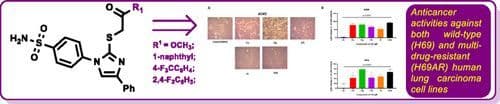
Herein, a series of S- and N-substituted imidazole-sulfonamide hybrids bearing aliphatic and aromatic fragments for their antiproliferative activities against both wild-type and multidrug-resistant human lung carcinoma cell lines are synthesized and evaluated. Compounds 11e, 11g, 11h, and 12 emerge as the most potent candidates, displaying significant cytotoxicity against both H69 and anthracycline-resistant H69AR cells.
A series of novel sulfonamide-imidazole hybrid derivatives are synthesized, and their antiproliferative properties are evaluated. The global challenge of cancer, highlighted by rising morbidity and mortality rates, is further intensified by the increasing prevalence of drug-resistant cancer cells. Targeting the molecular mechanisms underlying therapeutic resistance is crucial for the development of innovative treatment strategies to improve clinical outcomes. Herein, the in vitro antiproliferative activity of novel sulfonamide derivatives, which exhibited significant low micromolar cytotoxicity against H69 human lung carcinoma cells and anthracycline-resistant H69AR cells compared to untreated controls (p < 0.05), is synthesized and characterized. The most promising compounds (11e, 11g, 11h, 12) also demonstrate cytotoxic activity against A549 human lung adenocarcinoma cells. Molecular docking studies predict that compound 11e interacts with tropomyosin receptor kinase A (TRKA) and mesenchymal-epithelial transition factor (c-MET) at conserved binding sites also targeted by FDA-approved inhibitors. These findings suggest that the novel sulfonamide derivatives, particularly compound 11e, may serve as promising antiproliferative candidates targeting TRKA and c-MET, potentially contributing to strategies aimed at overcoming drug resistance. Moreover, compound 11e can serve as a structural scaffold for future hit-to-lead optimization efforts.