ARTIKEL

New Approaches in Catalytic Reactions Using Triphos: A Classical Privileged Ligand |

28.06.2025
New Approaches in Catalytic Reactions Using Triphos: A Classical Privileged Ligand |

Von Wiley-VCH zur Verfügung gestellt

Over the past decades multiple catalytic transformations have been feasible due to the application of triphos as ligand. Its particular fac coordination mode to a transition metal center provides a suitable flexibility enabling variation on the coordination mode resulting in metal stabilization. Most of the reported catalytic reactions have been dominated by the use of the ruthenium-triphos system, either by application of well-defined complexes or the in situ formed complex. However, in the last years the emergence of cobalt complexes with comparable or even superior catalytic performance than ruthenium have been reported. In this review we have focused on the use of triphos in selected reactions such as N-alkylation, formic acid dehydrogenation and bond cleavage.

Verwandte Artikel

New Approaches in Catalytic Reactions Using Triphos: A Classical Privileged Ligand |
Photocatalyzed Reduction of β‐Nitroacrylates via Hydrogen Atom Transfer Promoted by Tetrabutylammonium Decatungstate
New Approaches in Catalytic Reactions Using Triphos: A Classical Privileged Ligand |
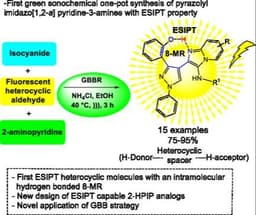
Green Multicomponent One‐Pot Synthesis of 2‐(2′‐Hydroxyphenyl)Imidazo[1,2‐a]Pyridine Analogs with an Intramolecular Hydrogen‐Bonded Eight‐Membered Ring Exhibiting Excited‐State Intramolecular Proton Transfer Luminescence
New Approaches in Catalytic Reactions Using Triphos: A Classical Privileged Ligand |
Efficient Route for Construction of Fluorinated Isoxazolines through Base‐Mediated Fluorinated Amino Acid Derivatives
New Approaches in Catalytic Reactions Using Triphos: A Classical Privileged Ligand |
Ruthenium‐Catalyzed Regioselective Sulphonamidation of Benzo[b][1,4]oxazin‐2‐ones via Csp2–H Functionalization Using Sulfonyl Azides
New Approaches in Catalytic Reactions Using Triphos: A Classical Privileged Ligand |
Organocatalytic Halogenation of Aromatic and Heteroaromatic Compounds