Membran‐Bioreaktor‐Technik kombiniert mit nachgeschalteter Ozonung – Vergleich mit konventionellen OzonanwendungenCombination of Membrane Bioreactor and Downstream Ozonation – A Comparison to Conventional Ozone Applications
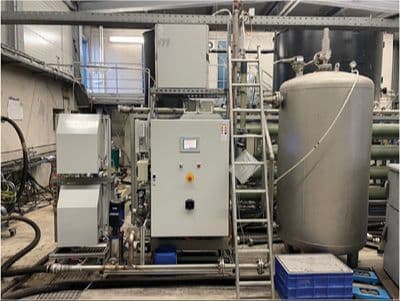
Von Wiley-VCH zur Verfügung gestellt
Kommunale Kläranlagen gelten als Haupteintragspfad organischer Mikroschadstoffe in die aquatische Umwelt. Ein Großteil der Arzneimittelrückstände und Industriechemikalien wird in Kläranlagen nicht oder nur teilweise entfernt. Um einen qualitativ höheren Kläranlagen-Ablauf zu erzeugen, wird eine Kombination aus hybridem Teilstrom-Membran-Bioreaktor mit nachgeschalteter Ozonung untersucht.
Zusammenfassung
Mit der Novellierung der EU-Kommunalabwasserrichtlinie werden höhere Anforderungen an die Ablaufqualität von Kläranlagen geregelt. Hierzu ist eine Modernisierung bestehender Kläranlagen mit weitergehenden Reinigungsverfahren notwendig. Mit der neuartigen Verfahrenskombination aus Membran-Bioreaktor und nachgeschalteter Ozonung soll im Rahmen des Forschungsprojekts „HyFive“ 1) die Elimination organischer Mikroschadstoffe (OMPs) bei gleichzeitiger Betrachtung ökotoxikologischer Auswirkungen untersucht werden. Bisherige Ergebnisse zeigen, dass bei geringen Ozonkonzentrationen OMP-Eliminationsraten von 80 % erzielt werden können. Zudem konnten keine schädlichen Auswirkungen für aufnehmende Gewässer festgestellt werden.
With the revision of the EU urban wastewater directive, higher requirements regarding the quality of the effluent of wastewater treatment plants (WWTPs) were defined. To meet these standards, existing WWTPs must be modernized with additional treatment processes. Within the research project „HyFive”1) an innovative process combining a membrane bioreactor (MBR) and downstream ozonation is developed to eliminate organic micropollutants (OMPs) while increasing plant capacity. The objective is to assess the feasibility of the process based on its treatment performance and the ecotoxicological impacts when treating MBR filtrate with ozone. So far derived results indicate that when applying smaller ozone concentrations, 80 % of selected OMPs can be eliminated. Furthermore, ecotoxicological investigations demonstrated that the effluent of the downstream ozonation step poses no risk to receiving water bodies.