Kinetics of the Cumyl Hydroperoxide Acid Cleavage: A Case Study
Von Wiley-VCH zur Verfügung gestellt
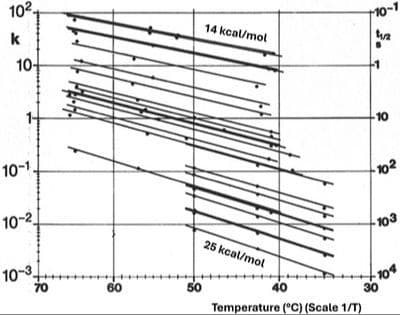
The cleavage of cumyl hydroperoxide is a fast reaction (0.1 < t 1/2 < 1.5 s), with a rate varying of an order of magnitude by changing the medium composition, i.e., H2O and phenol concentrations. A four-parameter model for the rate constant has been identified, based on a isoentropic relationship. Similar models have been derived also for the side reactions.
Abstract
Phenol is an important chemical commodity utilized for several applications (e.g., polycarbonates, epoxy and phenolic resins, nylon). Its production starts from benzene and propylene and is based on a series of reaction steps. Among them the acid cleavage of cumyl hydroperoxide is characterized by the high reaction rate of the main reaction, together with a number of side reactions. During the 1980s a thorough kinetic study has been carried out by the researchers of Montedipe S.p.A. This activity led to the development of a comprehensive kinetic model including 14 differential equations and 15 parameters, then utilized for process operations and unit design. A review of the strategy adopted for the experimental activities is provided along with a discussion on model identification and parameter estimation.a