A Tale of Two Designs: Comparing Design of Experiment Strategies for Reaction Optimization
Von Wiley-VCH zur Verfügung gestellt
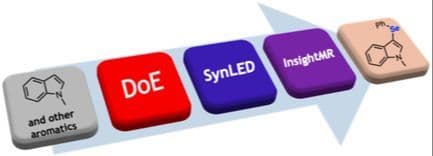
The application of Design of Experiments (DoE) significantly accelerates the optimization of reaction conditions for previously unreported transformations. DoE achieves this by focusing experimental efforts, enabling efficient exploration of the so-called experimental space. In this study, two DoE paradigms are used to determine the optimal parameters for converting the model substrate, N-methylindole, into its C-3 phenylselenylated analogue. The DoE approaches include the widely recognized face-centered central composite design and the less familiar D-optimal design, implemented using the freeware Chemometric Agile Tool (CAT) for experimental plan development and data analysis. A comparison of the two designs reveals that the D-optimal design, requiring 25% fewer reactions, provided equivalent results in terms of experimental space exploration and information retrieved. This highlights its efficiency and potential advantages. One aim of this report is to raise awareness within the organic chemistry community about the capabilities of the D-optimal design. Reaction kinetics are studied using an online FlowNMR device, which allows real-time reaction monitoring without the need for stopping the reaction or performing work-up procedures that might introduce errors or yield misleading results. Finally, the scope of the reaction is briefly explored.